
Summer is the quarter most radio sales teams quietly write off — and the one your sharpest competitors are quietly cleaning up in. This guide covers why the Q3 book sells differently, the summer advertiser categories that are already spending hard, how to package content plus air plus digital into sponsorships nobody can rate-shop, the content engine that turns programming into sellable inventory, and the summer-sales mistakes that leave money on the table every August.
Forget whether summer is a "slow quarter." That framing is exactly why so much Q3 money walks right past radio. The question that actually moves your summer number isn't is anyone buying — plenty of categories spend their biggest dollars of the year between Memorial Day and Labor Day — it's what you're putting in front of them. A loose spot schedule gets rate-shopped against every other station in the market. A packaged summer franchise they can't get anywhere else doesn't. Same inventory. Completely different sale.

Why the Q3 Book Sells Differently
Summer revenue doesn't follow the same rules as the spring or fall books, and the sellers who win Q3 are the ones who plan around the differences instead of fighting them.
- The buyers are seasonal — and motivated. A grill brand, a tourism bureau, an HVAC company, an ice-cream chain: these advertisers do an enormous share of their annual business in a 12-to-14-week window. They don't need to be convinced that summer matters. They need to be shown a way to own it.
- Your audience relocates, and that's a feature. In-car and out-of-home listening climb all summer — the same shift that defines the summer ratings book. For a seller, that's a story: your signal follows the buyer's customer to the lake, the cookout, and the road trip, exactly when they're making spur-of-the-moment spending decisions.
- Half the market goes quiet. Plenty of stations coast from mid-June to Labor Day. When the competitive set softens, share of voice gets cheap — and the advertiser who shows up consistently all summer owns the season's mindshare for a fraction of the fall cost.
Put those together and the takeaway for a sales team is simple: summer isn't a discount season. It's a packaging season.
The Summer Categories That Are Already Spending
You don't have to manufacture demand in Q3. You have to go meet it. These are the verticals that reliably open their wallets in summer — keep a running prospect list for each:
- Grilling, beverage, and backyard. Grocery, hardware, beer and beverage, propane, patio and pool. Anyone whose product shows up at a cookout is in-market right now.
- Auto. Summer service pushes, "road-trip-ready" inspections, and used-car clearance events. The "before you hit the road" angle practically writes itself.
- Travel and tourism. Local attractions, state parks, regional getaways, water parks, and the convention-and-visitors bureaus whose entire job is to drive summer foot traffic.
- Home services and HVAC. Air conditioning is a need-it-now category — a heat wave creates same-day urgency, and urgency commands premium rates.
- Festivals, fairs, and concerts. They live or die on attendance, they buy in both cash and trade, and they need exactly what radio does best: getting bodies through a gate this weekend.
- QSR, ice cream, and cold treats. Frequency plays that daypart beautifully — afternoon-drive cravings are a real thing.
- Lawn, garden, and outdoor living. Nurseries, landscapers, outdoor furniture, and the home-improvement aisles that peak the moment the weather turns.
I'd build a one-page summer category sheet for the whole sales team — the six to eight verticals above, with local prospects named under each. Nobody should be walking into a summer pitch starting from a blank page.
Package, Don't Sell Spots
This is the move that separates a flat Q3 from a strong one. The instinct under pressure is to lower the rate and move units. The better instinct is to build something a buyer can't get by calling the station across town.
Theme the inventory. Give summer a name and a shape: a "Summer Road Trip" feature, "Backyard Weekends," a "Beat the Heat" forecast sponsorship, a "Festival Season" series. A named franchise is an idea, not a commodity — and ideas don't get rate-shopped.
Bundle across everything you own. A real summer package is a named on-air feature plus a digital home (a web feature, a sponsored newsletter section, social) plus a real-world moment like a remote or an appearance. That combination is why programming and sales are the same revenue engine, not separate departments — the content makes the package worth more than the sum of its spots.
Sell the digital you're probably leaving on the table. Sponsored newsletter sections and "brought to you by" web features reach advertisers who would never buy a traditional spot — and they're some of the easiest incremental dollars a station can capture. The summer buyer pool is bigger than your spot inventory; sell to all of it.
Lead with outcomes, not units. "Own the drive-time road-trip feature for July and August, on air and online" lands harder than "here's a 60-spot schedule." You're selling a season, a story, and an audience — price it that way.

Turn Your Content Into Sellable Inventory
Here's the part that quietly determines whether any of this works: every package needs real content underneath it. A named feature needs daily segments. A web feature needs articles. A sponsored newsletter needs copy that's actually worth opening. Sell a "Summer Road Trip" franchise and then deliver three weeks of thin, generic filler, and you've trained that advertiser not to renew.
That's exactly the work that buckles under summer staffing — the team is thin, hosts are on vacation, and "we'll build the content later" turns into a banner with nothing behind it. A reliable content engine flips that: when seasonal hooks and format-specific segments show up every morning regardless of who's in the building, your sellers can promise a real franchise and your air staff can actually deliver it. That's the gap Radio Content Pro is built to close — daily, format-specific prep and seasonal content that gives the sales team something concrete to package, even in the middle of July.
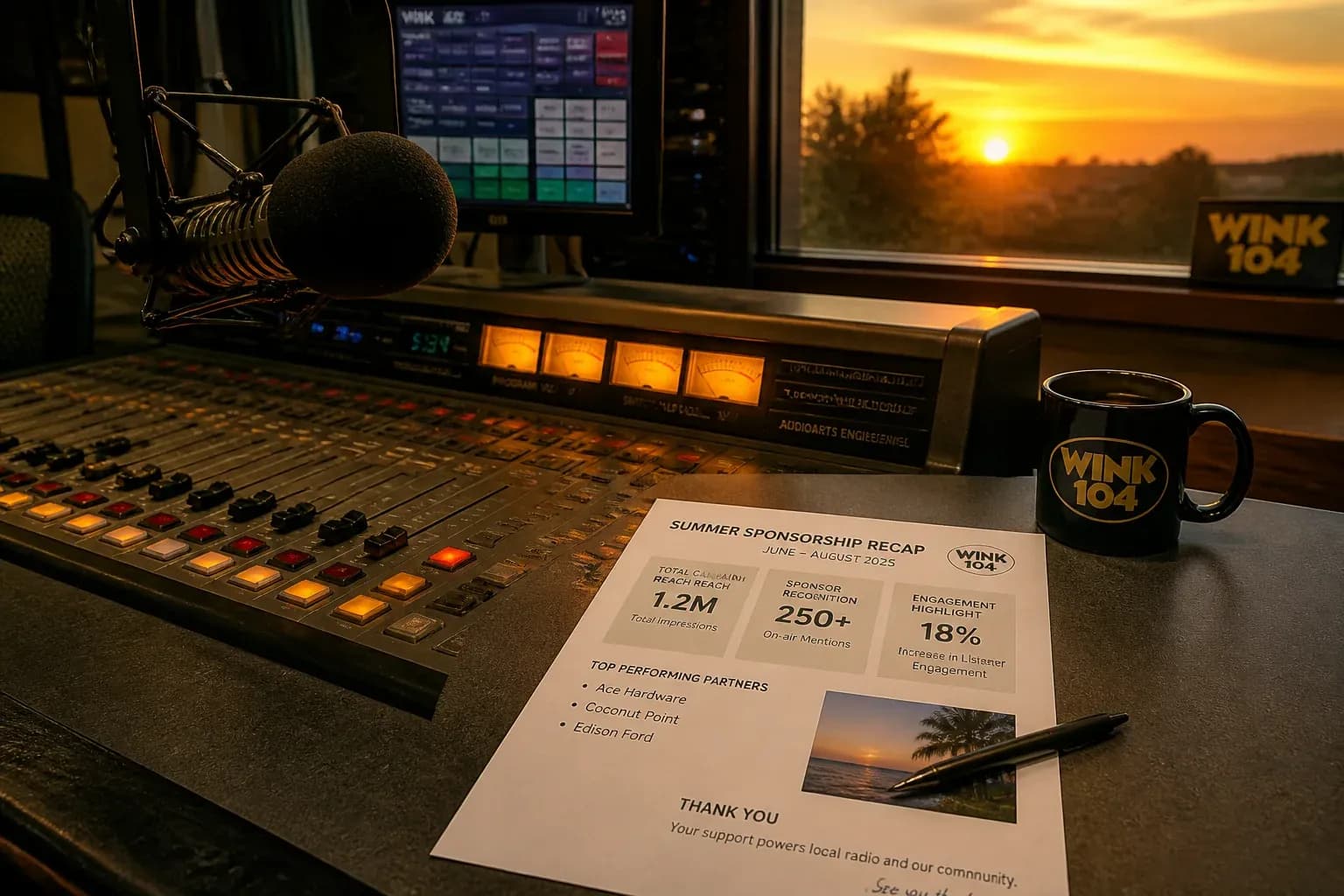
And once a package is on the air, prove it worked. Tie the campaign to recall, web clicks, or foot traffic, because demonstrating ROI is what turns this summer's one-off sponsor into next summer's automatic renewal.
Summer-Sales Mistakes That Cost You
Most weak Q3 books trace back to one of these:
- Recycling last summer's rate card. No new ideas, no new packages — just the same avails at a softer price. Buyers can smell a station that's coasting.
- Discounting instead of packaging. Every reflexive summer discount trains the market to wait for your deal. Package value up; don't price it down.
- Ignoring digital. Leaving newsletter and web sponsorships unsold is leaving the easiest summer dollars on the table.
- Starting in July. Summer is sold in the spring. If the planning is happening in season, you're already late — which is why building the summer promotional inventory early matters as much as the content does.
- Selling units instead of outcomes. "60 spots" is a commodity. "Own the season" is a story.
- No proof of performance. Without a recap, there's nothing to renew on — and you start every summer from scratch.
Your Q3 Revenue Playbook
The realistic version, in five moves:
- Build the summer category sheet — the six to eight verticals already spending, each with a named local prospect list.
- Package three summer franchises — give them names, price them as sponsorships, and bundle air, digital, and a real-world moment into each.
- Sell the digital you're not selling — sponsored newsletter sections, web features, and "brought to you by" placements that reach beyond your spot buyers.
- Put content behind every package — so the franchise is real on day one, not a promise you can't staff.
- Measure and report — so this summer's sponsor becomes next summer's renewal.
Ready to simplify your show prep?
Try RCP free for 7 days. $0 until day 8
FAQ
What advertising sells best on radio in summer?
The strongest summer categories are the ones with seasonal urgency: grilling and backyard brands, auto service and road-trip campaigns, travel and tourism, home services and HVAC, festivals and concerts, and QSR or cold-treat advertisers. These verticals do a large share of their annual business in the summer window, which makes them motivated buyers rather than reluctant ones.
Is Q3 a slow quarter for radio sales?
It's slow mostly for stations that treat it that way. Listening doesn't stop in summer — it relocates to cars and out-of-home environments — and several advertiser categories spend their biggest dollars of the year in Q3. The quarter softens when sellers default to discounting instead of building packages that match where the audience and the buyers actually are.
How do I package summer radio sponsorships?
Build a named, themed franchise — a "Summer Road Trip" feature or "Backyard Weekends" series — and bundle it across on-air, digital (web feature, newsletter, social), and a real-world moment like a remote. Sell the outcome ("own the season") rather than a spot count, and put consistent content behind it so the franchise delivers on what you promised.
When should I start selling summer radio campaigns?
Earlier than feels comfortable. Summer is sold in the spring, when advertisers are still setting Q3 budgets. If you're pitching summer packages in June and July, you're competing for whatever's left rather than shaping the plan — so build your category sheet and your franchises before the season starts.
Key Takeaways
- Summer is a packaging season, not a discount season. Loose spots get rate-shopped; named franchises don't.
- Go where the demand already is. Grilling, auto, travel, HVAC, festivals, and QSR are in-market every summer — meet them with a prospect list, not a cold pitch.
- Bundle air plus digital plus a real-world moment into themed sponsorships, and sell outcomes instead of units.
- Content is what makes a package real. A franchise with nothing behind it doesn't renew — a reliable content engine keeps Q3 deliverable even when the bench is thin.
- Sell summer in the spring, and prove it after. Early planning wins the budget; a performance recap wins the renewal.
The stations that finish Q3 strong aren't the ones with the most avails or the lowest rates. They're the ones that turned a "slow" quarter into a season worth owning — and gave advertisers something they couldn't buy anywhere else. Package it, staff it with real content, and prove it worked. Summer will pay you back.
— Ava
Ready to simplify your show prep?
Try RCP free for 7 days. $0 until day 8