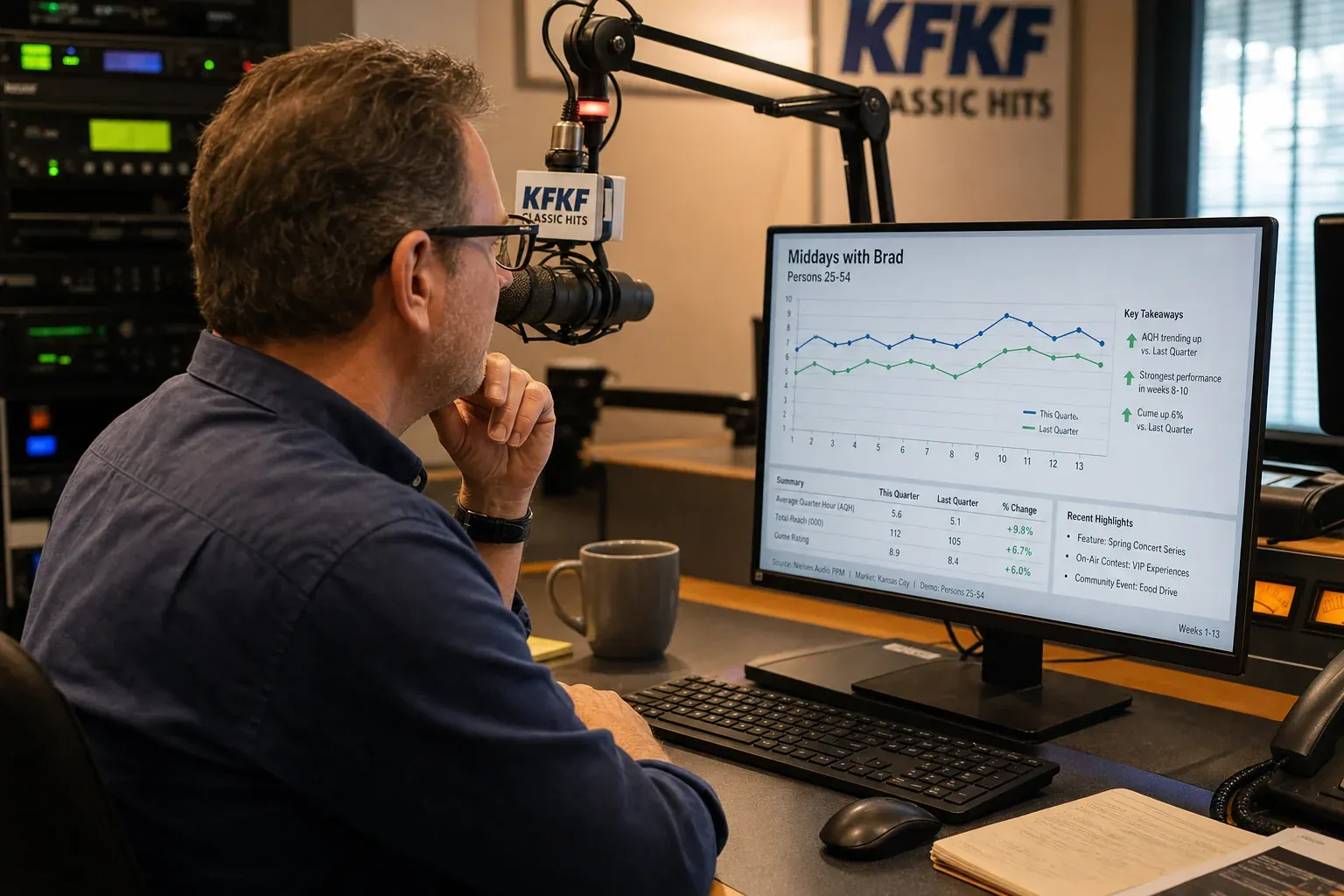

The summer book is the ratings period stations most love to write off — and that's exactly why it's winnable. This guide covers what actually changes in summer listening (routines break, cars matter more, recall gets harder), how to program for the summer survey without burning out your staff, how to take vacations without losing the book, and the summer-ratings mistakes that quietly hand share to the station across town.
There's a quiet divide in radio every June: stations that treat the summer book as a throwaway — "everyone's at the beach, we'll get serious in the fall" — and stations that keep showing up like the meter never stopped running. Because it didn't. The audience doesn't take a quarter off. They just listen differently. And the stations that program for that difference, instead of waiting it out, are the ones that walk into fall with momentum the throwaway crowd spends October trying to buy back.

What the Summer Book Is (and Why It Counts)
Quick level-set, because "the book" means different things depending on your market.
In diary markets, the summer survey is one of four quarterly measurement windows, running roughly from late June into mid-September. Listeners in the sample write down (or tap in) what they remember listening to. In PPM markets — the largest metros — measurement is continuous and reported monthly, so "the summer book" really means the June, July, and August monthlies.
Either way, the mechanics matter more in summer than any other season, for one reason: ratings are estimates built from a panel of real people, and summer scrambles those people's routines. A diary keeper on vacation isn't filling out her diary at the kitchen table at 7:15 AM like she did in April. A meter carrier is at the pool, in the car, at a cookout. The sample is the sample — you can't control who's in it. What you can control is whether your station is the one they remember (diary) or the one playing wherever they physically are (PPM).
That distinction shapes everything below. In diary markets, summer is a brand recall game — top-of-mind awareness has to survive a disrupted routine. In PPM markets, it's a presence game — be on in the car, at the lake, in the backyard. If you need a refresher on the underlying numbers — AQH, cume, TSL and what moves them — start with our guide to the show metrics that actually matter.
How Summer Listening Actually Changes
The summer audience isn't smaller so much as relocated. Program for where it went.
- In-car listening rises. Road trips, longer evenings, kids to camp, errands that don't end at 6 PM. Drive dayparts stretch and soften at the edges — your 5 PM listener might now be a 7 PM listener heading home from the ballfield.
- At-work listening dips and shifts. Offices empty on Fridays, teachers disappear entirely, and the midday at-work audience you built all spring is suddenly mowing the lawn with a phone in their pocket.
- Routines break — and habits are what ratings run on. Listening is mostly habitual. When school schedules and commutes dissolve, the appointment behaviors that drive quarter-hours dissolve with them. The station that gives listeners new summer appointments wins the season.
- Out-of-home listening explodes. Backyards, beaches, garages, boats. PPM credits it automatically. Diaries only credit it if the listener remembers it — which is why memorable, named, repeatable content matters more in summer diary markets than at any other time of year.
One more piece of math worth keeping in mind: your P1s — first-preference listeners — contribute up to five times as many quarter-hours as casual listeners. In a season where everyone's routine is shaky, protecting your P1s' habit is worth more than chasing strangers. Summer cume-chasing has its place, but the book is usually won by keeping your heaviest listeners from drifting, not by converting tourists.
Programming for the Summer Survey
You don't need a bigger budget. You need consistency, presence, and a reason to come back tomorrow.
Keep your benchmarks nailed down
Familiar features at set times are how listeners form habits — and summer is when most stations get sloppy about them. Resist it. The 7:20 feature stays at 7:20, even with a fill-in hosting. Worry about burn-in (listeners not yet knowing the feature exists) rather than burnout; programmers tire of their own content long before the audience does. That instinct — projecting your own fatigue onto listeners — is one of the most reliable ways to break a habit you spent two books building.
Give summer its own appointments
A season-long franchise turns scattered summer listening into scheduled summer listening. A Songs of Summer countdown, a daily "summer bucket list" giveaway at a fixed time, a Friday cookout-playlist hour — the format matters less than the namedness and the fixed time slot. Named, repeatable content is also exactly what diary keepers recall when they're filling in a week from memory. Our summer radio content ideas guide has a full bench of these.
Be physically where the audience went
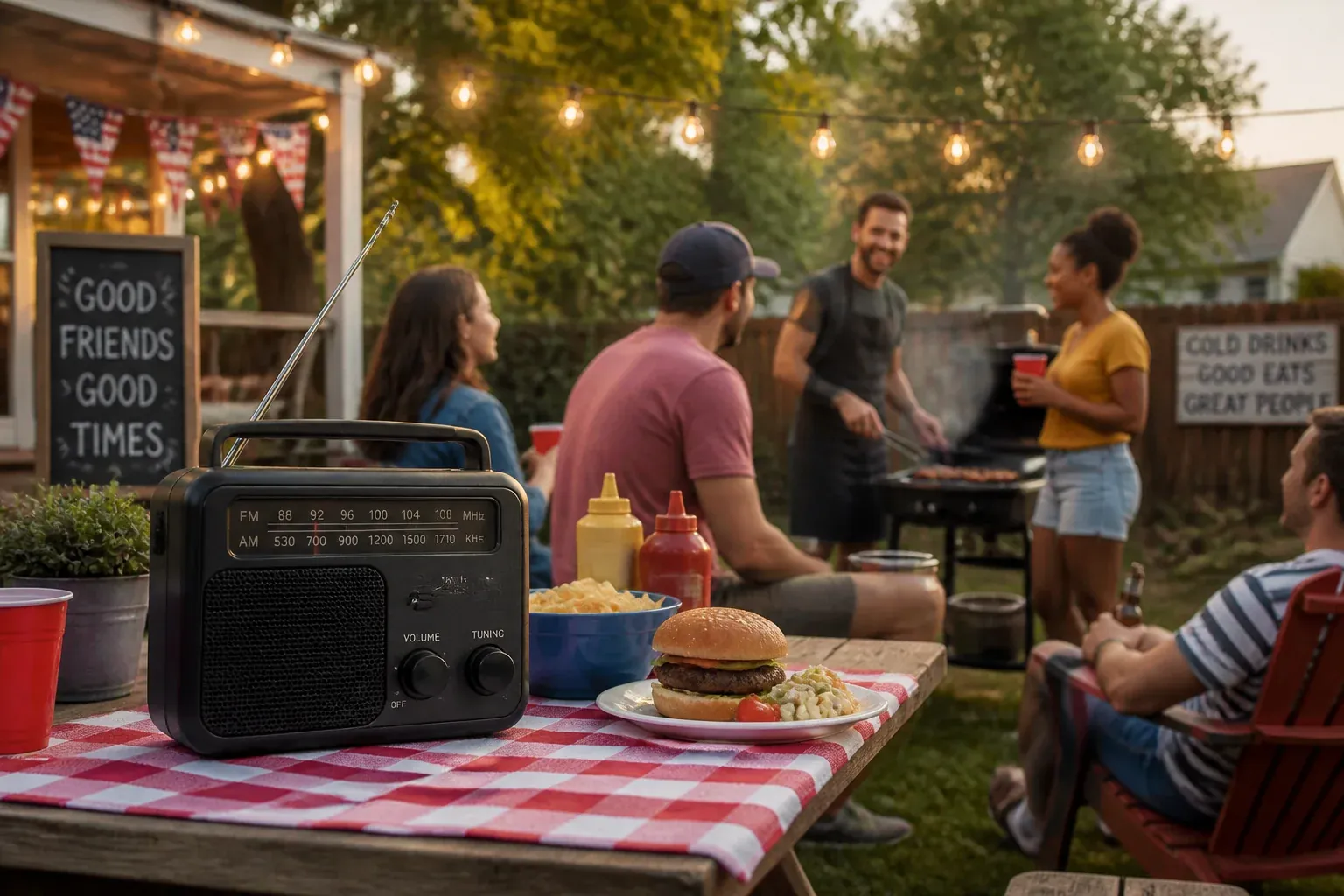
Street presence isn't a vanity play in summer — in PPM markets it's literally measurable. Remotes at festivals, pools, and ballgames put your signal in environments where meters are present and competitors aren't. Even modest appearances signal "this station is part of my summer," which pays off in recall when the diary comes out in September.
Localize relentlessly
Summer is the most local season radio gets: festivals, road construction, heat waves, county fairs, the splash-pad schedule. National prep services sound identical in every market; the station that owns this town's summer owns the book. (This is strategy #7 in our content-driven ratings playbook, and summer is its peak season.)
Taking Vacations Without Losing the Book
Here's the tension every PD faces: your staff needs time off in exactly the weeks the survey is running. You can have both — if you plan the coverage instead of improvising it.
Best-of shows work better than radio folklore says they do. The ratings are happening whether you're live or not, and a well-built best-of — your strongest segments, re-cut tight, presented with energy — beats a flat fill-in show. Listeners generally only know it's a repeat if you tell them or if the content is dated. Pull the evergreen gold, skip anything tied to a news cycle, and the show still sounds like your show.
Voice tracking and AI-assisted prep close the rest of the gap. A fill-in host with a strong prep sheet sounds prepared; a fill-in host winging it sounds like summer radio's worst stereotype. We've covered the full playbook — prep handoffs, fill-in briefs, and where AI fits — in our guide to summer vacation coverage.
The principle underneath both: the audience should never be able to tell your bench is thin. Images and perceptions keep forming in July whether your A-team is in the building or not.
Common Summer-Ratings Mistakes
The summer book is rarely lost to bad luck. It's lost to one of these:
- Autopilot mode. Coasting from mid-June to Labor Day on the theory that "nobody's listening." Somebody is always listening — and they're in the sample.
- Changing too much at once. Summer tempts stations into experiments. Fine — but test one variable at a time, or you'll learn nothing from the fall numbers. The one-variable rule from our mid-book guide applies all summer.
- Cancelling benchmarks "for the season." Every paused feature is a habit you're asking listeners to rebuild in September. Most won't.
- Programming to your own calendar. You're tired of the summer contest by week three. Your audience — hearing it in fragments between vacations — is just discovering it. Audience turnover means most listeners experience far less of your station than you do.
- Ignoring the car. If your imaging, teases, and contests all assume a desk listener, you're talking past the season's biggest platform. Short segments, frequent resets, forward teases that survive a drive-thru interruption.
- Sounding bored. Summer's lighter staffing shows up on-air as lower energy. The station that sounds like it's having a summer — instead of enduring one — is the one listeners remember.
Your Summer Book Playbook
The realistic version, in five moves:
- Audit your benchmarks — confirm every named feature survives the vacation schedule at its usual time, even if a fill-in or a best-of carries it.
- Launch one summer-long franchise with a name and a fixed slot, and tease it forward every single day.
- Build the coverage plan now — best-of shows pulled from your strongest evergreen segments, prep sheets ready for every fill-in.
- Book your outside moments — two or three real-world appearances a month where your summer audience actually is.
- Hold the line on localism — own the festivals, the heat waves, and the day-by-day seasonal hooks that national prep can't fake.
Daily, format-specific prep is the part that usually buckles under summer staffing — and it's exactly the work Radio Content Pro handles: segments, host notes, and seasonal hooks delivered every morning, whether your A-team is in the building or at the lake.

Ready to simplify your show prep?
Try RCP free for 7 days. $0 until day 8
FAQ
When is the summer radio ratings book?
In diary markets, the summer survey runs roughly from late June into mid-September. In PPM (metered) markets, measurement is continuous, so the "summer book" generally refers to the June, July, and August monthly reports. Check your market's exact survey dates — programming to the window matters.
Do summer radio ratings matter?
Yes — for revenue and for momentum. Fall ad buys lean on the most recent numbers available, and a weak summer book makes the fall sales story harder — which is why the ratings push and your summer sales strategy are best run as one season, not two. Strategically, listening habits you protect (or lose) in summer carry directly into the fall book.
Why do radio ratings drop in summer?
Often they don't drop as much as they move. At-work and at-home listening dips while in-car and out-of-home listening rises. Stations that keep programming to the spring audience's routine see declines; stations that follow the audience outdoors and into the car hold or grow share.
Should we run best-of shows during the summer book?
A well-built best-of beats an unprepared fill-in. Use your strongest evergreen segments, cut tight, and avoid anything tied to a dated news cycle. The measurement doesn't pause when your host does — the goal is a show that sounds intentional, not absent.
Key Takeaways
- The summer book is won by showing up. Most of your competitors are coasting — consistency alone is a competitive strategy from June through Labor Day.
- The audience relocates; it doesn't disappear. Program for cars, backyards, and broken routines, not for the April commute.
- Protect P1 habits over chasing cume. Your heaviest listeners contribute several times the quarter-hours of casual ones — keep their appointments intact.
- Plan vacation coverage like programming, not absence. Strong best-ofs, prepped fill-ins, and voice tracking keep the station's image forming all July.
- Change one thing at a time. Summer experiments are fine; uncontrolled ones turn the fall book into a mystery novel.
The stations that treat summer as a season to program — instead of a season to survive — are the ones the fall book rewards. Sound like you're having a great summer. The meters are listening.
— Ava
Ready to simplify your show prep?
Try RCP free for 7 days. $0 until day 8