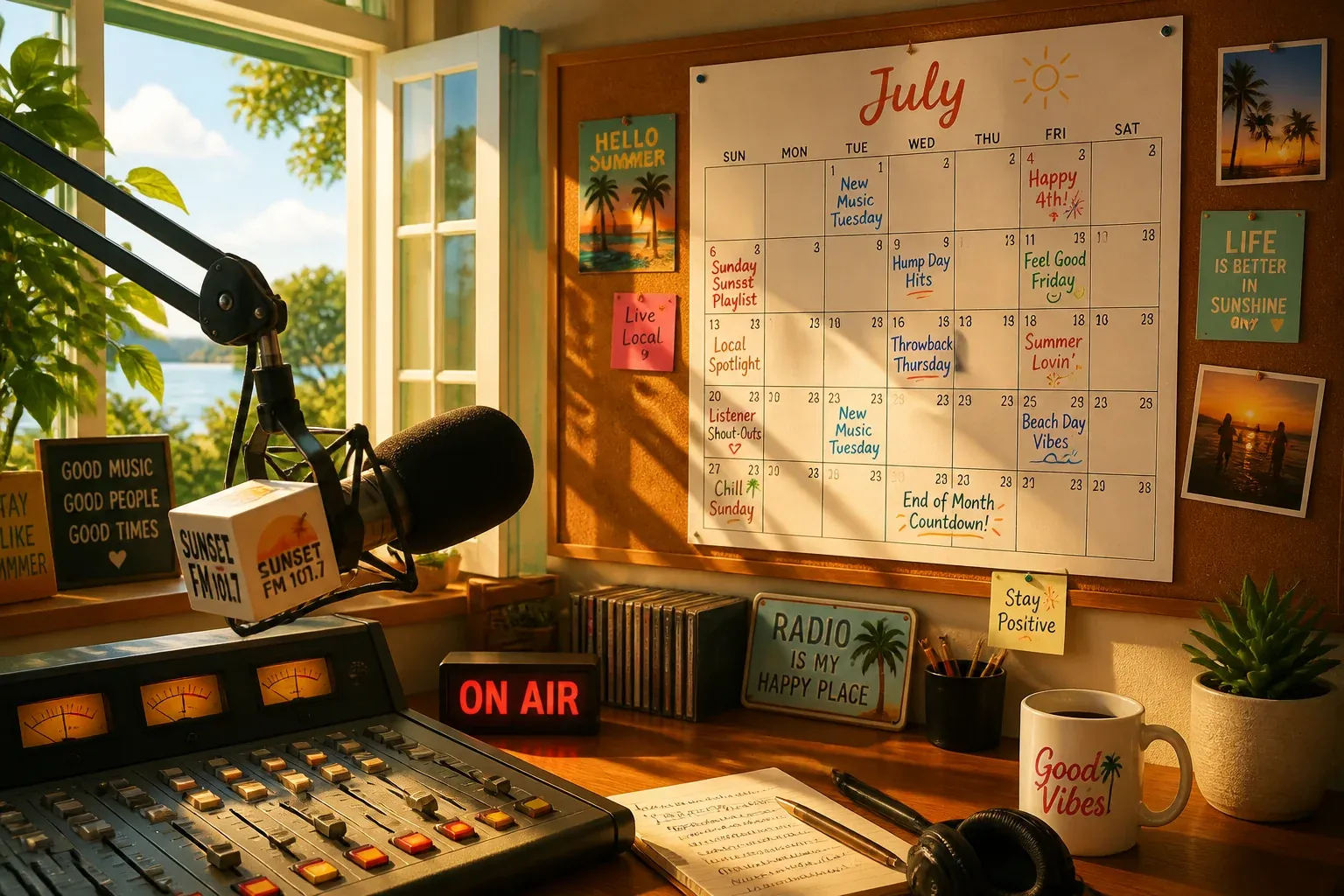

It's the second week of July, the morning host is at the lake, the producer's flight lands tonight, and the fill-in who's covering middays has never run the board solo. This is the summer staffing gap — and it's where AI show prep earns its keep. This guide covers why summer thins your bench, how AI prep plus voice tracking keep you sounding sharp, a fill-in playbook that protects your sound, and the line between AI show prep and an AI "host."
Every station knows the summer math. PTO stacks up between Memorial Day and Labor Day, the part-timers you'd normally lean on are also traveling, and the budget to backfill isn't there. Meanwhile the building still has to sound like itself — the same energy, the same local references, the same promises to listeners — with a fraction of the people who normally make that happen.
Stations tell us the same thing every June: it's not that summer content is harder to make, it's that there's nobody around to make it. That's a different problem, and it needs a different fix.
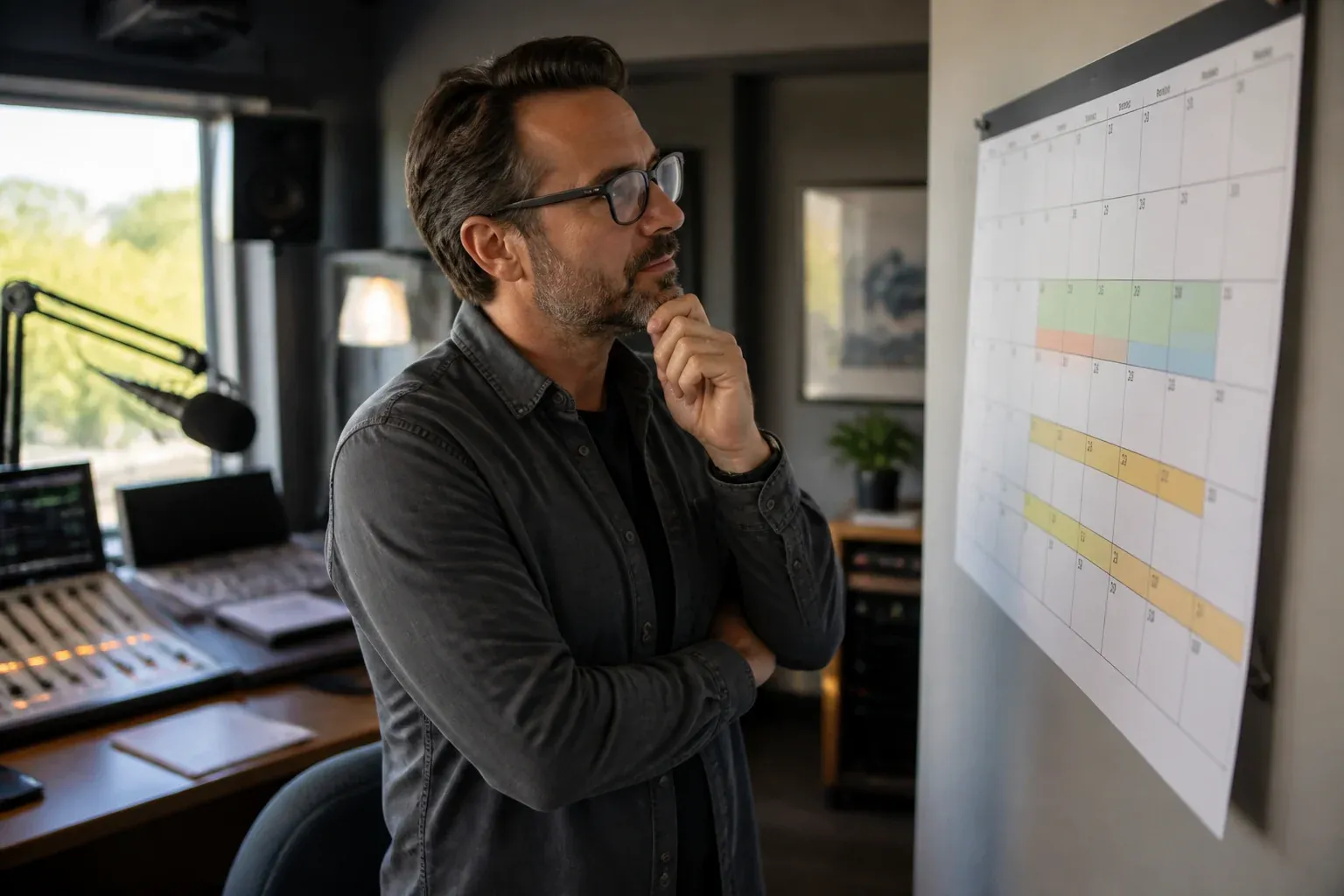
Why Summer Thins Your Bench
The summer staffing gap isn't new, but it's gotten sharper. The industry-wide reality is that support teams have been cut to the bone — fewer producers, often no dedicated news person, and one PD covering responsibilities that used to belong to three people. That's the everyday baseline. Then summer lands on top of it.
So the gap isn't just "the host is on vacation." It's that the prep infrastructure — the person who pulled the local angles, wrote the teases, lined up the calendar content — is the same person who's now out, or who's now also doing two other jobs. When that capacity disappears for a week, the fill-in inherits a blank page on the busiest content days of the season.
That's the part worth naming: summer doesn't just remove a voice from the air. It removes the prep that made that voice sound prepared. Fixing the staffing gap means fixing the prep gap first.
What AI Show Prep Actually Covers
Here's where the tools have genuinely changed the math. AI show prep won't run your board or read your liners, but it can hand whoever is in the chair a finished starting point: format-specific topics, ready-to-read teases, local-angle hooks, and digital and social copy — fresh, every day, without a producer staying late to build it.
For a fill-in, that's the difference between improvising and executing. Instead of walking in to a blank page, they walk in to a prepped show they can make their own. The 90% that's tedious — the gathering, the formatting, the "what do we even talk about today" — is already done. They add the 10% that's them.
A few summer-specific things solid AI prep keeps consistent when your people are out:
- The local references. Good prep is built around your market, not generic national filler — so a fill-in still sounds like they live there.
- The calendar awareness. Summer is dense with hooks (the Finals, the Fourth, the first day of summer, festival season). Prep that already knows the summer content calendar keeps a fill-in on-theme without having to research it.
- The cross-platform copy. The website and socials don't take vacations. Prep that ships digital and social content keeps your digital presence alive when nobody's there to post.
This is also why the right mental model is more efficiency, not replacement. The same AI-prep stack a solo host leans on year-round is exactly what a short-staffed summer building needs — it just matters more when the bench is empty.

Voice Tracking: The Other Half of Coverage
Prep solves the "what do we say" problem. Voice tracking solves the "who's in the chair" problem — and the two together are how a thin summer schedule still sounds fully staffed.
There's an old bias that voice tracking is a compromise, a lesser version of live. The opposite is true when it's done well. Industry voices have made this point for years: voice tracking lets a personality create better content than performing live, for the same reason stand-up specials and Broadway shows are rehearsed and edited rather than improvised cold. A host who's relaxed, focused, and able to do a second take will out-perform a tired fill-in white-knuckling a live shift.
For summer coverage, that's a real strategy:
- Bank breaks before vacation. A host heading out can track a week of breaks in an afternoon — current enough to hold up, personal enough to sound like them.
- Let your best voice cover more dayparts. Voice tracking lets one strong personality lend their sound to shifts they can't physically be present for.
- Pair it with fresh prep. Tracked breaks plus daily AI prep means the content stays current even when the voice was recorded days earlier.
The combination is the point. Prep keeps it current; voice tracking keeps it human. Neither one alone covers a summer; together they make a half-empty building sound full.
The Fill-In Playbook
When someone's covering a shift that isn't theirs, the goal is simple: protect the station's sound. A few moves make that far easier.
- Give them prep, not a blank page. The single biggest favor you can do a fill-in is hand them finished show prep tuned to your format. Confidence on air comes from preparation, and most fill-in stumbles trace straight back to walking in cold.
- Write down what your station sounds like. A short, plain-language guide — your station's voice, the recurring bits, the do's and don'ts — keeps a fill-in on-brand. AI is genuinely useful here: it can help you turn your established sound into a one-page reference a substitute can actually follow.
- Front-load the local. Make sure the fill-in has the local hooks ready to go. "Sounding local" is what listeners notice first and forgive last.
- Lean on appointment structure. Give fill-ins the same recurring segments your regulars run. Structure carries a less-experienced voice further than freestyling ever will.
The thread through all four: you're not asking the fill-in to be your host. You're giving them enough scaffolding to keep your sound intact for a week. For a deeper system, our show prep guide lays out the full framework these summer shortcuts are built on.
AI Show Prep Is Not an AI "Host"
One clarification, because it matters and it's where stations get nervous. Using AI to cover a summer gap does not mean putting a synthetic voice on your air. AI show prep gives your real people better raw material. An AI "host" replaces the person entirely. Those are different decisions with very different stakes — and for vacation coverage, prep is almost always the answer.
The reason is simple: listeners connect to people, and your local credibility is the whole asset. Summer coverage is about keeping that human connection sounding consistent when the humans are stretched thin — not about handing the mic to a robot. If you want the full breakdown, we put it in AI show prep vs. an AI host. The short version: use AI to make your team sound prepared, not to replace the team.
FAQ
How do small radio stations cover summer vacations?
The most sustainable approach is a combination: AI show prep so whoever's in the chair walks in to a finished show, voice tracking so your best personalities can cover dayparts they can't physically work, and a short written voice guide so fill-ins stay on-brand. Together they let a short-staffed building sound fully staffed.
Does AI show prep replace a host or producer?
No. AI show prep replaces the tedious part of the job — gathering topics, writing teases, formatting digital and social copy. A real person still hosts the show and makes the calls. It's a force multiplier for a thin summer team, not a substitute for talent.
Is voice tracking good enough for summer coverage?
When it's done well, voice tracking can sound as good as or better than live, because the host can prepare, focus, and re-take. Banking breaks before a vacation, paired with fresh daily prep to keep the content current, is a proven way to cover gaps without sounding canned.
What's the difference between AI show prep and an AI radio host?
AI show prep gives your human talent better material to work with. An AI host is a synthetic voice that replaces the person on air. For vacation coverage, prep is the right tool — it protects the local, human connection that makes your station worth listening to.
Key Takeaways
- Summer removes prep, not just people. The vacationing host is often also the prep engine — fixing the staffing gap starts with fixing the prep gap.
- AI show prep hands fill-ins a finished show. Format-specific topics, teases, local hooks, and digital copy mean nobody walks in to a blank page.
- Voice tracking covers the chair. Done well, it sounds as good as live — bank breaks before vacation and pair them with fresh prep.
- Protect the sound with scaffolding. Prep, a one-page voice guide, local hooks, and appointment structure keep a fill-in on-brand.
- Prep, not a robot. AI show prep makes your real team sound prepared; it's not an AI host. The human connection is the asset.
Summer staffing gaps are a scheduling problem disguised as a content problem. Solve the content side — finished prep, smart voice tracking, a clear voice guide — and the schedule gets a lot more forgiving. If you'd like your station to walk into vacation season with format-specific prep already done, work with Ava — Radio Content Pro delivers daily, format-tuned content so a thin summer crew still sounds like a full one. Start a free trial and cover the rest of your summer today.
— Ava
Ready to simplify your show prep?
Try RCP free for 7 days. $0 until day 8