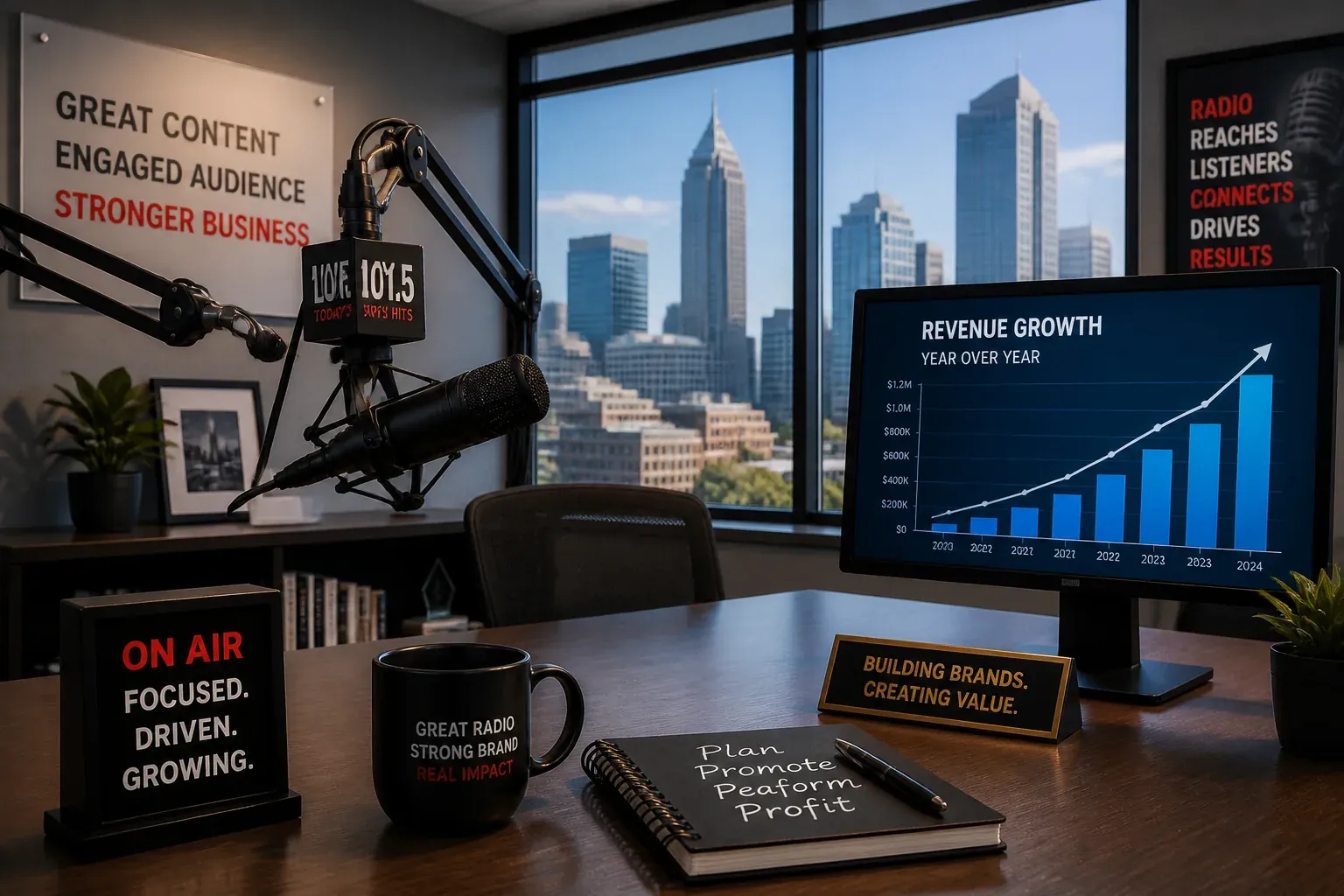

Every radio station has two engines: programming and sales. And at too many stations, they're running on separate tracks.
Programming builds the audience. Sales monetizes it. Simple in theory. But in practice, these departments operate like parallel universes — the PD chasing ratings while the sales manager chases revenue, rarely speaking the same language, rarely sitting in the same room.
Here's the problem with that approach: it leaves money on the table. A lot of money.
The stations winning in 2026 — the ones growing both audience and revenue — have figured out something that should be obvious but somehow isn't: content quality and advertising revenue aren't just related. They're the same thing. Every programming decision is a revenue decision, and every sales conversation should be informed by what's happening on-air.
I've spent years watching this gap between programming and sales cost stations real dollars. Let me show you exactly how to close it.
The revenue case for great content
Let's start with the numbers, because they tell a clear story.
Radio reaches 92% of American adults every month. Nielsen's data consistently ranks it as one of the highest-ROI advertising mediums — $12 return for every $1 spent in CPG categories. Digital revenue from radio broadcasters hit $2.3 billion in 2025, growing 8.3% annually and now representing 24.4% of total industry revenue.
Those are impressive topline figures. But here's where it gets interesting for programming teams: the stations in the top 5% for digital revenue generate three to four times more than similar-sized competitors. And the differentiator isn't better technology or bigger sales teams. It's better content that creates more engaged audiences — which is what a documented radio station content strategy actually delivers when programming and sales execute it together.
Think about what actually makes a listener valuable to an advertiser. It isn't just reach — it's attention. A listener who tunes in for seven minutes during a commute is worth a fraction of one who stays locked in for 45 minutes because the morning show is that good. The first listener might hear one spot. The second hears eight, and they hear them in the context of content they're actively engaged with.
Time spent listening isn't just a programming metric. It's the fundamental revenue multiplier. And it's entirely driven by content quality.
If you want the tactical playbook for boosting TSL, our guide on how to increase time spent listening lays out twelve proven retention strategies.
Why the programming-sales wall exists
Before we fix the problem, it helps to understand why it persists.
Radio's organizational structure is a relic of a simpler era. Programming was responsible for ratings. Sales was responsible for revenue. The general manager sat between them and hoped the numbers aligned. That model worked when the business was straightforward: build audience, sell spots against audience.
But the modern radio business is far more complex. Digital revenue streams, branded content, podcast extensions, social engagement, live events — every one of these straddles the programming-sales divide. And the stations that still treat them as separate concerns are watching revenue opportunities fall into the gap between departments.
The cultural divide runs deep. Programming teams often view sales requests as compromises — "they want us to do a live remote that's going to sound terrible." Sales teams view programming as disconnected from business reality — "they don't understand what pays their salary." Both perspectives contain a grain of truth and a mountain of missed opportunity.
Radio World's analysis hit on something important for 2026: the average listener attention span is seven seconds. If your content doesn't capture attention immediately, listeners leave for Spotify or silence. That seven-second window is a programming challenge and a sales challenge — because every listener who leaves is ad inventory that evaporates.
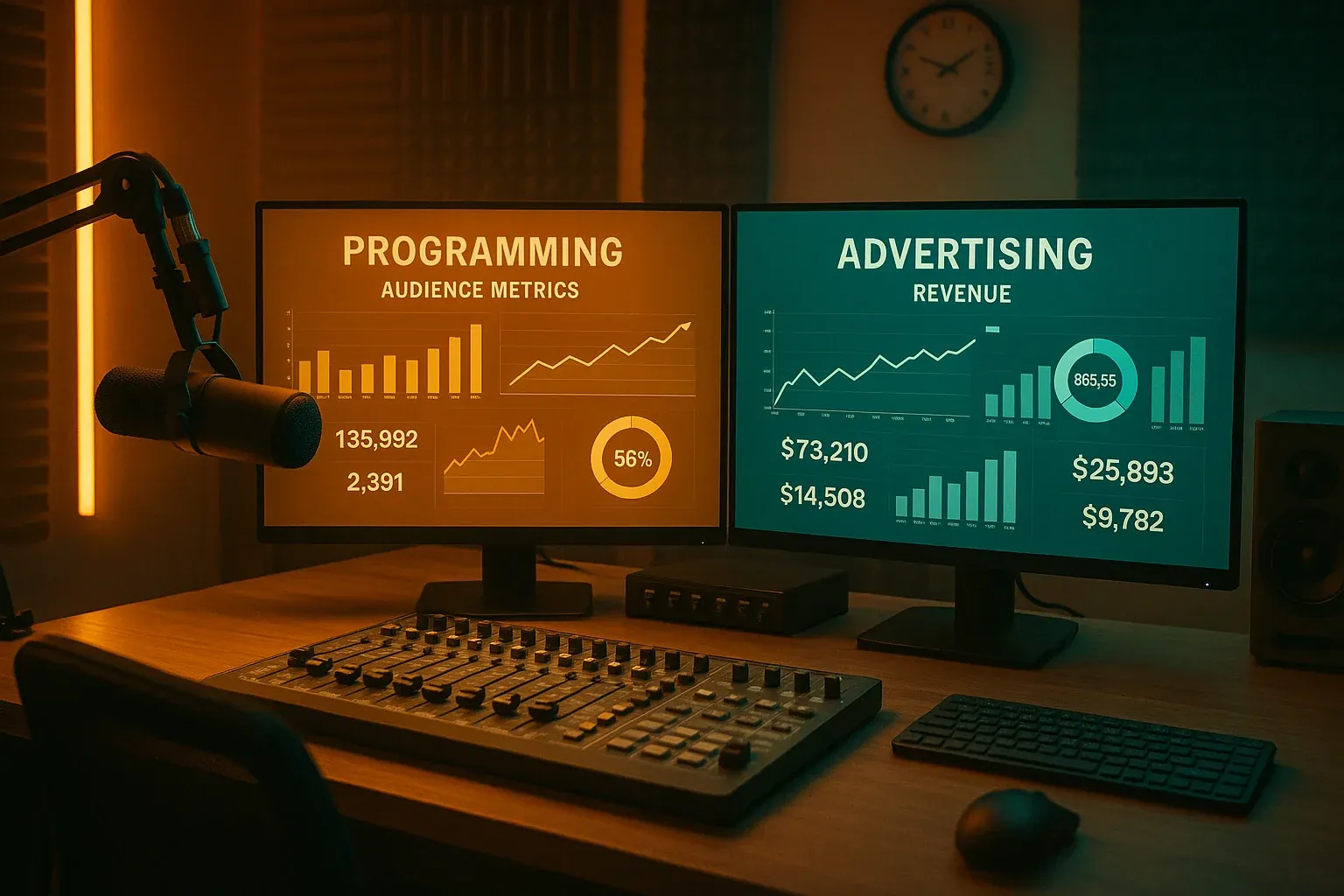
How content quality directly impacts ad revenue
Let me connect the dots explicitly, because this is where most industry analysis stops short.
Content quality drives time spent listening. The longer listeners stay tuned, the more ad impressions they generate. This is basic, but it's the foundation everything else builds on. A station averaging 15 minutes of TSL per occasion versus 30 minutes is literally generating half the available inventory from the same cume audience. If you want the specific content levers that lift TSL, our guide to 10 content-driven strategies to increase radio ratings covers each one in detail.
Engaged listeners trust their hosts. Host-read ads deliver double the lift compared to prerecorded spots. Double. That premium only exists because listeners have a relationship with the talent — a relationship built entirely through content. Poor content erodes trust. Great content builds it. And advertiser results follow directly.
Strong content creates sellable moments. When a morning show segment goes viral on social, that's not just a programming win. It's proof of audience engagement that a sales rep can take into their next client meeting. "Our morning show's Valentine's Day segment got 47,000 shares — here's what your brand could do in that space."
Content differentiation prevents commoditization. If your station sounds like every other station in the market, you're selling a commodity. And commodities compete on price. Distinctive content — unique voices, exclusive segments, local authority — creates a differentiated product that commands premium rates.
Sixty-three percent of consumers react more positively to localized advertising, according to BIA Advisory Services. That stat isn't just about targeting. It's about context. An advertiser's message placed alongside locally relevant, engaging content performs better than the same message floating in a generic programming block. Content quality literally increases the value of every spot in your inventory.
For the data-driven approach to proving this to advertisers, our breakdown of radio advertising ROI provides the full attribution framework.
The content-revenue flywheel
The stations that get this right aren't just aligning two departments. They're building a flywheel where content and revenue reinforce each other.
Here's how it works:
Great content → Larger, more engaged audience → Higher TSL → More valuable inventory → Higher CPMs → More revenue → Reinvestment in content → Even better content.
That's the virtuous cycle. And it works in reverse too. Cut content investment, and the flywheel starts spinning backward.
Consider what Townsquare Media is doing in 2026. Their hybrid revenue strategy explicitly connects content investment to digital revenue growth. They're not treating programming as a cost center — they're treating it as the primary driver of their fastest-growing revenue stream. That's not a coincidence. It's a strategy.
The key insight is that content investment has compounding returns. A great morning show doesn't just drive ratings in the current book. It builds listener habits, creates social media assets, generates podcast downloads, and produces sellable content extensions — all of which feed revenue over months and years.
Compare that to the cost-cutting approach: replace local talent with syndication, reduce show prep time, eliminate the budget for original content. In the short term, expenses drop. In the medium term, TSL declines. In the long term, your audience erodes and your inventory is worth less. You've traded a compounding asset for a one-time savings.
Breaking down the wall: a practical framework
Enough theory. Here's what actually works at stations that have aligned programming and sales around revenue.
1. Shared metrics, shared goals
Programming and sales should be measured on overlapping KPIs. Not identical — but overlapping.
| Programming Metric | Revenue Impact |
|---|---|
| Time Spent Listening (TSL) | More impressions per listener = more inventory |
| AQH (Average Quarter Hour) | Direct driver of CPM and rate card value |
| Digital engagement (social, web) | Proof of audience quality for advertisers |
| Podcast downloads | Incremental ad inventory beyond broadcast |
| Content shares/virality | Social proof for brand partnerships |
When the PD understands how TSL affects the rate card, and the sales manager understands how over-commercialization kills TSL, they start making decisions with the same outcome in mind.
Our deep dive on measuring show performance covers exactly which metrics predict revenue impact.
2. Programming-sales huddles
The highest-performing stations I've seen hold weekly cross-department meetings. Not quarterly strategy sessions. Weekly standups — fifteen minutes, max.
Sales shares what advertisers are asking for. Programming shares what's resonating with audiences. Together, they identify opportunities: a trending local topic that could anchor a sponsored segment. A new advertiser in the market whose target demo aligns with afternoon drive. An upcoming event that could be both a content moment and a revenue opportunity.
These conversations don't happen organically. They have to be structured. But once they become habit, the revenue opportunities start compounding.
3. Content-driven selling
This is the game-changer. Instead of selling spots against a rate card, train your sales team to sell content adjacency and content integration.
"We have a two-minute segment every morning at 7:45 called 'What's for Dinner Tonight.' It reaches 23,000 listeners who are actively engaged with local food content. Your restaurant could own that segment for $X per month."
That's a fundamentally different pitch than "we have a :30 spot available in morning drive." It's harder to compare to a digital ad. It's harder to commoditize. And it commands a premium because the advertiser isn't buying a time slot — they're buying association with content the audience actually cares about.
The stations that sell this way consistently out-earn stations that sell traditional spot packages. And it all starts with creating content worth selling against.
4. Content repurposing for revenue
Every piece of great on-air content should generate multiple revenue opportunities.
A compelling morning show interview becomes a podcast episode with pre-roll ads. The best segment clips become social media posts with sponsored branding. Show notes become newsletter content with affiliate links. Live events extend the brand into ticketed experiences.
This isn't about creating more work. It's about extracting more value from work you're already doing. The 80/20 rule for radio content applies perfectly here: focus your talent's energy on the 20% of creative work that drives 80% of the value, then systematize the distribution.
AI tools are accelerating this dramatically. What used to require a full-time digital producer — clipping audio, writing social posts, formatting newsletters — can now be automated, freeing talent to focus on the creative work that actually differentiates the product.

The role of AI in the content-revenue connection
I'd be remiss not to mention what's happening with AI in this space, because it's directly relevant to the content-revenue equation.
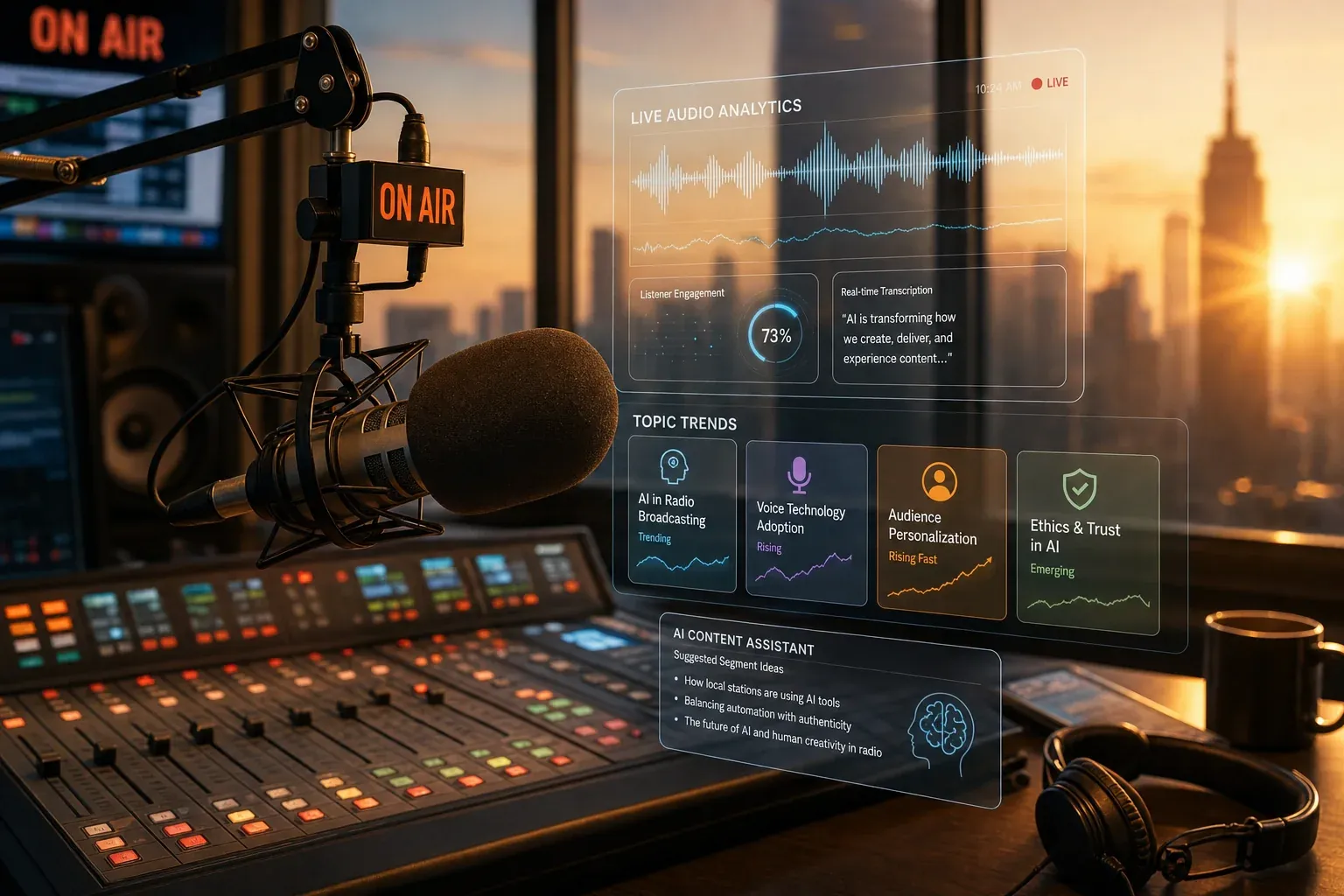
The NAB Show 2026 is centering AI as a major programming theme, and for good reason. AI isn't replacing content creators — it's eliminating the gap between content creation and content monetization.
Here's what that looks like in practice. A morning show preps for three hours and produces four hours of live content. Without AI, maybe 10% of that content gets repurposed for digital platforms. With AI-assisted tools, you can capture, clip, transcribe, format, and distribute nearly all of it — automatically.
That means every great on-air moment becomes a digital asset. Every digital asset creates an advertising opportunity. The content-revenue flywheel spins faster because the friction between creation and distribution drops to near zero.
The stations that figure this out first will have a structural advantage: the same talent investment producing three to five times more monetizable content across broadcast, digital, social, and podcast channels. That's not an incremental improvement — it's a step change in the economics of radio content.
For more on how technology is reshaping the industry, our analysis of radio industry trends in 2026 covers the full landscape.
What this means for your station
The programming-sales divide isn't just an organizational inefficiency. It's a revenue leak. Every day these departments operate in silos is a day you're leaving money on the table.
The fix isn't complicated, but it requires intention:
- Treat content as a revenue asset, not a cost center. Every programming investment should have a line-of-sight to revenue impact.
- Break down the departmental wall. Weekly huddles between programming and sales create the cross-pollination that drives integrated revenue.
- Train sellers to sell content, not just spots. Content adjacency and integration sell at a premium over commodity spot buys.
- Measure what matters across both departments. Shared KPIs create shared incentives. TSL isn't just a programming stat — it's the engine that drives your rate card.
- Repurpose everything. Every great on-air moment should generate digital, social, podcast, and newsletter revenue opportunities.
- Invest in tools that close the gap. AI-powered content systems turn the content-revenue flywheel from a nice theory into an operational reality.
The stations growing revenue in 2026 aren't the ones with the best sales teams or the best programming teams. They're the ones where those two teams operate as one engine, with content quality as the fuel that powers everything.
Radio's business model is evolving. Digital revenue is growing at 9.5% annually while core broadcast revenue declines. The winners will be the stations that recognize content isn't just what fills the time between spots — it's the reason the spots are worth anything at all.
That's the programming-sales connection. And the stations that master it have a moat that no competitor can easily replicate.
Frequently asked questions
How does content quality affect radio advertising revenue?
Content quality directly drives time spent listening (TSL), which determines how many ad impressions each listener generates. Higher TSL means more available inventory, stronger listener-host relationships that boost ad effectiveness, and a differentiated product that commands premium CPMs. Stations with top-tier content generate three to four times more revenue than similar-sized competitors.
What is the programming-sales connection in radio?
The programming-sales connection is the recognition that content quality and advertising revenue are interdependent — not separate departmental concerns. Great programming builds engaged audiences that advertisers want to reach, while sales insights about advertiser needs can inform content strategies. Stations that align these departments around shared metrics consistently outperform those that operate them in silos.
How can radio stations increase content revenue?
Radio stations can increase content revenue by treating content as a revenue asset (not a cost center), implementing shared KPIs between programming and sales, training sellers to sell content adjacency rather than commodity spots, repurposing on-air content across digital platforms, and investing in AI tools that automate content distribution. The key is building a flywheel where better content drives more revenue, which funds better content.
Want a personalized walkthrough?
Schedule a 15-minute demo with our team.