
Time Spent Listening is the metric that separates healthy stations from struggling ones. Cume gets you in the building. TSL keeps the lights on. And right now, TSL is under attack from every direction — podcasts, streaming, smart speakers, and the simple fact that listeners have more options than ever.
Edison Research data tells the story: radio still commands 44% of all audio listening in the U.S., but that number drops to 27% for listeners under 35. The audience isn't disappearing. They're just spending less time with you per occasion. And that's a TSL problem.
The good news? TSL is fixable. It's a programming problem with programming solutions. Here are 12 strategies that actually work — not vague advice, but specific tactics you can implement this week.
What Is Time Spent Listening (and Why It Matters More Than Ever)
Time Spent Listening measures how long your average listener stays tuned to your station during a single listening occasion. It's one of the core metrics Nielsen Audio uses to calculate ratings, and it directly affects your Average Quarter-Hour (AQH) numbers — which is what advertisers actually buy.
Here's the math that matters: if you can add just one additional listening occasion per day, ratings can jump by up to 50%. Add an extra day per week of listening and you could potentially double your numbers. Small TSL improvements compound into significant ratings gains.
The average radio listening occasion today is roughly ten minutes. That's not much. But it means the upside is enormous — every additional minute you keep someone tuned in is a disproportionate win.
So what drives listeners away? Edison Research identified five primary tune-out triggers:
- Desire for variety (35% of 18-34 listeners) — "I want to find something different"
- Music preference (28%) — hearing songs they don't like
- Commercial breaks (24% of 35-54 listeners) — the ad load problem
- Seeking specific content (64%) — wanting talk vs. music or vice versa
- External factors (64%) — arriving at a destination, signal loss
You can't control signal strength or when someone pulls into their driveway. But you can control everything else. Let's get into it.
12 Strategies to Increase Time Spent Listening
1. Master Forward Promotion
Forward promotion — teasing what's coming next — is the single most underused TSL tool in radio. Television networks spend hundreds of thousands of dollars on people whose only job is writing promos. Radio talent often throw together a tease in the last ten seconds of a break. That's money on the table.
Effective forward promotion is specific and creates curiosity: "Before 10 o'clock, I've got the story about what happened at [local venue] last night that has everyone talking" beats "Great stuff coming up" every time.
The formula: what + when + curiosity gap. Tell them what's coming, when it's coming, and give them a reason to wonder about the outcome. Great teases are a skill — but they're also a habit. Build them into every break and you'll see the difference in your quarter-hours.
2. Create Appointment Content
Smart programmers schedule specific features at exact times: 7:20, 1:20, 4:20. Clock precision. This creates listening appointments — predictable moments that listeners build into their routines.
The key is consistency. If your "Impossible Question" airs at 7:40 every morning, listeners who enjoy it will tune in at 7:35. That's a habit. Habits compound. Over time, a listener who tunes in for one feature stays for two. Then three. Then they're listening through entire dayparts.
What works as appointment content: daily trivia, confession segments, hot takes, reaction bits, trending stories with a twist. What doesn't work: generic features that could air on any station in any market. The content needs to be specific enough that listeners feel like they'd miss something if they weren't there.
3. Optimize Your Music Flow
Research from Powergold's scheduling analysis suggests a useful benchmark: the 10-minute test. Take any random 10-minute window of your music log. Does it flow? Is there variety in tempo and energy? Could a listener reasonably enjoy all ten minutes without reaching for the dial?
Music tune-out is the second most common reason listeners leave. But it's rarely about one bad song — it's about momentum. Three mid-tempo songs in a row. Two ballads back-to-back. A jarring tempo shift from a high-energy track to a slow one with no transition.
Program your music scheduling software to avoid tempo clusters. Build in strategic variety that keeps the energy moving without giving listeners whiplash. And audit your rotations regularly — what tested well six months ago may be burning out now.
4. Respect the 4-Minute Attention Cliff
Audience research out of Denmark found something specific: listener attention drifts at exactly four minutes into a segment or topic. Not roughly. Not approximately. Four minutes.
This has massive implications for talk breaks. If your morning show is running seven-minute talk segments, you're losing people halfway through — every time. The fix isn't to stop doing long-form content. It's to build in "reset moments" at the three-to-four-minute mark: a change of voice, a new angle, a listener call, a drop or sound effect.
Think of it like chapters, not monologues. A four-minute talk break can actually run six minutes if you shift gears midway. The listener's attention resets with each new element, buying you more time before the next drift point.
For music stations, the principle applies to stop sets too. Front-load your best content. If listeners are going to tune out during a break, make sure they've already heard your strongest tease, your best bit, or your most compelling reason to stay.
5. Rethink Your Commercial Strategy
Commercials are the third-biggest tune-out trigger — and the one stations feel least empowered to fix. You need ad revenue. But Edison Research makes a crucial distinction: the problem isn't commercials existing. It's how they're presented.
The recommendation: shift from "playing commercials" to "getting people to hear commercials." That means:
- Reduce perceived load. Shorter breaks feel shorter even when total ad minutes stay the same. Four 3-minute breaks feel lighter than three 4-minute breaks.
- Nail the re-entry. The first thing listeners hear coming out of a break matters enormously. Open with your strongest content — a teased payoff, a hit song, a compelling hook. If you bury the good stuff three minutes after the break, listeners who surfed away won't be there to hear it.
- Integrate where possible. Sponsored content segments, live reads with personality, and branded features keep advertising from feeling like an interruption. When a host genuinely endorses something, it sounds like content, not a commercial.
6. Build More Listening Occasions
Here's a counterintuitive truth about TSL: sometimes the best strategy isn't keeping listeners tuned in longer per visit — it's getting them to visit more often.
With average listening occasions at roughly ten minutes, the math favors frequency over duration. Three ten-minute occasions beats one twenty-minute session in the ratings. So how do you create more occasions?
Daypart teasing. Your morning show should tease what's happening in afternoon drive. Your afternoon show should promote tomorrow morning's features. Give listeners reasons to come back.
Digital touchpoints. Push notifications, social media posts, and email alerts that reference specific on-air content drive tune-in. "Hear what [host] said about [topic] — live right now" turns a social media follower into a listening occasion.
Event programming. Countdowns, live broadcasts, breaking format moments — these create occasions that wouldn't otherwise exist. Use them strategically, not constantly.
7. Leverage Contests as TSL Tools
Contests aren't just promotional fluff. Designed correctly, they're precision TSL instruments.
The most effective contest format for TSL is listen-to-win: a specific cue triggers the call-in. "When you hear the sound effect, be caller number 9." This requires sustained listening. Unlike text-to-win (which requires no listening at all), cue-to-call mechanics directly reward tune-in time.
Schedule your contest cues at strategic times — right after commercial breaks, during traditionally low-TSL dayparts, or during drive times when you want maximum AQH. And always, always tease the next opportunity: "Your next chance to win is coming up after 2 o'clock."
The contest doesn't have to be expensive. A $25 gift card with a well-structured listen-to-win mechanic will generate more TSL than a $500 prize given away via text.
8. Personalize Content to Your Format
A Country station and a CHR station serve fundamentally different listeners with different content expectations. This sounds obvious, but you'd be surprised how much programming advice — and how much content — treats all formats the same.
TSL strategies that work in Talk radio (long-form storytelling, deep dives, debate) would be catastrophic in Hot AC (where listeners want quick hits and music). Conversely, the tight-and-bright music format approach doesn't serve News/Talk audiences who tune in specifically for extended discussion.
Your content should be format-specific from the ground up — not generic material awkwardly adapted. When listeners hear content that feels like it was made for them and their format, they stay. When it feels like one-size-fits-all, they don't.
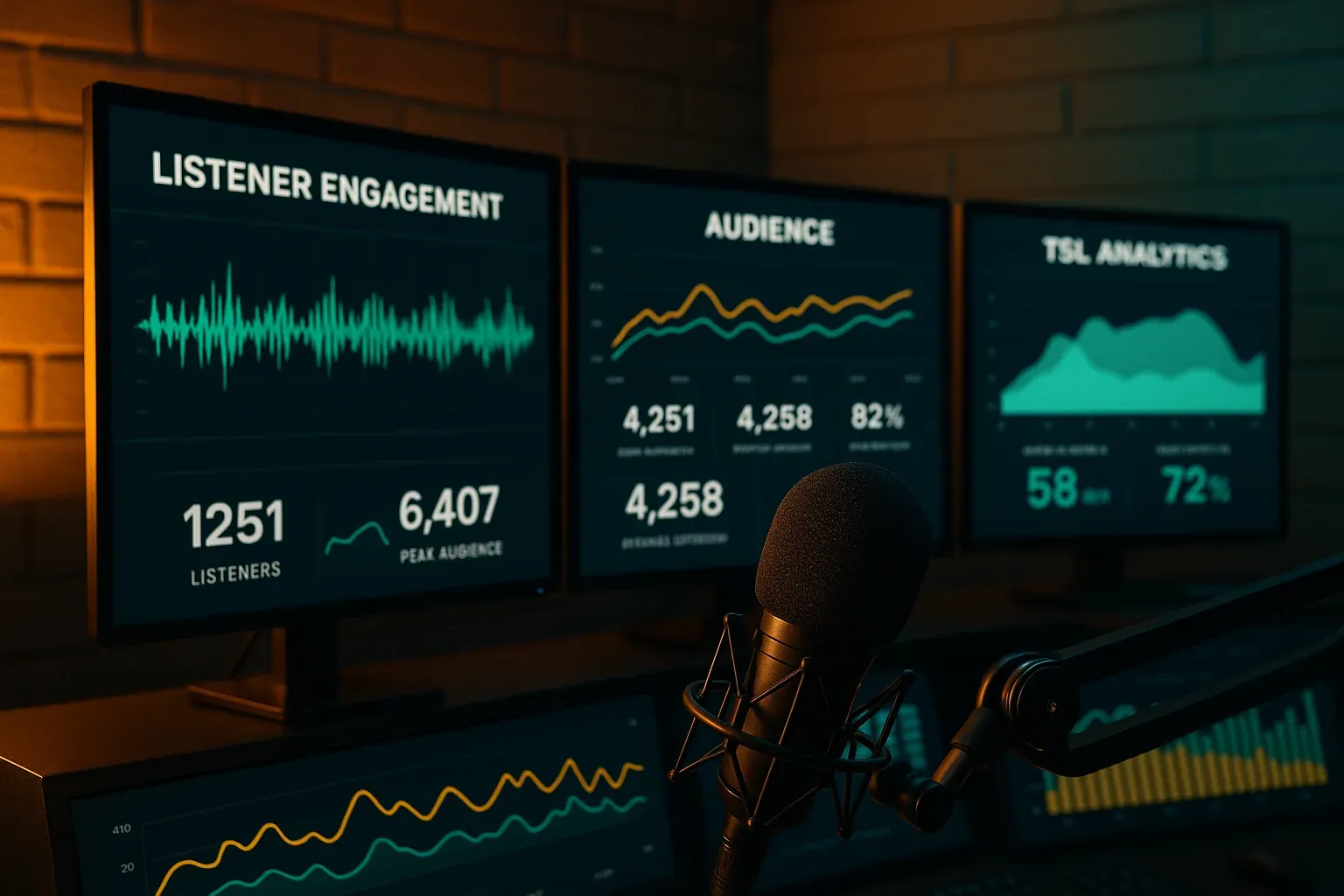
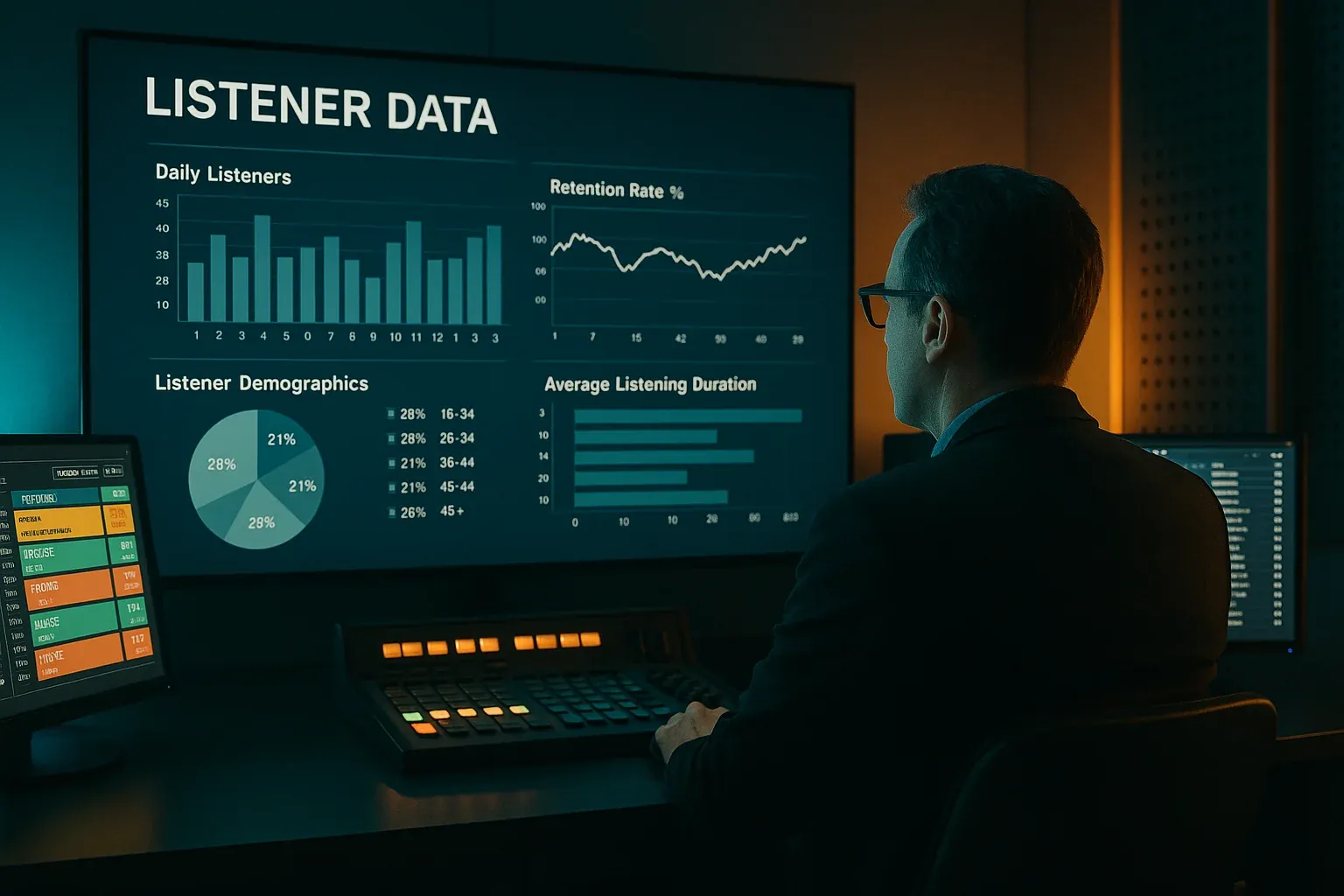
9. Use Data to Find Your Drop-Off Points
If you have access to PPM data or streaming analytics, you have a TSL roadmap hiding in plain sight. Look for patterns:
- When do listeners tune out? Is there a consistent drop-off at a specific time? That's probably a content or commercial placement issue.
- What segments keep people? Identify your highest-retention breaks and figure out what they have in common.
- Where do listeners come from? If people are switching to you from a competitor at a specific time, something you're doing is working. Double down.
Stations without PPM can still use streaming data, app analytics, and even social media engagement patterns as proxies. The point is to stop programming by gut and start programming by evidence. Test a change, measure the result, iterate.
10. Invest in Fresh Content Every Single Day
This is the strategy that underpins all the others: stale content kills TSL.
When your prep hasn't changed since yesterday — when the "trending" stories are 12 hours old, when the same trivia question has been floating around the internet for a week — listeners feel it. They may not articulate why the show feels flat, but they reach for the preset button.
Fresh content doesn't mean more content. It means current content. Stories that happened this morning. Angles that nobody else has aired yet. Material that's genuinely new to your listener at the time they hear it.
The stations that consistently win TSL battles are the ones that invest in continuously updated show prep — not a once-a-day email blast, but a living stream of curated material that refreshes throughout the day. When your content is genuinely fresh, your energy changes. Your delivery improves. Your listeners stay.
11. Build Community, Not Just Audience
The shift from "audience" to "community" is one of the most powerful retention strategies available — and it costs almost nothing.
Radio's competitive advantage over streaming and podcasts is its ability to be local, live, and connected. When listeners feel like they're part of something — when they hear their name, their neighborhood, their team — they don't just listen. They belong. And people don't leave communities as easily as they change stations.
Tactical community builders:
- Listener stories on air. Feature real listeners by name. "Sarah from [neighborhood] texted in about this..."
- Two-way social engagement. Don't just broadcast on social — respond, react, feature.
- Local partnerships. Visible presence at community events makes the station feel real.
- Recurring community segments. Weekly local spotlights, small business features, neighborhood shoutouts.
The stations that grew audience in 2025-2026 consistently did it by treating listeners as community members, not statistics.
12. Integrate Digital and On-Air Experiences
Your listeners don't live in one channel. They're on your stream, your app, your social media, and your over-the-air signal — sometimes all in the same day. TSL strategy in 2026 means connecting these touchpoints so each one drives the others.
Specific integrations that boost TSL:
- App push notifications timed to your strongest on-air content: "The confession segment is starting now"
- Social media clips from that morning's show, with a CTA to tune in for more
- Smart speaker skills that make your station the default command: "Alexa, play [station name]"
- Website content that references on-air segments and drives tune-in for followups
Each digital touchpoint is a potential listening occasion. And as Edison's research shows, radio listening for ages 55+ (your highest-TSL demo at 63% audio share) is strong — but the 27% figure for 13-34 means the growth opportunity is in digital-first listeners who need a reason to tune in to the broadcast.
Key Takeaways
- Forward promote everything — tease what's next using the what + when + curiosity formula
- Create appointment content — schedule features at exact times to build listening habits
- Respect the 4-minute cliff — reset listener attention before they drift
- Fix the break re-entry — what listeners hear coming out of commercials determines if they stayed
- Prioritize occasions over duration — three short tune-ins beats one long one in the ratings
- Use listen-to-win contests — cue-to-call mechanics directly reward tune-in time
- Match content to format — one-size-fits-all programming is a TSL killer
- Invest in fresh content — stale prep is the invisible TSL drain that compounds daily
Frequently Asked Questions
What is Time Spent Listening (TSL) in radio?
Time Spent Listening measures how long the average listener stays tuned to a radio station during a single listening occasion. It's a core Nielsen Audio metric that directly affects Average Quarter-Hour (AQH) ratings and determines advertising revenue. The average radio listening occasion is roughly ten minutes.
What improves radio TSL?
The most effective TSL improvements come from forward promotion (teasing upcoming content), creating appointment features at specific times, keeping talk breaks under four minutes, investing in fresh daily content, and building more listening occasions through digital touchpoints and strategic contests.
Why do listeners tune out of a radio station?
According to Edison Research, the top tune-out triggers are desire for variety (35% of 18-34 listeners), disliking the current song (28%), commercial breaks (24% of 35-54 listeners), seeking specific content types (64%), and external factors like arriving at a destination (64%). Stations can address most of these through programming strategy.
How long does the average person listen to radio?
The average listening occasion lasts about ten minutes, though this varies significantly by age and format. Listeners aged 55+ spend considerably more time with radio (63% of audio time), while listeners 13-34 average only 27% of their audio time with broadcast radio. Talk and news formats typically generate longer occasions than music formats.
TSL is a solvable problem. Every strategy on this list is something you can start implementing today — and most of them are free. The stations that win the TSL battle in 2026 won't be the ones with the biggest budgets. They'll be the ones with the freshest content, the smartest programming, and the strongest connection to their listeners.
Start with one strategy. Measure the result. Then stack the next one on top. That's how you build a station people don't want to leave.
Ready to simplify your show prep?
Try RCP free for 7 days. $0 until day 8