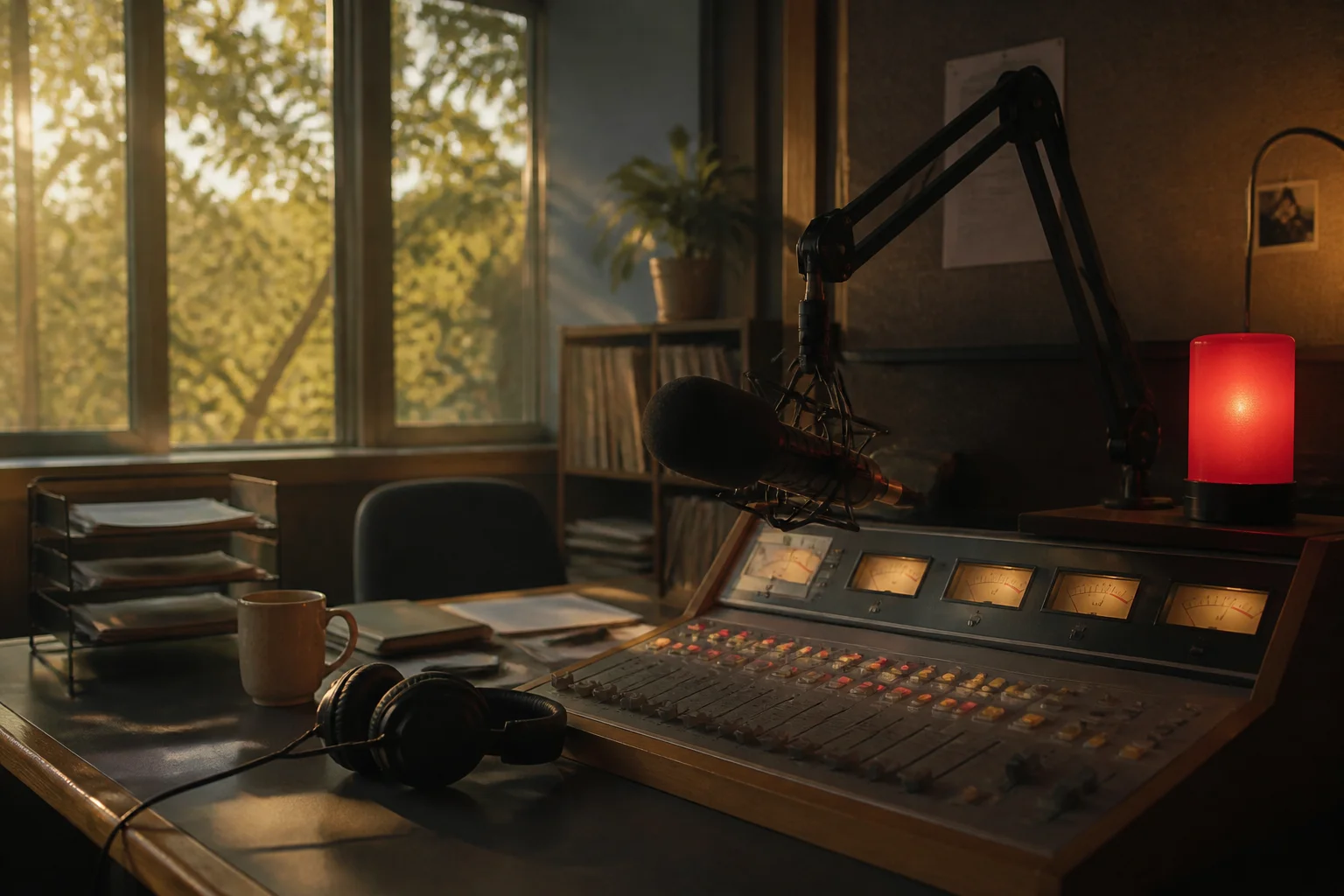
Voice tracking runs modern radio. That's not controversial — it's math. Fewer staff, more stations, tighter budgets. The talent who figured out voice tracking years ago aren't going anywhere. But here's the thing stations tell us constantly: most voice-tracked shows sound voice-tracked. And that's the problem.
The energy drops. The content goes stale. Time references get vague. Listeners can't always pinpoint why a show feels off, but they feel it. And they tune out.
It doesn't have to be that way. The best voice trackers in the business sound indistinguishable from live. Some are tracking five, six, seven stations and nobody can tell. Their secret isn't talent alone — it's technique, preparation, and fresh content.
Here's everything that works.

What Is Voice Tracking (and Why It Gets a Bad Rap)
Voice tracking means pre-recording your on-air segments — your talk breaks, intros, outros, and transitions — then having automation software stitch them together with music, spots, and other elements. The result should sound like a live show. When done right, even industry pros can't tell the difference.
So why does it get a bad rap?
Because lazy voice tracking is obvious. Generic content that could apply to any day. Zero energy shifts between dayparts. Breaks that feel disconnected from the music around them. Radio professionals report that the biggest complaint from program directors isn't voice tracking itself — it's voice tracking that sounds like the talent phoned it in.
The real problem was never the technology. It's the approach.
According to the Nielsen Audio data that program directors track, listeners don't actually care how their favorite shows are produced. They care whether the show connects. A voice-tracked show with great content, real energy, and timely references will outperform a live show with a tired host reading headlines from eight hours ago. Every time.
The question isn't whether to voice track. It's how to do it so well that nobody notices — or cares.
The Golden Rule: Track Like You're Live
Before we get into specific tips, here's the mindset that separates great voice trackers from mediocre ones: treat every tracked break like a live break.
That sounds obvious, but watch yourself next time you sit down to track. Are you rushing through breaks to get done faster? Are you re-recording every small stumble until it's "perfect"? Are you using the same material you just tracked for another station ten minutes ago?
All of those habits scream pre-recorded.
The fix starts with three principles:
Track close to airtime. Record your afternoon show that morning, not three days early. The closer you track to when it airs, the more current and connected you'll sound. Your frame of mind matters — tracking a Tuesday afternoon show on Saturday morning puts you in a completely different headspace.
Talk to one person. Use "I" and "you." Never "we" or "us" or "all of you out there." You're having a conversation with one listener in their car, at their desk, in their kitchen. That intimacy is what makes radio work — and it's the first thing that disappears when talent starts "performing" into a mic instead of talking.
Leave mistakes in. This one's counterintuitive, but it works. A small stumble, a laugh at yourself, a restart — those are exactly what make live radio feel live. When every syllable is polished and perfect, it sounds like a recording. Because it is.
8 Voice Tracking Tips That Actually Work
These tips come from what we hear working with radio professionals across every format. They're practical, they're specific, and they work whether you're tracking one station or seven.
1. Reference Time Naturally
Don't say "It's 2:15." You probably tracked this at 9 AM and you'll sound fake. Instead, use relative time: "Coming up in the next few minutes..." or "Before 3 o'clock, I've got..." or "Just a couple more songs until the top of the hour."
These references anchor your show in time without committing to a specific minute that might be wrong by the time automation airs your break.
Pro move: if you know a song is about three-and-a-half minutes long, you can safely say "in about four minutes" before it plays. That kind of specificity sounds incredibly live without requiring you to be there.
2. Stay Topical — Talk About What's Happening Now
If there's a local event happening during your shift, mention it. "That big game kicks off in about an hour" sounds incredibly live — even if you recorded it that morning. Check the weather, local events calendars, and trending topics right before your tracking session.
The goal isn't to predict the future. It's to reference things your listeners will also be aware of during your show's airtime. This is where solid morning show prep habits pay off — the same research that feeds your live show feeds better voice tracks.
3. Vary Your Energy by Daypart
Morning voice tracks need different energy than afternoon or evening. Stations tell us this is one of the most common mistakes: talent tracks everything at the same energy level because they're recording it all in one sitting.
If you're tracking morning, afternoon, and evening in the same session, take breaks between them. Stand up. Walk around. Reset your energy. Morning needs warmth and momentum. Afternoon needs conversational ease. Evenings need a slower, more intimate feel.
4. Keep Breaks Short and Punchy
Under 30 seconds for most music breaks. That's it.
Long voice tracks are the fastest way to expose yourself as pre-recorded. When you're live, you naturally keep breaks tight because you're responding to the flow of the show. Tracked breaks tend to ramble because there's no clock pressure and no listener response pulling you forward.
Say one thing well. Get to the music. Your PD will thank you.
5. Prep Before You Track
Don't wing it. This is identical to the prep advice for live shows — actually, it's even more important. When you're live, you can recover from a thin prep with improvisation and caller interaction. When you're tracking, what you prepared is all you've got.
For each break, know:
- Your topic or hook (one sentence)
- Your angle or opinion
- Your out (how you're getting back to music)
That's three things. Not a script. Three bullet points per break, and you're set.
6. Use Fresh Content Every Session
This is where most voice trackers quietly fall apart. You're tracking five stations. By station three, you're recycling the same stories, the same takes, the same angles. And listeners who happen to hear you on multiple stations — or who just hear the same energy pattern day after day — notice.
The biggest enemy of great voice tracking is repetition. When your show prep is stale, your tracks are stale. Fresh content, updated every few hours with unique angles and different story options, transforms your tracking sessions from a grind into something that actually stays interesting — for you and your listeners.

7. Match the Station's Format and Vibe
You wouldn't use the same vocal tone on a Country station that you'd use on a CHR. That seems obvious, but when you're batching stations, format bleed is real. Your Rock station breaks shouldn't have the same energy as your AC breaks.
Before each station's tracking session, listen to a few minutes of the station's music log. Get into the format's headspace. What's the listener doing right now? What do they care about? A Country afternoon audience has different vibes than an Alternative evening audience, and your tracking should reflect that.
8. Invest in Your Recording Environment
If you're tracking from home — and many of you are — your room matters. A treated space with a decent condenser mic, proper gain levels, and minimal background noise is the baseline. Listeners may not consciously notice good audio quality, but they definitely notice bad audio quality. It pulls them right out of the illusion.
You don't need a $5,000 setup. Acoustic panels or heavy blankets on the walls behind you, a pop filter, and consistent mic distance get you 90% there. The production team handles the rest with processing.
One thing that catches a lot of home trackers: room reflections. Record a test track, listen back on headphones, and pay attention to the "room sound" behind your voice. If you hear a hollow or boxy quality, your walls are reflecting too much. Move the mic closer to your mouth, angle away from hard surfaces, and add absorption behind and beside you. Small changes here make a noticeable difference.
The Multi-Station Workflow: Tracking Without Burnout
Tracking three to seven stations is a different beast than tracking one. The volume of breaks is higher, the risk of repetition is bigger, and burnout is a real threat. Radio professionals who track multiple stations successfully share a few common patterns.
Batch by format, not by station. If you track two Country stations and three CHR stations, do all the Country first, then reset and do CHR. Switching formats mid-session creates awkward tonal shifts.
Differentiate your content per station. Same story, different angle. If you're talking about a trending topic, find a different way into it for each station. This is where having a deep bench of content options — multiple angles on the same story, different reaction prompts, format-specific takes — makes or breaks your workflow.
Schedule breaks between batches. Even five minutes. Get water. Check your phone. Come back fresh. The difference between a voice tracker who takes breaks and one who powers through is audible.
Don't skip your station's imaging. Make sure you have current promo copy, contest info, and positioning statements for every station you track. Nothing kills the illusion faster than promoting a contest that ended last week or using a slogan the station dropped two months ago. Keep a shared doc or note with each station's current messaging and update it weekly.
And be honest with yourself: if you're burning out on content, the answer isn't working harder. It's working with better tools and fresher material.
Your Content Is the Secret Weapon
Here's something nobody talks about in voice tracking guides: the content you bring into the session determines 80% of how you'll sound.
Walk in with stale headlines from last night's prep blast, and you'll sound flat — because you're bored. Walk in with fresh angles, unique takes, and stories you're genuinely interested in, and your energy transforms. It's not discipline. It's material.
The best voice trackers we work with have figured this out. They don't rely on a single content source. They use multiple streams of curated, up-to-date material so that every station gets something different, every break has a fresh angle, and they never hit that wall where they're saying the same thing for the fourth time that morning.
That's the flip: spend 80% of your time creating and performing and only 20% searching for what to say. Most talent have it backwards — and it's killing their tracks.
Think about what changes when your prep is handled. You sit down to track and everything's already there: today's trending stories with multiple angles, format-specific content that actually fits your audience, and fresh material you haven't seen on every other prep service. Your energy is different. Your pacing improves. Your breaks sound like you're talking about something you actually care about — because you are.
That's the real voice tracking secret. It was never about microphone technique or studio acoustics. It's about walking into every session with content that excites you. The right show prep system makes that automatic.

Key Takeaways
- Track close to airtime — your headspace and content freshness both depend on it
- Talk to one listener — "I" and "you," never "we" and "all of you"
- Leave in small mistakes — perfection sounds fake on radio
- Use relative time references — "in the next few minutes" beats "it's 2:15"
- Stay topical — mention events, weather, and what's happening during your airtime
- Match energy to daypart — take breaks between morning, afternoon, and evening sessions
- Keep breaks under 30 seconds — say one thing well and get to the music
- Never recycle content across stations — fresh prep eliminates your biggest enemy: repetition
Voice tracking isn't going anywhere. But lazy voice tracking shouldn't survive either. The talent who sound live — who make listeners forget they're hearing a recording — are the ones who treat every tracked break with the same intention and preparation as a live show.
The difference between good and great? It's not talent. It's technique. And now you have it.
Frequently Asked Questions
What is voice tracking in radio?
Voice tracking is the practice of pre-recording on-air segments — talk breaks, intros, outros, and transitions — and having automation software assemble them with music and spots to create what sounds like a live show. It's standard practice across modern radio because it lets one personality cover multiple stations or dayparts efficiently. When done well, even industry professionals can't distinguish a voice-tracked show from a live one.
How do you voice track effectively to sound live?
The key techniques are: track close to airtime so your content and mindset are current, use relative time references ("in the next few songs") rather than specific clock times, vary your energy by daypart rather than recording everything at the same level, keep breaks under 30 seconds, and leave in small natural stumbles rather than re-recording for polished perfection. Walking in with fresh, format-specific content is the biggest single factor — when you're genuinely engaged with the material, the energy difference is audible.
What makes good voice tracking for radio?
Good voice tracking sounds conversational and present, not rehearsed and generic. The fundamentals are: talking to one person (using "I" and "you," never "we"), referencing something happening during the show's actual airtime, matching energy to the daypart and format, and using different content angles for each station rather than recycling the same material. Program directors consistently say the biggest complaint about voice tracking isn't the technology itself — it's talent who use identical content and energy across all their stations.
How has AI improved voice tracking for radio?
AI has most directly improved voice tracking by solving the content problem. Fresh, format-specific material — different angles on the same stories, station-specific talking points, up-to-the-hour trending topics — is the resource that separates great voice trackers from flat-sounding ones. AI content curation gives multi-station talent a deep bench of differentiated material for every station in their lineup, eliminating the repetition that exposes voice tracking as pre-recorded. It hasn't automated the performance itself; it's made the preparation that drives great performance much faster.
Ready to simplify your show prep?
Try RCP free for 7 days. $0 until day 8