Summer is the easiest season to run a radio promotion and the hardest season to run a profitable one. This guide covers how to pick a promotion objective before you pick an idea, five summer promotion frameworks that actually pay, the revenue math behind each one, how to match a promotion to your format, a planning timeline that starts six weeks out, and the execution gap where most summer promotions quietly die.
A summer promotion can fill a parking lot, light up your request line, and still cost your station money it never made back. That sentence describes a lot of summers in a lot of buildings — the remote that drew a crowd but no renewal, the contest that everyone loved and nobody sponsored. The fun was never the hard part. Pulling revenue and ratings out of the fun is the hard part, and that's the part most "summer radio promotion ideas" lists skip entirely.
So this isn't a list of cute stunts. It's a working guide to summer promotions that earn their slot on the log — what to run, what each play is worth, and how to keep it from collapsing in execution. If you want the year-round version, the radio promotion playbook covers all-season strategy; pair this with our summer content ideas for the on-air programming side. This piece is about the money.
Start With the Objective, Not the Idea
Here's the most common mistake we hear about from promotions directors: the idea comes first. Somebody pitches a foam party, the room likes it, and then everyone scrambles to explain why the station is doing it. That's backwards, and it's why so many summer promotions can't be defended when the GM asks what they returned.
Every promotion you run this summer should answer to one of four objectives — and only four:
- Ratings and cume. You're driving tune-in, occasions, or time spent listening during a specific daypart or survey window.
- Revenue. A sponsor is paying for the promotion, or the promotion sells inventory that wouldn't have sold otherwise.
- Database growth. You're capturing emails and phone numbers you can market to long after summer ends.
- Community equity. You're buying the kind of local goodwill that shows up later as P1 loyalty and easier sales conversations.
If a summer promotion idea doesn't map cleanly to one of those four — ideally two — it's not a promotion. It's a party. Parties are fine. Just don't run them on promotional airtime and call it strategy.
If I could get stations to change one habit this summer, this would be it: name the objective out loud before you greenlight anything. "This remote exists to grow our database" leads to a completely different setup than "this remote exists to make the auto dealer happy." Same tent, same date, different build. Pick first.
Five Summer Radio Promotion Frameworks That Pay
These aren't ideas — they're frameworks. Each one survives a format change, scales up or down with your budget, and has a revenue mechanic built in. The specific stunt is yours to choose. The structure is what makes it work.
1. The Remote Broadcast
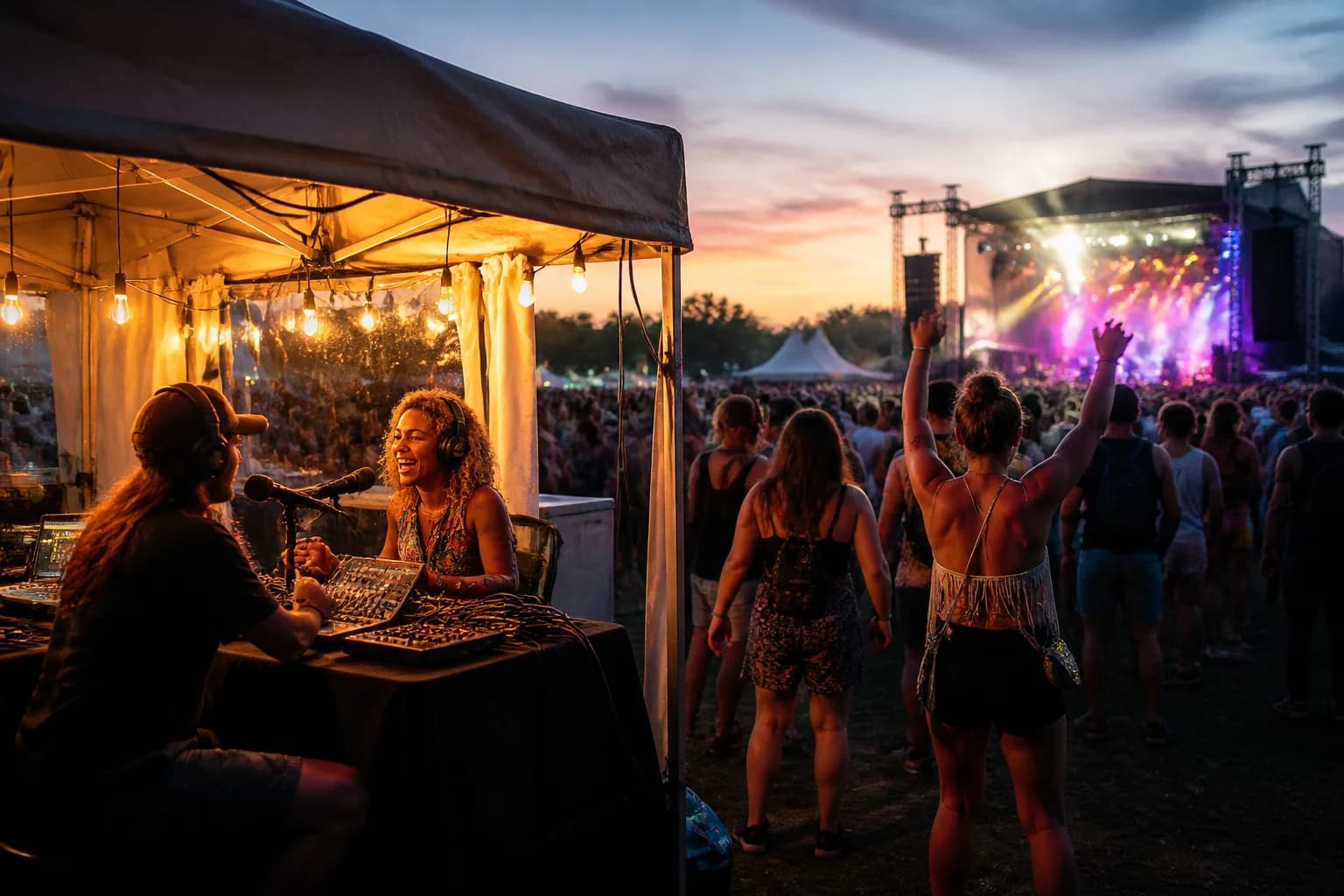
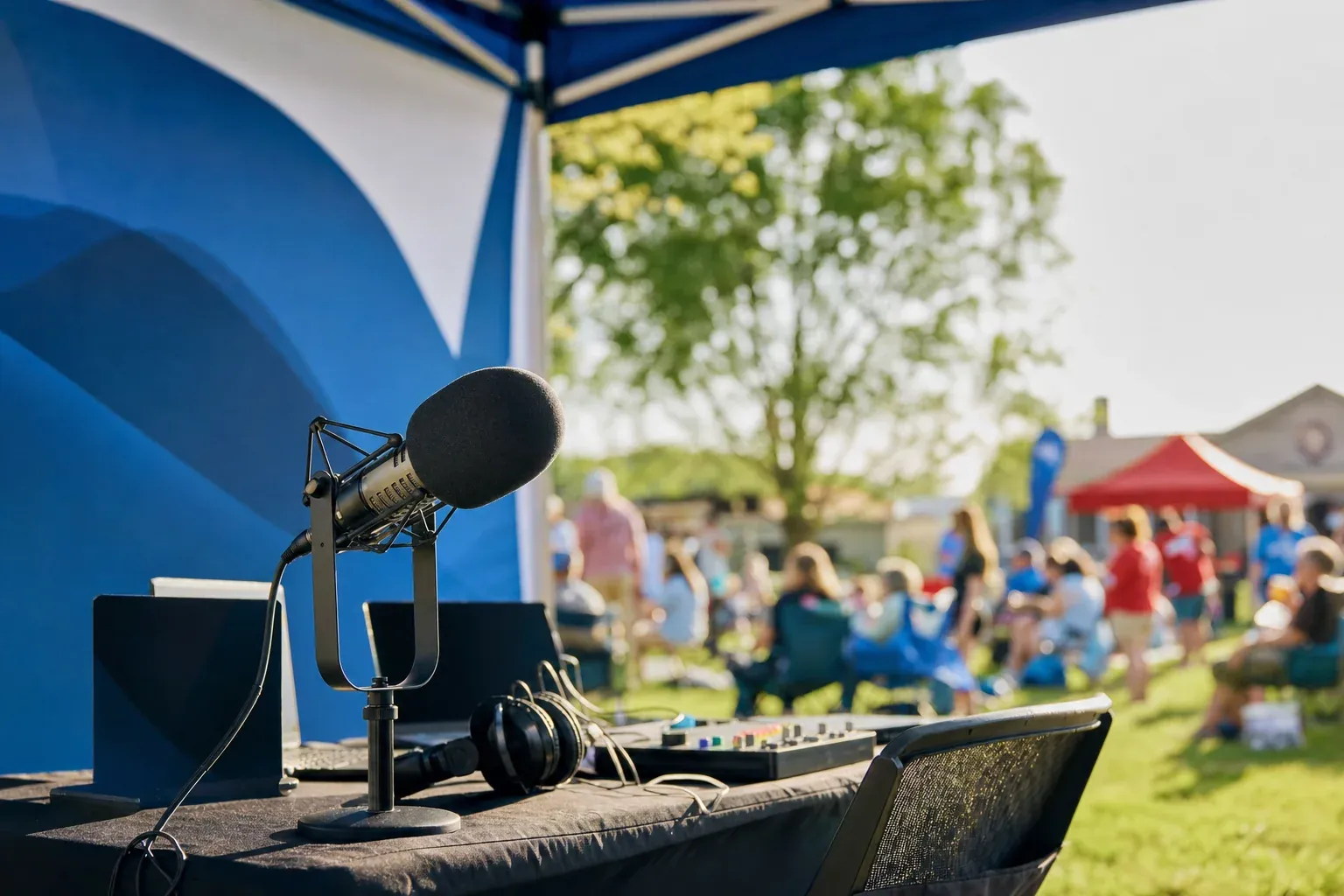
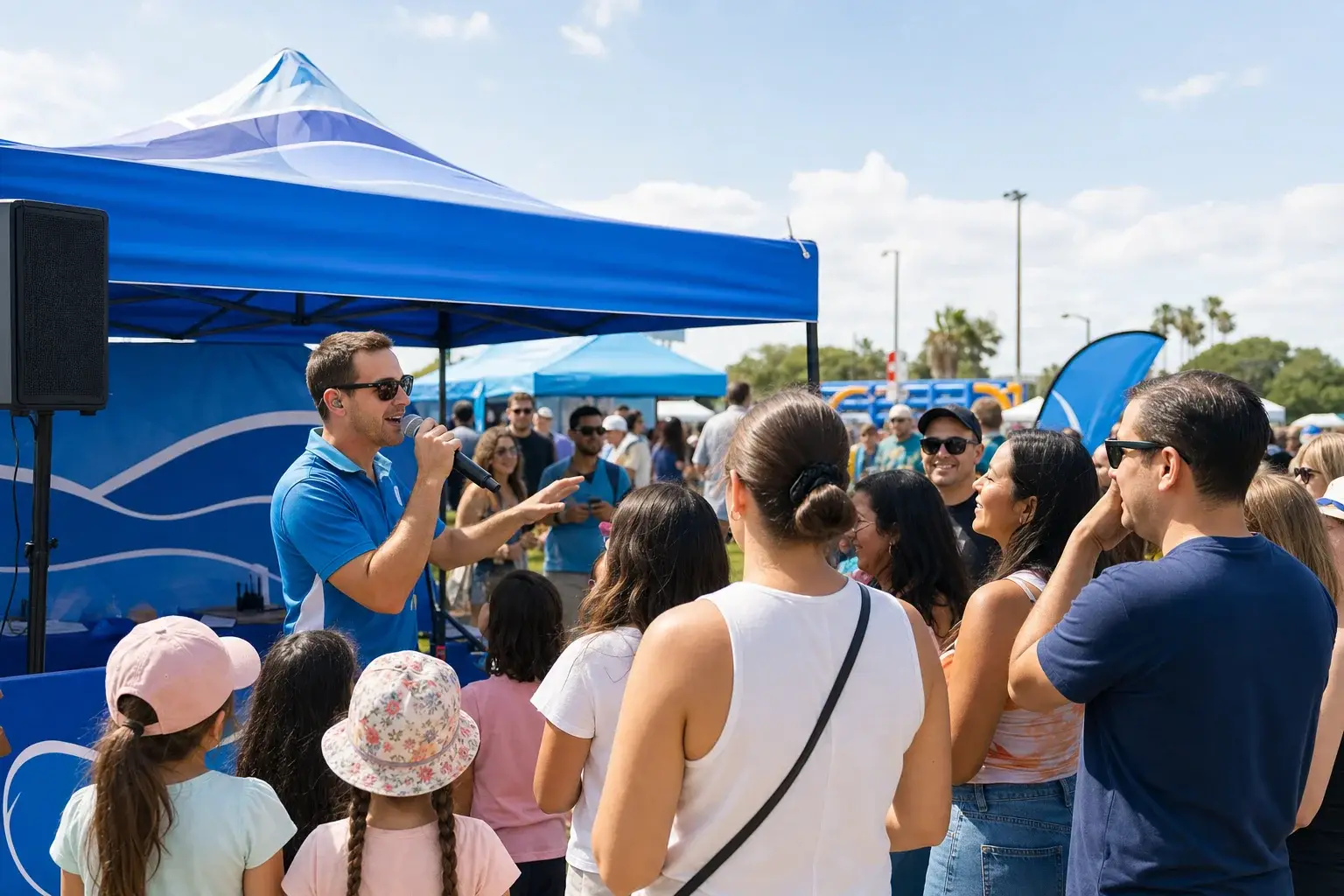
The summer staple, and the one stations most often run on autopilot. The fix is a mindset shift: a live broadcast isn't "the show, but outside." It's a production and an event in its own right. The stations that get remotes right staff them like a production — a host with an actual on-mic job, a promotions team running the crowd, and a plan for what airs in the next break, not just this one. Revenue mechanic: a presenting sponsor pays for the location tie-in; the remote sells their event, store opening, or seasonal push.
2. The Listener Contest or Sweepstakes
Built for appointment listening and database capture at the same time. A summer-long "win it" contest — concert tickets, a getaway, a backyard upgrade — gives every daypart a reason to tease forward. Revenue mechanic: the prize is sponsor-supplied or sponsor-funded, and the entry mechanic captures an email or phone number every single time. A contest that doesn't grow your database is leaving its best asset on the table.
3. The Sponsor-Built Event
Concerts, fairs, festivals, food truck nights — your station becomes the vehicle that delivers a sponsor's summer event to a crowd. This is the highest-revenue framework when it's sold right, because you're not selling spots, you're selling a turnkey audience. Revenue mechanic: tiered sponsorship — one presenting sponsor, a handful of supporting sponsors, each with a defined on-site and on-air package.
4. The Summer-Long Franchise
A "100 Days of Summer," a summer passport, a loyalty-card play that runs Memorial Day to Labor Day. The franchise turns one sponsor sale into three months of recurring content. Revenue mechanic: a season-long title sponsor, plus rotating weekly sponsors who buy into a structure that's already built. It's the same logic that makes seasonal content drive radio revenue — package once, sell repeatedly.
5. The Mobile Street Presence
The branded vehicle, the prize patrol, the ice cream truck with your call letters on it. Low cost, high visibility, and it goes where your listeners already are — pools, parks, neighborhoods on a hot afternoon. Revenue mechanic: a vehicle-wrap sponsor funds the whole thing, and the itinerary itself becomes promotable on-air ("we'll be at Lincoln Park at 2"). It pairs naturally with any of the four frameworks above — and with seasonal tentpoles the way March Madness promotions work in spring.
The Revenue Math (What Each Play Is Actually Worth)
This is the section every competing article skips, and it's the one your GM actually cares about. You don't need a finance degree — you need to be able to defend the number.
For a sponsor-built event, price it as a package, not a spot count. A presenting sponsorship bundles on-air mentions, on-site signage, a live-read schedule, social and digital coverage, and an email blast. Stations routinely package presenting sponsorships in the four-to-five-figure range depending on market size — and the supporting-sponsor tier below it can double the total. Sell the audience and the production, not the inventory. (Our guide to summer radio sales breaks down the seasonal categories and packaging that actually buy in the Q3 book.)
For a contest or sweepstakes, the revenue is partly the prize underwrite and partly the database. Put a real dollar value on every email you capture. If a captured email is worth even a few dollars a year in newsletter and event marketing, a contest that lands 1,500 new contacts is a measurable asset, not a giveaway. That's the math that turns a contest from a cost into an investment.
For a remote, stop pricing it as "host plus two hours." Price the audience you deliver to that location and the production around it. Radio still reaches more than 90% of U.S. adults, and Nielsen's audio research shows most listening happens out of home, and most of that in the car. Summer is peak out-of-home season. You are delivering an in-market, in-car audience to a physical address. That's worth real money — price it that way, and back it with the kind of sponsor logic in our 2026 radio sales guide.
Match the Promotion to Your Format
The five frameworks survive any format. The execution shouldn't. A quick read:
- Country: Community-event and remote frameworks are home turf — fairs, rodeos, hometown festivals. Family-friendly, sponsor-rich, multi-generational.
- Hot AC / CHR: Contests and the summer-long franchise. High-energy, prize-forward, social-native. Concert ticket sweepstakes overperform here.
- Classic Hits / Classic Rock: Nostalgia-anchored events — summer concert series, car shows, throwback nights. The mobile street presence works because your audience shows up.
- Urban / Rhythmic: Street presence and sponsor-built events. Be where the summer is — block parties, cookouts, community days.
- News / Talk: Lean civic. Sponsor-built community events, charity tie-ins, listener-appreciation gatherings. Skip the foam party.
- Sports: Tie the franchise to the season — a summer baseball passport, watch parties, a sponsor-funded fan tour.
The Summer Promotion Timeline
The single biggest predictor of whether a summer promotion makes money is when you started selling it. Promotions that look effortless in July were sold in May. The Fourth of July is the clearest example — the July 4th promotions playbook shows exactly how the marquee summer weekend gets packaged and priced.
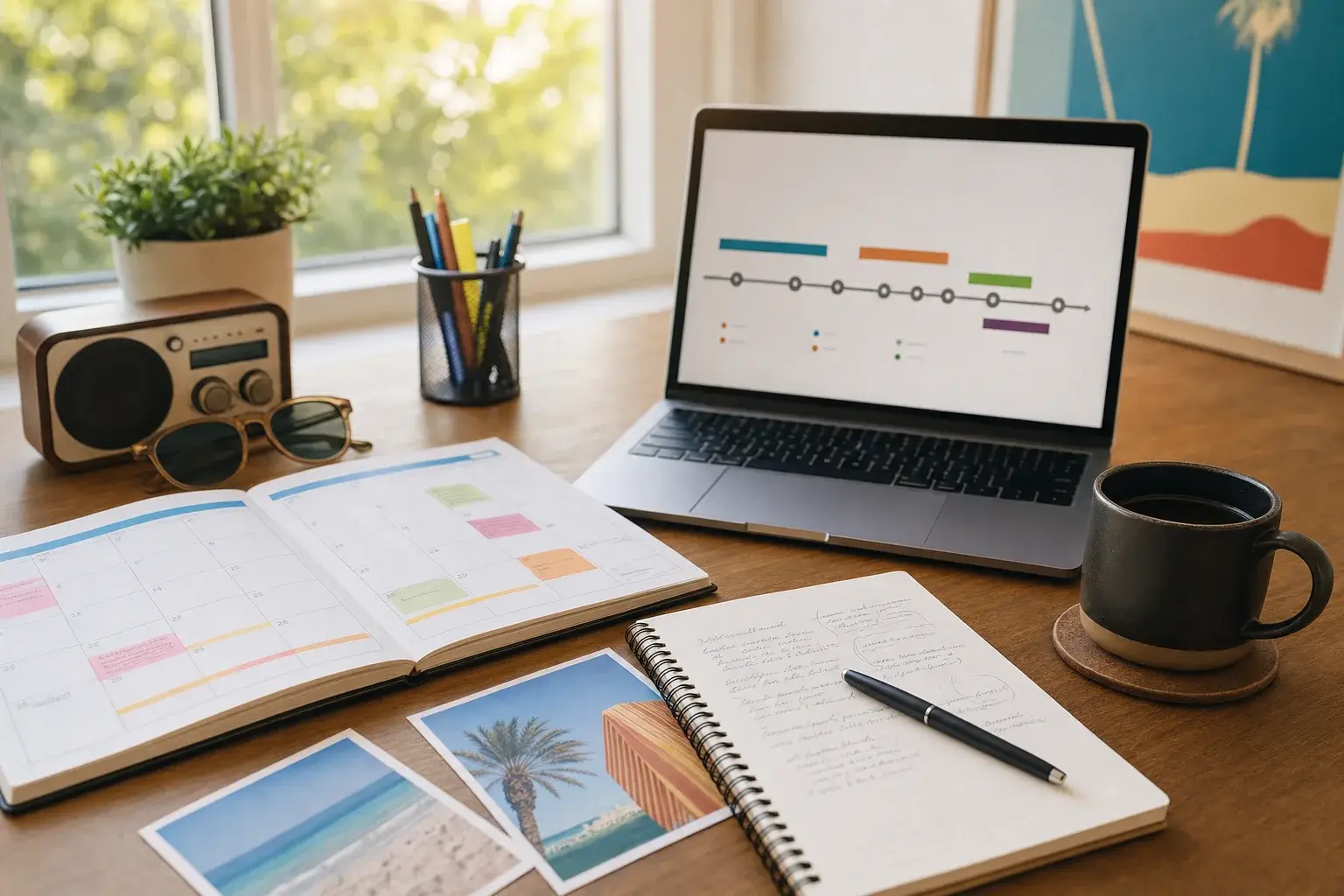
- Six to eight weeks out: Lock the objective and the framework. Build the sponsor package. Start the sell. Sponsors plan their summer spend early — if you're pitching in June, you're pitching leftovers.
- Three to four weeks out: Sponsor confirmed. Now produce — promos, live-read scripts, social assets, the entry mechanic, the on-site plan.
- One to two weeks out: Full on-air push. Tease across every daypart. Brief the air staff so it sounds like the station's idea, not a read.
- Promotion window: Execute, capture data, and document everything for the recap.
If you're mapping the whole season, build it into your May and June programming calendar so promotions and content reinforce each other instead of competing for airtime.
The Execution Gap — Where Summer Promotions Die
You can pick the right framework, sell the sponsor, and still lose the promotion in execution. Three places it happens — and three fixes.
The promotion has no on-air engine. A remote or contest that gets one tease an hour isn't a promotion, it's a footnote. Every framework needs a daily on-air structure — a feature, a tease rotation, a recurring bit — so the promotion actually lives on the station. That's a show prep problem as much as a promotions problem. Build the on-air content with the same care you build the sponsor package.
Nobody has a job at the event. The worst remote is the one where the station is just present — a tent, a banner, a folding table. Personalities need an actual role and a microphone: games, giveaways, interviews, a reason for the crowd to come over. Treat "set up, sit there, tear down" as a failure mode, not a default.
No recap. The promotion ends and everyone moves to the next one. That's how stations run the same mediocre remote for nine summers in a row. The fix is a post-promotion recap every time — entries captured, attendance, social reach, sponsor feedback, what to change. The recap is what makes next year's sponsor pitch easy, because now you're selling results instead of a hopeful guess.
Frequently Asked Questions
What are the best summer radio promotion ideas?
The best summer radio promotions fall into five frameworks: remote broadcasts, listener contests and sweepstakes, sponsor-built events (concerts, fairs, festivals), summer-long franchises like a "100 Days of Summer," and a mobile street presence such as a branded prize vehicle. Pick the framework that matches your objective and format rather than chasing a one-off stunt.
How do radio stations make money from summer promotions?
Radio stations make money from summer promotions through sponsorship, not spot sales. The strongest revenue model is a tiered package — a presenting sponsor plus supporting sponsors — that bundles on-air mentions, on-site presence, social and digital coverage, and email marketing. Contests add value by capturing listener emails and phone numbers that the station markets to long after summer ends.
How far in advance should you plan a summer radio promotion?
Plan a summer radio promotion six to eight weeks out. That window lets you lock the objective, build the sponsor package, and sell it before advertisers commit their summer budgets elsewhere. Production happens three to four weeks out, and the full on-air push starts one to two weeks before the promotion window.
What's the difference between a summer radio promotion and a contest?
A contest is one tool inside a promotion. A summer radio promotion is the overall campaign with a defined objective — ratings, revenue, database growth, or community equity — while a contest is a specific entry-based mechanic used to drive tune-in and capture listener data. A promotion can include a contest, a remote, an event, or all three.
Key Takeaways
- A great summer promotion and a profitable one aren't the same thing — design for revenue, not applause.
- Pick the objective first: ratings, revenue, database growth, or community equity. No objective, no promotion.
- Run one of five frameworks — remote, contest, sponsor-built event, summer-long franchise, mobile street presence — each with a built-in revenue mechanic.
- Price promotions as sponsor packages and audience delivery, never as a spot count.
- Start selling six to eight weeks out, and recap every promotion to make next year's pitch easier.
Radio Content Pro helps your station run summer promotions that don't collapse in execution — format-tuned teases, contest copy, remote-broadcast bits, and daily on-air content that keeps a promotion alive across every daypart. Your morning show wakes up to prep that already sounds like your station, and your promotions team gets the on-air engine that turns a good idea into a profitable one. RCP does 90% of the work; your personality adds the final 10%.
Ready to simplify your show prep?
Try RCP free for 7 days. $0 until day 8