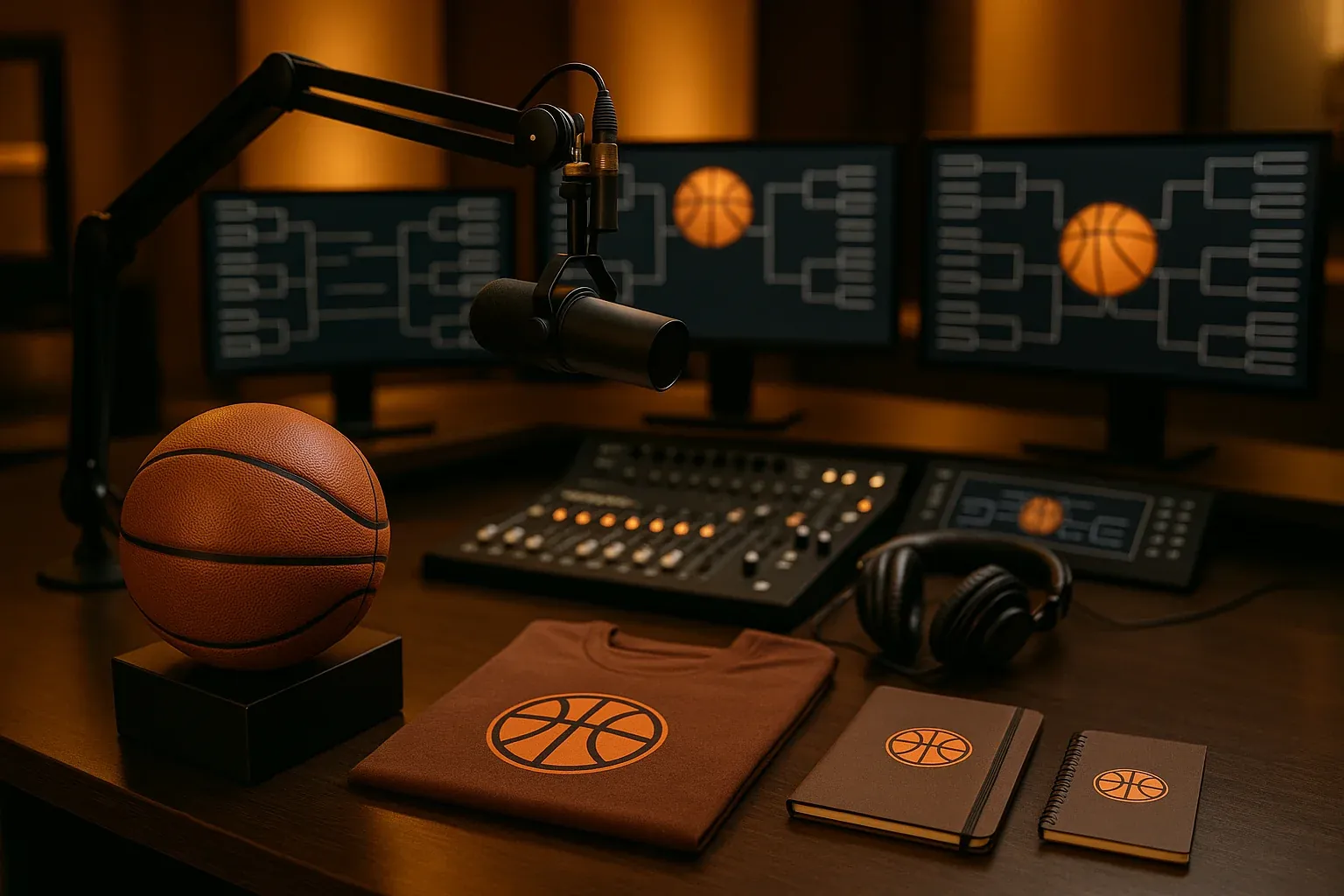

Radio doesn't just cover March Madness. Radio sells March Madness.
Here's the number that should stop every sales manager and program director in their tracks: radio's advertising value during the NCAA tournament now surpasses television. Not close. Not competitive. Radio dunks on TV. The audience is younger (average age 48, five years younger than TV viewers), wealthier (median household income $117,000), and more engaged — 64% of radio tournament listeners rate their fandom 8 or higher on a ten-point scale. These aren't casual viewers flipping channels during halftime. These are invested fans who follow 21% more games per season than their TV counterparts.
And the reach? Ninety-three percent of college basketball fans listen to AM/FM radio monthly. Twenty million fans tune into Westwood One's NCAA coverage alone. Forty-four percent of those listeners are weekly basketball bettors with an average wager total exceeding $1,000.
That's not an audience. That's a goldmine. And the tournament starts March 15.
We've already covered how to create March Madness content for every format — segment ideas, talk-break angles, and format-specific hooks. This guide is about the other side of the equation: promotions that drive revenue, ratings, and listener engagement during the three most valuable weeks in spring radio.
Why March Madness Promotions Work for Every Format
The NCAA tournament isn't just a sports event. It's a cultural moment. Office brackets. Family rivalries. Cinderella upsets that dominate water cooler conversations for weeks. That cultural reach is why March Madness promotions work for Country stations, AC stations, CHR stations — not just sports talk.
Consider the audience profile. Sixty percent of Westwood One's tournament listeners are employed full-time. Thirty-nine percent are parents with children at home. Twenty-five percent are college graduates. These are the exact demographics that advertisers chase across every format.
Audio also delivers something TV can't match at scale: incremental reach. Adding radio to a TV tournament buy generates a 4% incremental reach lift, amplifies message frequency by 33%, and outperforms television in ad recall, brand lift, and purchase intent. That's the pitch your sales team needs to be making right now.
Think Games, Not Just Contests
Before we get into specific promotions, one principle separates stations that drive ratings from stations that just give away prizes: the play-along factor.
Only about 2% of your audience will ever call to win something. But 100% can play along in their heads. The stations that win March Madness aren't building promotions for the caller — they're building them for the listener. As radio programming strategist Tracy Johnson puts it: "A contest is a prize delivery system, but a game is an audience engagement experience."
That distinction matters for every promotion in this guide. When you design your bracket contest, prediction segment, or social media tie-in, ask: Can the listener who never picks up the phone still feel like they're part of this? If the answer is yes, you've got a promotion that drives TSL, not just prize fulfillment.
One more rule worth internalizing: invest 80% of your resources promoting the campaign, not creating it. The promotion itself is usually the easy part. Making it famous is the challenge. A great bracket contest that nobody knows about is worth exactly nothing.
Bracket Contests: The Cornerstone Promotion
Bracket contests remain the single most effective March Madness promotion for radio. They're addictive, popular, and highly sponsor-friendly — and the beauty is that listeners who are already filling out brackets for their office pools are primed to engage with yours.
How to Run a Bracket Contest That Drives Revenue
The basic setup:
- Partner with a bracket platform (Second Street, Aptivada, Odds On Promotions, or a custom solution through your station's digital team)
- Create a station-branded bracket page — logo, colors, sponsor branding
- Gate entries behind email capture for database growth (this is the long-term play)
- Track leaderboard standings on-air daily to maintain engagement
The revenue play:
- Sell title sponsorship of the bracket contest to one anchor advertiser
- Offer secondary sponsorships for bracket "rounds" (Sweet 16 Sponsor, Final Four Sponsor)
- Run bracket-adjacent promotions: "Pick the upset" daily contests with smaller prizes from rotating sponsors
- Set up an automated email campaign to every entrant — regular updates throughout the tournament that build a relationship with your station beyond the contest itself
The Million Dollar Bracket play: Want a headline-grabbing promotion with almost zero financial risk? Offer a million-dollar prize for a perfect bracket. The odds of picking every game correctly are 1 in 9.2 quadrillion — Warren Buffett once offered $1 million per year for life to anyone who pulled it off, and he slept fine. You can self-fund this with confidence or get insurance from specialty providers. The real payoff: the person with the most correct picks wins a smaller prize ($1,000), and your station gets three weeks of "million-dollar" promotional language that sounds far bigger than it costs.
Execution tips from stations that do this well:
- Have your personalities fill out their own brackets and play along on-air. The trash talk between show hosts creates organic content for the entire tournament.
- Include a tiebreaker rule (predict the final score of the championship game) — you will have ties.
- Allow one entry per person and enforce it. Sort your entry database by phone number to catch duplicates.
- Since a perfect bracket is essentially impossible, make sure you have a clear secondary payoff so the promotion doesn't fizzle once brackets bust (and they will, usually by Day 2).
One example worth studying: KFMB's college basketball sweepstakes campaign generated $58,000 in revenue using a multi-contest approach tied to the tournament bracket. The key was layering multiple sponsor touchpoints across the three-week window — not a single bracket and a prayer.
Format-specific bracket ideas:
A bracket can be about anything — and that's its power. Start with 16, 32, or 64 choices. Fewer than 16 isn't interesting enough; more than 64 gets cumbersome. Remember that multiple rounds mean multiple days of content, so plan the timing around the tournament schedule.
- CHR/Hot AC: "Song Madness" — bracket 64 songs against each other, listeners vote daily. Tournament theme, music execution.
- Country: "Country Madness" — bracket classic country artists vs. current artists. Who's the GOAT? Listeners decide.
- AC: "March Movie Madness" — bracket the 64 best movies from the past 30 years. Daily voting drives web and social traffic.
- Rock: "Rock Bracket" — genre vs. genre, decade vs. decade. Nothing gets rockers arguing like ranking.
- News/Talk: "Hot Take Tournament" — bracket the year's 16 most debated topics. Listeners vote on which take wins each round.
The beauty of format brackets is they piggyback on tournament momentum without requiring actual basketball content. When listeners become invested in the outcome — when they genuinely care whether Prince beats Bruce Springsteen in Round 2 — attention is earned. That's play-along at its best, and it works because your listeners are already in bracket mode. You're just channeling that energy toward your station.
Listener Prediction Contests
Predictions drive engagement because they make the listener an active participant, not a passive one. And here's the key: use multiple choice whenever possible. Open-ended questions only reward superfans. Multiple choice invites everyone to play — even listeners who know nothing about basketball can guess between three options and feel smart when they're right. That dopamine hit keeps them coming back.
Daily Prediction Segments
Run a daily "Pick the Winner" segment during the tournament. Text or app-based. Listeners predict the outcome of one featured game per day. Correct picks enter a drawing for weekly prizes, with a grand prize at the tournament's end.
Why this works:
- Low barrier to entry (one pick, not a full bracket)
- Creates daily on-air content (reveal yesterday's results, tease today's game)
- Drives consistent text/app engagement across the full three weeks
- Perfect vehicle for daily sponsor mentions
- The 98% who don't call are still playing along in the car, at their desk, in the kitchen
Upset Alert Contests
This one capitalizes on the tournament's most memorable moments. Before each round, ask listeners to predict the biggest upset. Anyone who calls it right wins a prize. The more unlikely the upset, the bigger the payoff.
Upset predictions generate better on-air content than straight picks because they invite explanation. "Why do you think a 12-seed beats a 5-seed?" is a more interesting conversation than "Who wins Duke vs. Kentucky?" — and it works across formats because everyone loves a Cinderella story.
Local Partnership Promotions
March Madness is three weeks of prime-time opportunity for local business partnerships. Here's how to package them.
Sports Bar and Restaurant Partnerships
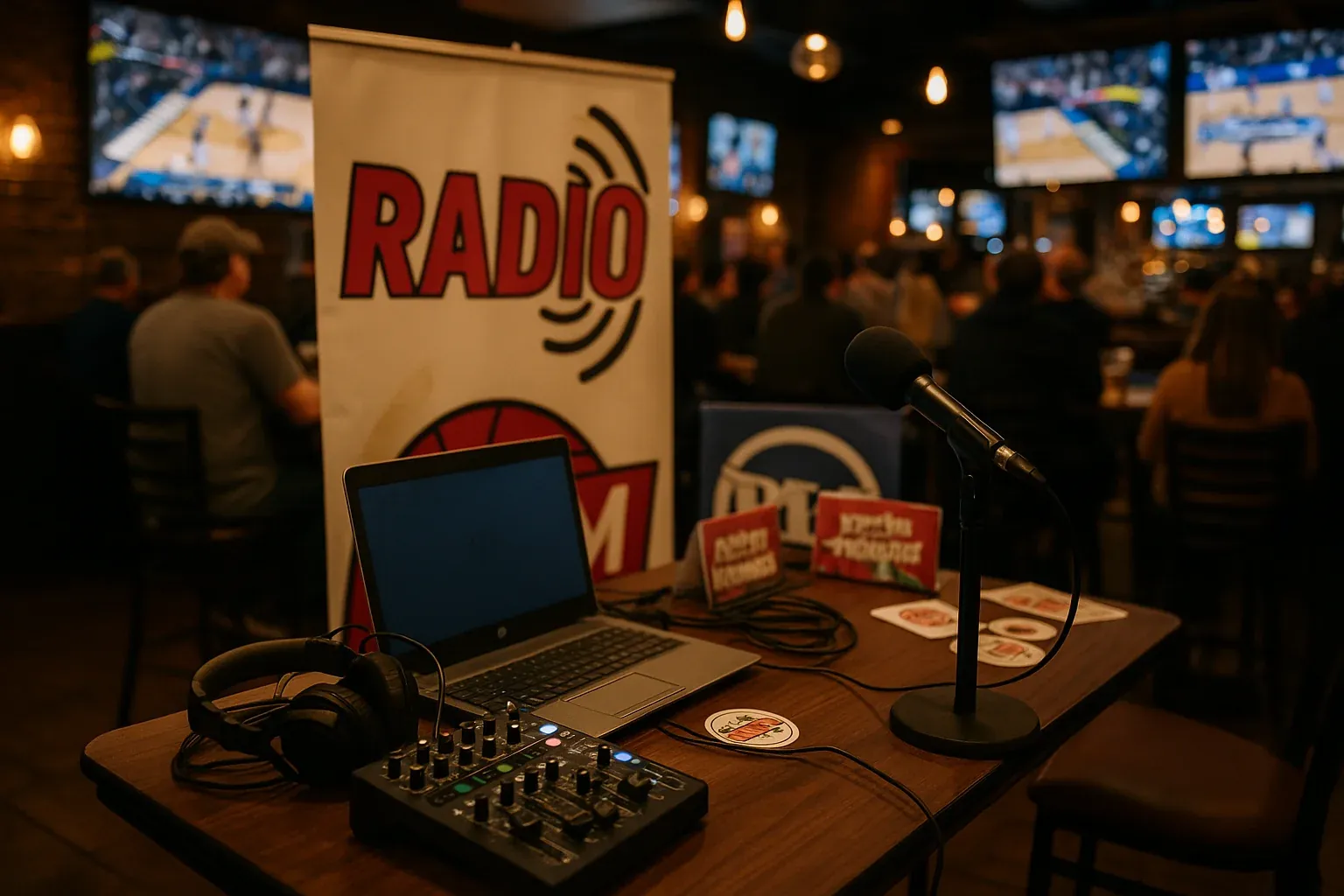
Partner with 3-5 local sports bars or restaurants for tournament watch parties. The package:
- On-air promotion: Mention partner location during tournament breaks, "Catch tonight's games at [Sponsor Bar]"
- Live remotes: Broadcast from partner locations during key games (First Four, Sweet 16, Final Four)
- Exclusive offers: "Mention [Station Name] for 10% off your tab during tournament games"
- Social cross-promotion: Tag partners in tournament posts, share their game-day specials
Price this as a package deal — weekly rate covering the three tournament weeks, not per-spot. Bars and restaurants will pay more for a sustained presence than isolated mentions.
"Sweet 16" Advertiser Packages
Create a themed advertiser package that sells itself:
- 16 spots across the three tournament weeks
- Inclusion in the bracket contest as a round sponsor
- Social media mentions tied to tournament milestones
- Logo placement on the station's digital bracket page
Name it the "Sweet 16 Package" and watch it sell faster than a generic spring rate card.
Ready to simplify your show prep?
Try RCP free for 7 days. $0 until day 8
Social Media Tournament Tie-Ins
The tournament generates massive social engagement. Your promotions should meet listeners where they already are.
Instagram/TikTok Bracket Reveals
Post daily bracket updates as short-form video. Let your morning show hosts reveal results, react to upsets, and trash-talk each other's picks. This extends on-air content to platforms where the 18-34 demo lives — and that 18-34 demo makes up 43% of the men's radio tournament audience.
"Selfie Madness"
One station ran a "March Selfie Madness" bracket with morning show DJs taking selfies in different categories — listeners voted for their favorites in a bracket format. Zero sports knowledge required. Pure personality-driven engagement that works for any format.
Twitter/X Game Threads
For sports-adjacent formats, host live game threads during marquee matchups. Pin predictions to the top, engage with listener reactions in real time, and clip the best moments for next-day on-air content. The 44% of fans who see breaking sports news on social before anywhere else are already scrolling during games — be part of that conversation.
Betting-Adjacent Promotions
With sports betting legal in 39 states, tournament gambling content is mainstream radio material. You don't need to be a sportsbook — you just need to speak the language.
"Over/Under" Daily Segments
Run a daily over/under segment with tournament-related questions that don't require gambling:
- Over/under 3 upsets in today's games?
- Over/under 100 combined points in tonight's featured matchup?
- Over/under 10 million brackets busted after the first round?
The format is familiar to the 44% of listeners who bet weekly, but accessible to everyone. It generates calls, texts, and social engagement without requiring a sportsbook partnership.
Fantasy Bracket Leagues
Create station-hosted fantasy bracket leagues with entry fees donated to local charities. Listeners compete against the morning show hosts, afternoon drive team, and each other. Leaderboard updates become daily on-air content through the championship game.
The Revenue Math
Let's put numbers to it. A well-executed March Madness promotion package for a mid-market station might look like:
| Promotion | Revenue Potential |
|---|---|
| Bracket contest title sponsor | $5,000-15,000 |
| Sweet 16 advertiser packages (4-8 advertisers) | $8,000-24,000 |
| Sports bar/restaurant partnerships (3-5 locations) | $3,000-10,000 |
| Daily prediction contest sponsors | $2,000-6,000 |
| Social media sponsorships | $1,000-4,000 |
| Total potential | $19,000-59,000 |
That $19K-59K range isn't hypothetical. It's consistent with what stations executing multi-layered tournament campaigns actually report. And the promotional inventory is incremental — this revenue sits on top of your regular March billing, not in place of it.
Timeline: Your March Madness Promotion Checklist
Now through March 14 (Pre-Tournament)
- Finalize bracket contest platform and sponsor packages
- Pitch Sweet 16 packages to advertisers
- Lock in sports bar/restaurant partnerships
- Build bracket contest landing page
- Record promos and social teasers
- Brief on-air staff on all promotion mechanics
March 15-22 (Selection Sunday through Second Round)
- Launch bracket contest on Selection Sunday
- Start daily prediction segments
- Post first bracket reveals on social
- Execute first live remote at partner location
- Begin daily on-air leaderboard updates
March 23-April 6 (Sweet 16 through Championship)
- Increase on-air promotion frequency as brackets narrow
- Execute final remote broadcasts
- Run final prediction contests with bigger prizes
- Award bracket contest winner on-air
- Collect sponsor testimonials for next year's pitch
Prep Smarter, Sell Harder
The three weeks of March Madness generate enough promotional opportunities to impact your entire Q2. But the stations that win aren't the ones scrambling to put a bracket together on Selection Sunday morning. They're the ones who had their promotion packages sold, their content planned, and their social strategy loaded before the first tip-off.
For the content side of tournament prep — daily talk-break material, format-specific segment ideas, and trending topics that keep your audience engaged between games — Radio Content Pro delivers that to your dashboard every morning. You handle the promotions and the sales. We'll handle the prep.
Start your 7-day free trial and see how much easier tournament week gets when the content is already done.
Frequently Asked Questions
How far in advance should I plan March Madness radio promotions?
Start selling sponsor packages 4-6 weeks before the tournament. Bracket contests should launch on Selection Sunday, but the platform, prizes, and partnerships need to be finalized at least two weeks before. Most spring radio promotions follow a similar planning timeline.
Do March Madness promotions work for non-sports radio formats?
Absolutely. The tournament reaches every demographic — 93% of college basketball fans listen to AM/FM radio monthly, and they're spread across every format. Bracket-style contests adapted to your format (Song Madness, Movie Madness, Country GOAT brackets) tap into tournament energy without requiring basketball knowledge. We cover the format-specific content angles in detail.
What's the revenue potential for a mid-market station during March Madness?
Stations executing multi-layered tournament campaigns (bracket contest + advertiser packages + local partnerships + social sponsorships) typically generate $19,000-59,000 in incremental revenue during the three-week tournament window. KFMB's basketball contest campaign alone drove $58,000. Your results depend on market size, sponsor relationships, and execution — but the opportunity is significant for any station that packages it well.
How do I tie March Madness promotions to digital revenue?
Gate bracket entries behind email capture to grow your digital database. Sell display ads on your bracket leaderboard page. Create sponsored social media content around daily predictions and bracket updates. Every tournament touchpoint should feed your digital content strategy — the audience engagement is already there, you just need to monetize it.
Can I run basketball-related promotions without an NCAA broadcast license?
Yes, with careful attention to trademark rules. Avoid using "NCAA," "March Madness," and "Final Four" in promotional materials — those are registered trademarks. Use generic terms like "college basketball tournament," "the big dance," or "tournament time." Your bracket contest can reference teams and matchups, but branded language requires a licensing agreement. When in doubt, consult your station's legal team.