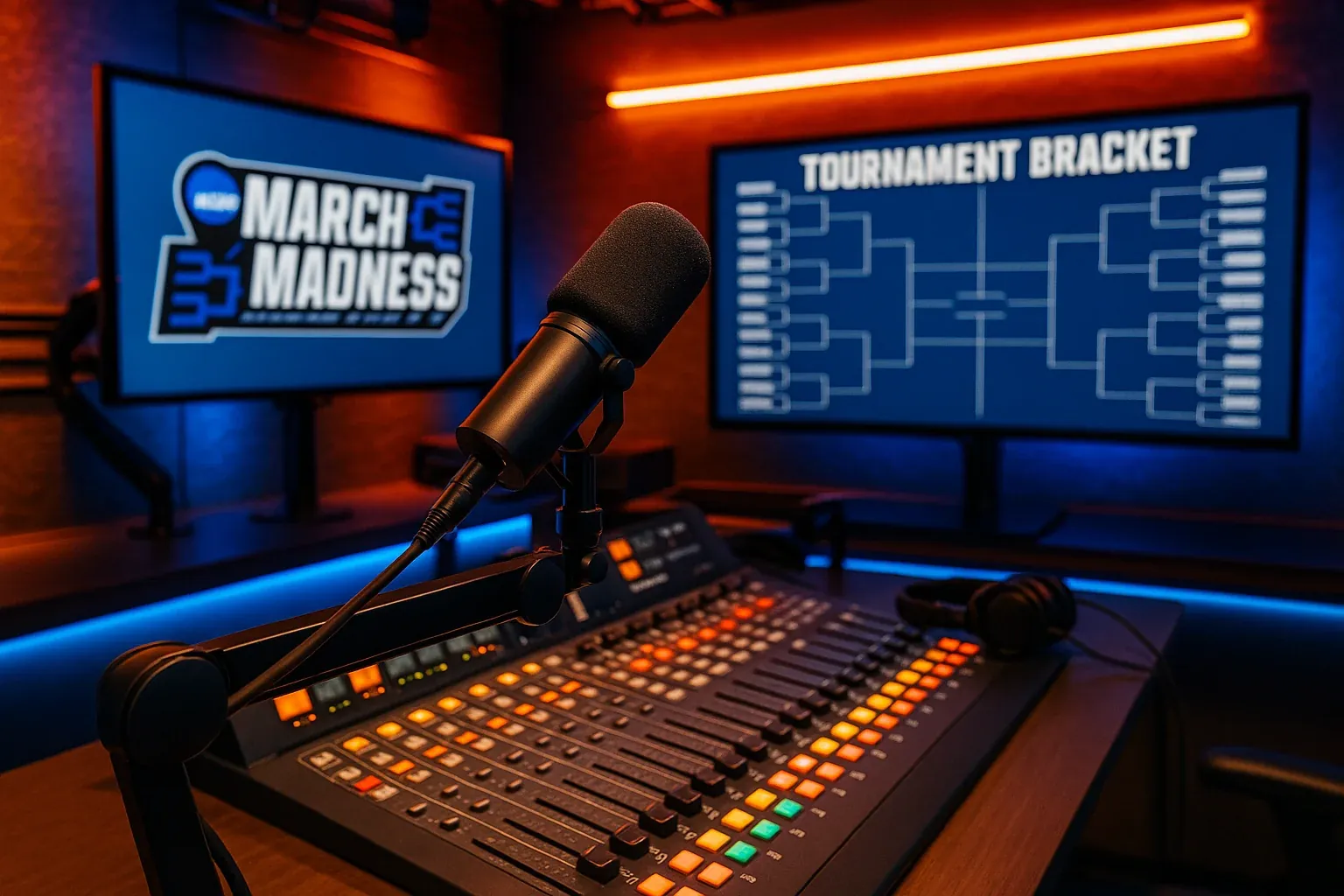

March Madness isn't just for sports stations. That's the part most programmers miss.
Ninety-three percent of college basketball fans listen to AM/FM radio. That's not a sports-talk stat — that's your audience, regardless of format. The tournament reaches 20 million radio listeners every year, and they're not all tuned to ESPN Radio. They're listening to your CHR morning show. Your Country afternoon drive. Your AC midday.
The NCAA tournament creates three weeks of built-in conversation fuel. Upsets, brackets, Cinderella stories, office pools, family rivalries — this stuff crosses every demographic. And while sports stations are locked into play-by-play coverage, you have the advantage of playing in the spaces around the games. The talk before and after. The culture around it.
Here's how to turn March Madness into must-hear radio for any format.
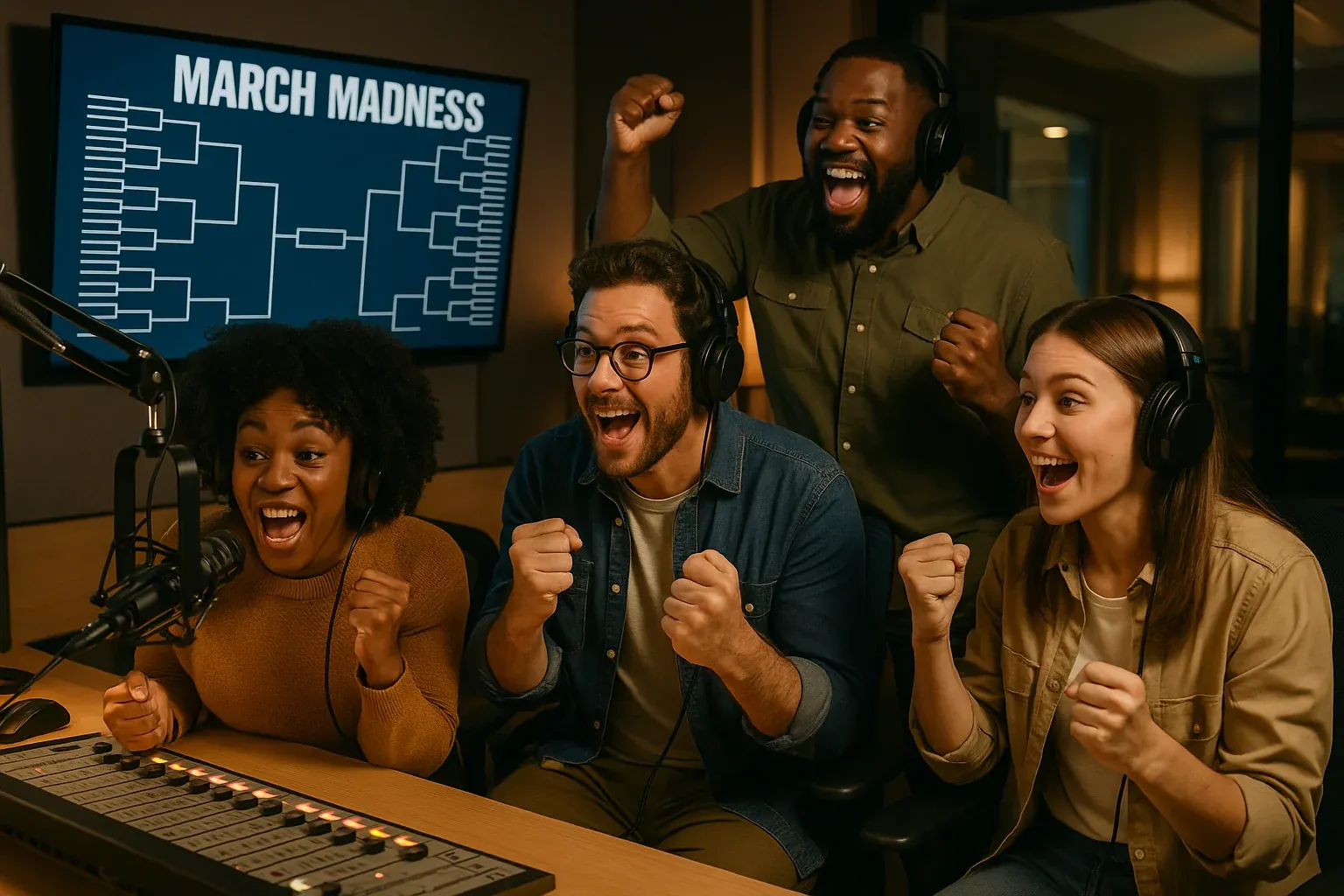
Why March Madness Matters Beyond Sports Radio
Let's talk numbers. According to Radio Ink, the March Madness radio audience skews younger and wealthier than TV viewers — average age 48 (five years younger than TV) with a median household income of $117,000. These aren't passive listeners. Sixty-four percent rate their fandom 8 or higher on a 10-point scale.
But here's the stat that should grab your attention if you're not a sports station: 44% of Westwood One's NCAA listeners are weekly sports bettors. That means nearly half your audience has money on the line. They're emotionally invested. They want to talk about it.
And they're not just talking about it during games. They're talking about brackets at work. Arguing upsets at the dinner table. Texting friends about busted picks. March Madness is a cultural event, not just a sporting one — and cultural events are content goldmines for every format.
The stations that win during tournament season aren't necessarily the ones carrying games. They're the ones that tap into the conversation around the games. That's a proven path to increasing time spent listening — and it's where you come in.
If you're looking for a broader framework for generating content ideas year-round, our 50+ radio content ideas guide is a solid starting point. But right now, let's get specific about March Madness.
Format-Specific March Madness Content Ideas
The trick is matching tournament energy to your audience's identity. A CHR listener and a Country listener might both follow March Madness, but they care about different angles. Here's how to work tournament content into your format without forcing it.
CHR / Top 40
Your audience lives online. They're filling out brackets on their phones, posting reactions on TikTok, and following the tournament through memes as much as scores.
- March Madness of Music bracket. Create a 64-song bracket and let listeners vote via social media. Pair it against the actual tournament timeline — Sweet 16 of songs during the Sweet 16. This drives multi-platform engagement for weeks.
- Bracket challenge with prizes. Partner with a local sponsor for a station bracket pool. Daily check-ins on who's winning keep listeners coming back.
- "Upset Alert" hot takes. Quick, punchy segments where you and your co-host disagree on something trending — doesn't have to be basketball. Use the tournament framing for anything: "This unpopular food opinion is the 16-seed that's about to beat the 1."
- TikTok crossover content. Highlight the best tournament-related TikToks during the show. Your audience is already watching them.
Country
Country listeners connect through storytelling and community. March Madness gives you both.
- Hometown hero angles. Is there a player from your market or region in the tournament? A walk-on with a great backstory? Country audiences eat up underdog stories.
- Tailgate and watch party content. "What's on your game day grill?" call-ins, best local spots to watch the games, listener photos from watch parties.
- "Cinderella Story" segments. Beyond basketball — ask listeners to share their own underdog moments. The job they weren't supposed to get, the relationship everyone doubted. Use the tournament as a storytelling frame.
- Local sports crossover. Connect college basketball to local high school and community sports. Small-town pride runs deep in Country audiences.
AC / Hot AC
Your audience is busy adults juggling work, kids, and everything else. March Madness fits into their life even if they're not hardcore sports fans.
- Office bracket pool content. Everyone's got a bracket pool story. The person who picks by mascot names and wins. The boss who takes it way too seriously. This is universal water-cooler content.
- "March Madness survival guide" for non-fans. Tongue-in-cheek segment: how to sound smart about basketball when you don't actually watch. Relatable, funny, and shareable.
- Work productivity segments. Studies show U.S. employers lose an estimated $17.3 billion in productivity during March Madness. Lean into it. "Are you secretly streaming games at work?" confessionals.
- Family viewing angles. Watching the tournament with kids, explaining the bracket to your spouse, family rivalry when you went to different schools.
For more morning show ideas that pair well with seasonal content, check out our 30 morning show content ideas.
News/Talk
Your audience wants depth, data, and debate. March Madness delivers all three.
- Betting and bracket analysis. With 44% of NCAA radio listeners betting weekly, this is a massive engagement driver. Odds, picks, upset predictions — treat it like a financial segment.
- NIL and the business of college sports. Name, Image, and Likeness deals have changed college basketball. How much are tournament players earning? Is it good for the sport? Strong debate content.
- Economic impact on host cities. What does the tournament mean for local economies? Hotel bookings, restaurant revenue, tourism numbers. Pair with local business interviews.
- Bracket psychology. Why do people pick based on mascots? What does your bracket say about your decision-making style? Fun angle that still feels intellectual.
Rock / Alternative
Your audience respects authenticity and doesn't want anything that feels corporate or forced.
- "Upset Anthems" playlist. Match Cinderella teams with songs about beating the odds. Let listeners suggest pairings. "If 14-seed Oakland is pulling off the upset, what song is playing?"
- Anti-bracket bracket. Create a tournament bracket of things your audience actually cares about — best guitar solos, worst band breakups, greatest concert moments. Use March Madness as the format, not the content.
- Rivalry energy segments. Rock listeners understand rivalry. Use tournament matchups to spark debates about music rivalries, local venue battles, or "which is the better rock city."
- No-BS predictions. Quick, blunt tournament predictions. No hedging, no "experts say." Just opinions and trash talk. Fits the format perfectly.
Urban / Urban AC
Your audience connects through culture, style, and community. The NCAA tournament intersects all three.
- Player culture and style. Pre-game tunnel fits, sneaker drops tied to the tournament, player playlist features. Basketball culture and music culture overlap heavily here.
- NIL and entrepreneurship. College athletes building brands during the tournament. Who's doing it right? What can listeners learn about personal branding from these players?
- HBCU tournament spotlight. HBCU teams in the tournament deserve dedicated coverage. Player stories, school pride, community connections.
- "Who's your pick?" quick hits. Fast caller segments — who are you rooting for and why? Keep it high energy and personal.
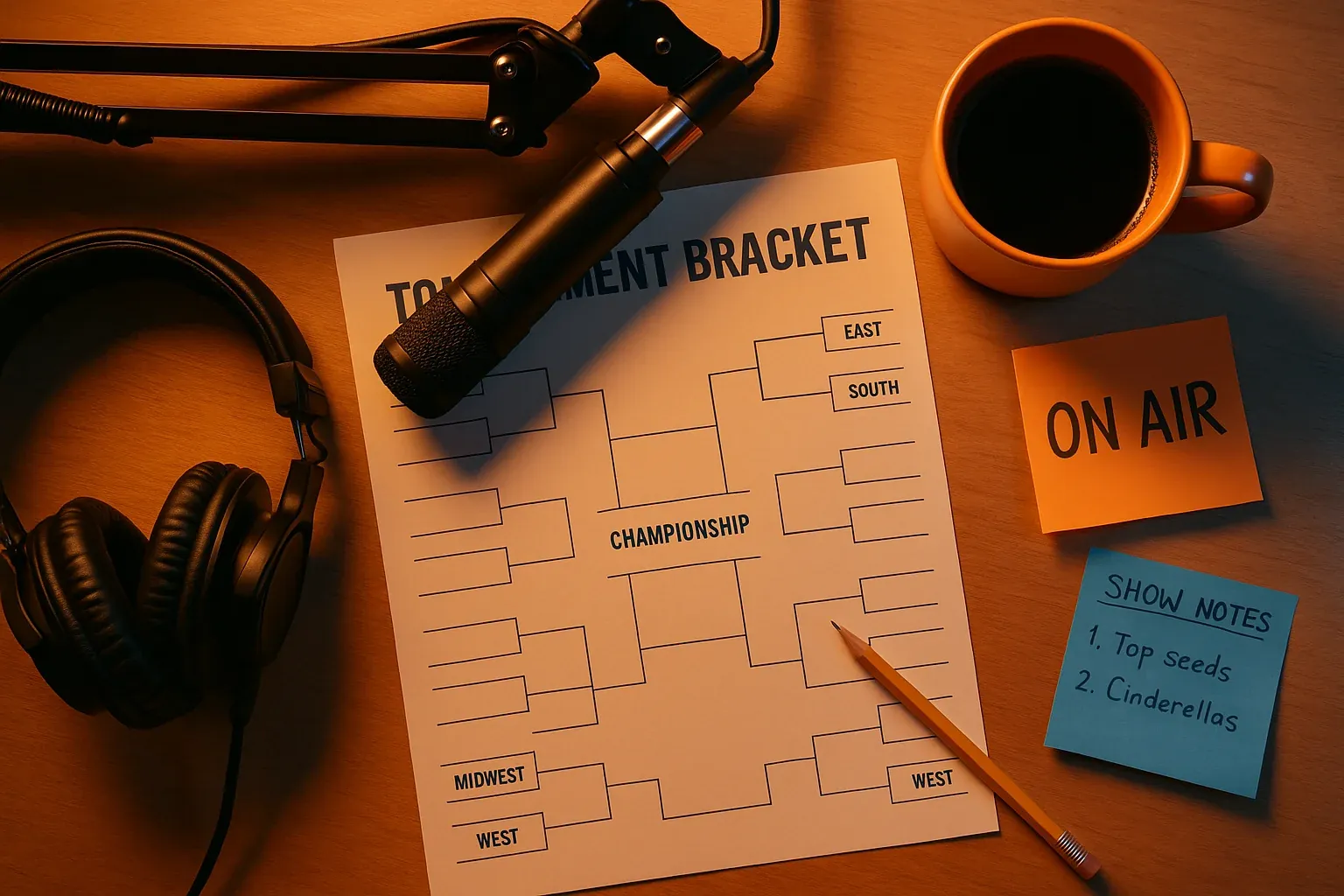
10 Ready-to-Use March Madness Segments
These work for any format. Grab one or two, customize for your audience, and you've got tournament content that doesn't require a sports background.
1. Bracket Buster Call-Ins. Listeners call in with their boldest tournament predictions. Track them throughout March and crown a winner at the end.
2. Cinderella Story of the Day. Pick one underdog — on or off the court — and tell their story. Works as a 60-second feature or a full segment.
3. Buzzer Beater Hot Takes. Sixty seconds. One opinion. No hedging. Topics don't have to be basketball: "This is my buzzer beater take on [anything]."
4. March Madness of [Your Format]. Run an elimination bracket of songs, artists, albums, local restaurants, or anything your audience cares about. Tournament structure, non-tournament content.
5. Upset Alert. Share an opinion that goes against the consensus. "The number one movie everyone loves? Overrated. Here's why." Frame it as a March Madness upset.
6. Final Four of [Category]. Pick a category each day — best pizza toppings, worst movie sequels, top road trip songs — and let listeners debate down to the Final Four.
7. Office Pool Confessionals. Listeners call in with their bracket pool stories. The weirder the better. Anonymous confessionals work great here.
8. One Shining Moment Dedications. Listeners dedicate "one shining moment" to someone in their life — a teacher, parent, coach, friend. Play their song request after the dedication. Emotional, simple, repeatable.
9. Coach's Corner. Listeners give advice on a topic as if they're coaching someone through it. Relationships, cooking, parenting — anything. The tournament framing keeps it fresh.
10. Tournament Trivia. Quick daily trivia about March Madness history. What seed has produced the most upsets? Who hit the most buzzer beaters? Easy prep, high engagement.
One common mistake? Trying to run all of these at once. Pick two or three and commit to doing them well. For more on that concept, read our piece on show prep mistakes that kill ratings — the same "less is more" principle applies here.
How to Prep Tournament Content Without the Time Crunch
Selection Sunday is March 15 this year. That gives you a clear deadline to work toward.
Batch before it starts. Once the bracket drops, spend one focused session mapping out your tournament content plan. Which segments are you running? What days? You don't need to script everything — just build the framework.
Pull from what's already happening. You don't need to watch every game to create tournament content. Follow the narrative: upsets, dominant performances, Cinderella stories. The storylines will write your content for you.
Use AI-powered content tools. Platforms like Radio Content Pro deliver fresh, format-specific content angles every day — including trending topics and cultural moments like March Madness. Instead of spending your morning searching for material, you'll have curated, ready-to-use content waiting when you walk in.
The whole point is to do less searching and more creating. If you're spending 80% of your prep time hunting for content and only 20% actually building segments, those numbers are backward. Our complete show prep guide breaks down how to flip that ratio.
And if you're already planning beyond March, our spring radio content ideas guide maps out the full Q2 — April through June — so you can ride the momentum from tournament season straight into summer programming.
Key Takeaways
- March Madness isn't just for sports stations. 93% of college basketball fans listen to AM/FM radio — they're spread across every format.
- Work the culture, not the scores. Your advantage is the conversation around the tournament, not play-by-play coverage.
- Match content to your format. CHR runs brackets and TikTok crossovers. Country tells underdog stories. News/Talk digs into betting and business angles. Find your lane.
- Pick 2-3 segments and execute well. Don't overload your show trying to be a sports station. A "March Madness of Music" bracket or daily "Buzzer Beater Hot Takes" is enough.
- Prep before Selection Sunday (March 15). One focused planning session saves you from scrambling for three weeks.
- Tournament content builds loyalty. Listeners who engage with brackets, predictions, and call-ins come back every day to follow the results. That's the kind of listener loyalty that outlasts the tournament.
FAQ
Should non-sports radio stations cover March Madness?
Yes. 93% of college basketball fans listen to AM/FM radio, and they're spread across every format — not concentrated in sports talk. Your advantage as a non-sports station is covering the CULTURE around the tournament (office brackets, watch-party recipes, upset stories, the bracket-bust TikTok humor) rather than the scores. That's content your listeners can't get from ESPN Radio.
What March Madness content works best for non-sports formats?
Bracket-style crossover content works across every format: "March Madness of Music" (bracket of one-hit wonders, best karaoke songs, etc.), "Bracket-Bust Songs" (tracks that sound like upsets), office bracket call-ins ("what's your coworker's bracket saying about them?"), and upset-story segments (Country: underdog team stories; CHR: Cinderella school social trends). None of these require sports expertise.
When should we start March Madness content?
Start teasing in the first week of March. Execute full coverage from Selection Sunday (mid-March) through the championship (first weekend of April). That's a ~4-week programming window. The most successful stations plan content on Selection Sunday and execute through to the championship without scrambling week-to-week.
What's the best sponsor integration for March Madness radio?
Sports bars and restaurants with watch-party promotions, pizza chains (delivery surges during tournament weekends), office-supply stores (bracket pools), and auto dealers with "MADness sale" promotions all work. The strongest play is a single sponsor bundle spanning Selection Sunday through the championship — typically sports bar, pizza, or auto — with daily promo integrations throughout the tournament.
How do we avoid sounding like ESPN during March Madness?
Don't do play-by-play or analysis — that's ESPN Radio's lane and you'll lose that comparison. Do cover the emotional and cultural moments: the upset story, the local team's run, the office-bracket drama, the "Cinderella" narrative, and the listener-participation angle. Your hosts are personalities, not analysts — lean into the storytelling and community angles, not the stats.
Ready to simplify your show prep?
Try RCP free for 7 days. $0 until day 8