
If you're a sales manager trying to hit your number this quarter, a PD being asked to justify the promotions budget, or a GM who wants to know which promotion types actually generate income versus which ones just generate activity — this is the guide for you. Most radio promotion content is written for the promotions director. This isn't that.
Activity and income are very different outcomes, and we hear from stations every week who've confused the two. The whole point of this list is to draw that line clearly and stay on the right side of it.
Here's the distinction I wish more stations made: a contest is a listener-facing engagement mechanic. A promotion is a revenue-generating vehicle that may include a contest as one of its components, but whose primary purpose is generating income. Most stations do plenty of the former and very little of the latter.
Every promotion on this list is organized by revenue model — direct sale, sponsorship, trade, or digital. That structure matters because the model determines how you build, price, and sell the package before you ever decide what the listener hears on air. Pair these with tactical radio contest ideas and you've got a full revenue + ratings playbook.
Direct Sale Promotions (4 Ideas)
Direct sale promotions are sold to a single advertiser at a defined price for a defined period. Simple revenue model: you build the package, set the rate, sell it. These are typically the highest individual revenue units on your rate card — and my favorite of the bunch below is the Ratings Period Promotion Package, because it's where great content and premium pricing actually reinforce each other.
1. Title Sponsorship Package
The most straightforward revenue promotion in radio. A single advertiser becomes the named title sponsor of a contest or promotion — "The [Brand Name] Summer Cash Giveaway." Their brand is in every on-air promo, every digital post, every social update. They own the moment.
What separates a $5,000 title sponsorship from a $30,000 one isn't the prize value. It's the content arc. A well-produced promotion with daily listener touchpoints — tune-in motivation, play-along mechanics, social amplification — creates meaningful advertiser value. A static "enter to win" page doesn't.
I've watched stations charge dramatically different rates for essentially the same prize budget based entirely on how strong the surrounding content was. The content strategy is the rate card.
Revenue potential: Small market: $2,000–$8,000. Large market: $10,000–$40,000+ per promotion cycle.
Format fit: All formats. Watch category adjacency — verify the sponsor's category doesn't conflict with format identity or other advertisers.
2. Seasonal Promotion Package
Spring and summer are the strongest local advertising windows of the year. Seasonal packages let you capture that demand with a structured offer: on-air promotion, a listener engagement component, and documented digital reach, all tied to a seasonal theme the advertiser already wants to be part of.
The premium isn't just the package elements — it's the timing. Seasonal demand justifies 15–25% higher rates than equivalent off-peak buys. Advertisers understand seasonal pricing. They budget for it. Make sure you're capturing it.
Revenue potential: Bundle pricing typically runs 15–25% above equivalent à la carte airtime. The seasonal hook makes it easier for advertisers to justify the investment internally.
Format fit: All formats. Match season to format: summer + Country or AC, back-to-school + any family-skewing station, holiday + nearly everyone.
3. Live Broadcast Package
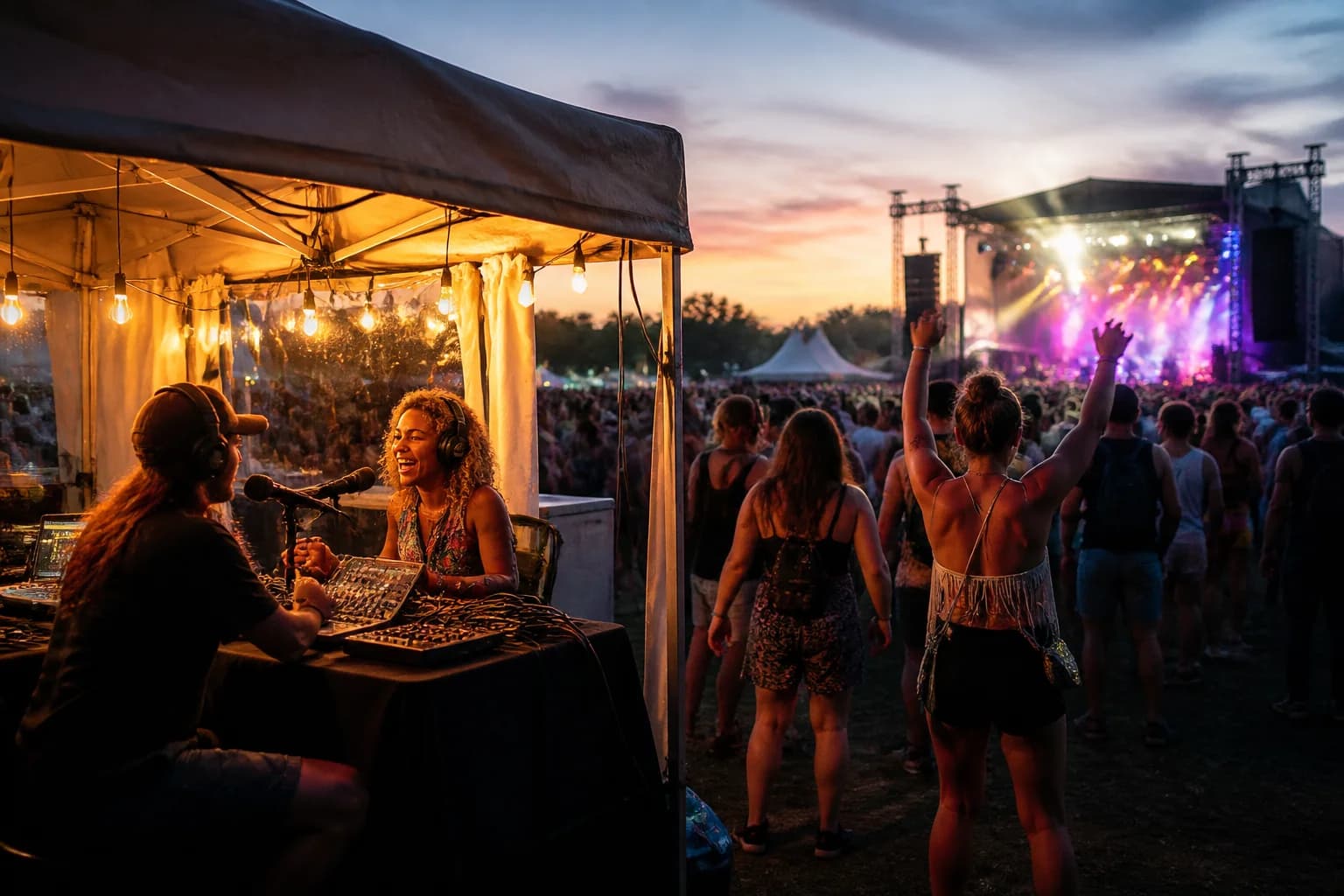
A live broadcast from a sponsor's location is one of the most effective radio promotions — and one of the most consistently underpriced. The station brings the show to the sponsor's business. The sponsor gets foot traffic, credibility, and association with your audience. You get a premium promotional fee.
One thing I want to name directly: the industry still calls these "remotes," which is a term that means nothing to a local business owner pitching this to their manager for budget approval. Call them live broadcasts. The language change sounds minor. The sales impact isn't.
The live broadcast itself is a production, not just a location change. Bring proper equipment. Never share mics — it kills energy and looks amateur. Don't let organizers or well-meaning sponsors hijack the mic mid-broadcast. The on-air experience is your product, and it needs to be protected.
Revenue potential: Ranges from $1,500–$8,000 in smaller markets; considerably higher in top-25 markets with morning show personality talent.
Format fit: All formats. Grand openings, seasonal sales events, anniversary promotions, new product launches. Any sponsor who benefits from foot traffic or local visibility.
4. Ratings Period Promotion Package
Your highest-engagement content belongs in your measured periods. And your rate card should reflect that.
A premium promotion package timed explicitly to Nielsen measurement — whether PPM or diary — isn't a cash grab. It's accurate pricing. The promotional content you create during sweeps is more valuable to advertisers because it reaches a more engaged, more intentional audience. A 15–30% premium rate is justifiable and honest.
The flip side: a weak promotion run during a measurement period is expensive twice. It underperforms for the advertiser and doesn't move the needle in ratings. Your strongest content arcs belong here — the ones that actually drive ratings and revenue together.
Revenue potential: 15–30% premium on standard promotional package rates.
Sponsorship Packages (4 Ideas)
Sponsorship packages build recurring, integrated revenue relationships rather than one-time transactions. The goal is long-term partnerships where an advertiser's brand becomes genuinely associated with content your audience values.
 The strongest sponsorships start with a content plan — not a rate card.
5. Morning Drive Feature Sponsorship
Package a defined daily segment as a sponsorable property: traffic and weather, the entertainment report, the daily trivia question, the "good news" moment. The sponsor owns the category association — their intro and outro, their name attached to something the audience already wants — for a contracted 13 or 26 weeks.
The key word is already. Sponsors don't want to buy association with content invented for them. They want to be attached to something listeners are already tuning in for. Build the segment first. Prove its audience value. Then sell the sponsorship.
A segment sponsorship on a tightly prepped show commands meaningfully higher rates than the same segment on a show that runs inconsistent content. Your prep quality is your inventory value.
Revenue potential: $500–$3,500/month depending on market, daypart, and segment.
Format fit: News/Talk, AC, Country — any format with a structured morning show and a defined segment grid.
6. Seasonal Calendar Ownership
One advertiser sponsors everything your station does around a specific moment: Mother's Day, Back-to-School, the Holiday Season. Every on-air promotion, every contest, every social post about that calendar moment carries their brand.
What you're selling is categorical exclusivity for a defined period. A retailer who owns "Back-to-School" on your station has no competing category presence for those weeks. That exclusivity has real value — price it accordingly.
The catch: you need to be able to show them the calendar. A PD who can walk into a sales meeting in June and say "here's what our Back-to-School programming looks like in August" closes this deal. A PD without that plan doesn't.
Format fit: All formats. Match category to audience: home improvement owns Summer for Country/AC; a school supply chain owns Back-to-School for family-skewing formats.
7. Community Connection Series
A multi-week series of community-focused segments — local hero stories, small business spotlights, neighborhood event coverage — packaged as a sponsorable property. The sponsor's brand is positioned as the enabler of the community content, not an interruption of it.
I've seen this work particularly well in small and mid-markets where local connection is the station's strongest competitive differentiator. The advertiser gets brand positioning; you get content your audience values. Neither side is compromising.
One rule I apply here without exception: the content has to be genuinely good. If listeners can tell it's sponsored content dressed up as community coverage, the sponsor's value erodes and your credibility goes with it. Quality protects the rate.
Format fit: News/Talk, AC, Country, Classic Hits. Any format where local identity is a core audience value.
8. Named Contest Sponsorship
Not a one-time promotion — a recurring contest format with a permanent sponsor name attached. "Monday Morning Mystery, brought to you by [Brand Name]." The advertiser is associated with a listener-loved format indefinitely, renewing because the content performs.
The recurring structure is the value proposition for both parties. The sponsor gets consistent presence rather than a one-time splash. You get predictable monthly revenue with a built-in renewal incentive.
Format fit: All formats. The contest format should be native to the show — quirky trivia for personality-driven mornings, a music challenge for music formats, a community question for News/Talk.
Trade Promotions (4 Ideas)
Here's the thing about trade: it gets a bad rap, but it shouldn't. Trade promotions exchange promotional value — on-air mentions, social exposure, audience reach — for prizes, services, or partner marketing. No cash changes hands initially. But trade promotions managed well convert to cash relationships, and that conversion is worth treating as a sales development investment, not a consolation prize.
9. Prize Trade Package
A local business provides prizes in exchange for on-air mentions and promotional value. You get prizes at no cash cost; they get exposure they couldn't afford to buy outright.
I want to be honest about the conversion rate here. Not every trade deal turns into a paid advertiser. But when you deliver results — when the business sees real listener response during the trade period — and your account exec follows up with data, conversion rates are meaningful. Trade promotions are prospecting at scale.
One rule: deliver trade mentions with the same quality as paid spots. The business is investing product value; you're investing airtime. A sloppy trade mention signals that you don't value the relationship, and you won't get the paid campaign that might follow.
Format fit: Any format. Travel, hospitality, entertainment, restaurants, and retail work best — businesses with prize-worthy products and a stake in local visibility.
10. Cross-Promotion Partnership
Your station promotes the business; the business promotes your station to their customers. A restaurant hangs your sign and mentions your contest to diners; you send listeners their direction. The exchange works on audience overlap — both sides win when the same people are your listeners and their customers.
A recent development worth folding into this model: local influencers. Partnering with local content creators to amplify a cross-promotion can dramatically expand reach without increasing cost. A local food blogger or community account with a real following is worth more to a cross-promotion than a generic social post from the station account. Reach out casually — "Love what you do, wondering if you'd be open to teaming up on something." The partnerships that come from that are often better than anything you could negotiate.
Format fit: All formats. Works best with businesses that have high foot traffic and a natural format match.
11. Event Co-Presentation
The station co-presents an event with a local business — their venue and supporting logistics, your talent, promotion, and audience. Both brands are attached to the event. Both benefit.
This typically starts as full trade and evolves toward partial cash. Once a business sees the attendance and social engagement their first co-presented event generates, they're motivated to invest more in the next one. The key is producing an event worth attending — and being disciplined about the live broadcast component, because on-location content that doesn't deliver on-air value wastes everyone's investment.
Format fit: Country, AC, Rock, CHR. Formats with strong live event culture.
12. Listener Reward Program
Local businesses provide exclusive listener benefits — discounts, priority access, early access events — that you promote as a listener reward program. No cash changes hands. The business gets impressions; listeners get value; you get a loyalty mechanism that keeps high-value listeners engaged.
This is infrastructure for paid programs, not a standalone revenue driver. The listener reward program builds an engaged subscriber base and a relationship network with local businesses — both of which convert to revenue when layered with paid offers.
Digital Revenue Extensions (3 Ideas)
These three models extend your revenue surface beyond the broadcast signal. They're increasingly important because advertisers increasingly demand measurable digital reach alongside traditional buys — and because digital audiences represent new revenue from categories that don't traditionally buy broadcast.
13. Email Newsletter Sponsorship
If you're publishing a listener email newsletter — show highlights, local events, content previews — that newsletter is a separate sponsorable property. One dedicated advertiser per issue. "Brought to you by" branding, sponsored sections, banner positions.
The key metric is engagement, not list size. An email list of 10,000 subscribers with a 40% open rate is a substantially more valuable asset than 50,000 subscribers at 8%. Open rates are your proof of audience quality, and they're the number your advertisers will ask about. Track them from day one.
You're not selling a radio ad anymore when you sell a newsletter sponsorship. You're selling a living, breathing digital asset with documented reach and attribution. That's a different conversation with a different category of advertiser — digital-first brands who may never buy traditional broadcast but will buy this.
Format fit: All formats with an active subscriber list. The newsletter must have content worth opening — not a list of commercials.
14. Social Campaign Bundle
Package on-air promotion with a structured social campaign: a defined number of branded posts, a sponsored Reel or Story, a social contest mechanic. The advertiser buys documented on-air reach plus documented social reach in a single package, and you deliver a results report at the end.
Bundling allows you to charge higher effective CPMs than on-air-only buys. It also forces the sales conversation onto total value rather than just spot rates — which is a conversation you want to be having.
Format fit: All formats with active social followings. CHR, Hot AC, and Country typically have the most active accounts and can command the strongest bundle rates.
15. Streaming Audio Pre-Roll
Your online stream reaches listeners beyond the broadcast signal — and that audience is measurable, targetable, and increasingly valuable. Pre-roll advertising on the stream is sold as a separate inventory unit, priced on CPM.
I'll be direct about something: streaming inventory is chronically underpriced at most stations. Not because the audience isn't valuable — it is — but because sales teams don't know how to sell it separately from broadcast. As listener behavior shifts toward app and online streaming, this inventory becomes more important. Digital-native advertisers and national brands who don't buy traditional broadcast will buy streaming. It's a door to revenue that doesn't otherwise interact with your sales team.
Format fit: All formats with active streaming. Start tracking streaming impressions now if you aren't already — the data is the sales tool.
What Makes a Promotion Actually Sell
We've watched a lot of promotion packages die on the whiteboard. The ones that get sold — and, more importantly, renewed — have a few things in common.
Price for value, not cost. What does this promotion cost to produce? Mostly irrelevant to the rate. What is the value to the advertiser — exclusivity, impressions, audience quality, brand association over time? Build the price from there. Promotions are chronically underpriced when reps anchor on production cost instead of advertiser value.
The content plan comes before the pitch. Sponsors are buying association with content the audience values. If you walk into a sponsorship pitch without a concrete content plan — "here's what the segment sounds like, here's how often it runs, here's what the listener experience is" — you're asking them to fund something abstract. The stations that close these deals have a PD and a sales manager sitting at the same table.
Specify deliverables explicitly. Every package should spell out exactly what the advertiser receives: number of on-air mentions, daypart distribution, social post count, event appearances. Vague packages create disputes at the end of the campaign. Explicit deliverables create renewals.
Do the post-promotion analysis. The best promotion teams conduct a structured review after every campaign ends: what worked, what drove measurable response, what would they do differently. That analysis does two things — it informs your next promotion, and it gives your account exec a results document to put in front of the advertiser when it's time to renew. Promotions that get measured get renewed.
Frequently Asked Questions
What's the difference between a radio contest and a radio promotion? A contest is the listener-facing engagement mechanic — the thing the audience participates in. A promotion is the full revenue-generating vehicle, which may include a contest but whose primary purpose is generating income for the station. A contest with no advertiser, no rate, and no measurable revenue outcome is a ratings tool. That's valuable — but it's different from a promotion.
How do you price a radio promotion package? Start with audience value, not production cost. How many listeners does this reach? How many times does the sponsor's name appear? What category exclusivity do they get? What's seasonal demand like in your market for this type of buy? Build the rate from those factors, then check it against comparable packages in your market. Most stations under-price by anchoring too early on what the promotion costs to produce.
What types of businesses make the best radio promotion sponsors? Businesses with high average transaction values can justify significant promotional investment — auto dealers, real estate, insurance, legal, home improvement. Seasonal businesses have natural calendar alignment — travel, retail, restaurants. And businesses that have tried digital-only advertising and struggled with attribution are often more receptive to radio packages than you'd expect. The attribution story for radio has gotten meaningfully stronger, and that's a conversation worth having.
How do trade promotions convert to paid revenue? The typical arc: trade deal → business sees measurable listener response → account exec follows up with results data → business buys a paid campaign. The conversion depends on the quality of the trade execution and the proactiveness of the follow-up. Treat every trade deal as a paid-campaign audition, and staff it accordingly.
How does content quality affect what you can charge for promotions? Directly and significantly. A morning segment sponsorship on a tightly prepped show with consistent, high-quality content is a different product than the same sponsorship on a show that's inconsistent or poorly prepared. Advertisers can tell the difference, and so can listeners. Content quality is infrastructure for revenue — invest in it before you try to sell around it.
Here's my take to close on: promotions are where content and revenue actually meet. If your prep is thin and your segments are sloppy, no rate card gimmick is going to fix that — and no sponsor is going to renew. But if the content is genuinely good, everything on this list becomes easier to sell, easier to price, and easier to repeat. Start with the show. The money follows.
— Ava
Want a personalized walkthrough?
Schedule a 15-minute demo with our team.