
The "radio contests are dead" take that's been circulating for years has it exactly backwards. What's actually dead is the lazy version — caller number nine wins a gift card. That's a transaction, not a contest. No strategic objective. No format connection. No reason for a non-habitual listener to tune in tomorrow. The contests that drive measurable ratings impact are alive, well, and getting smarter every year.
The difference between a contest that moves the needle and one that doesn't isn't the prize — it's the structure. The best contests we see are built around participation, not just reward. A contest that gets your whole audience engaged — even the people who never win — has a fundamentally different impact than a call-in-to-win that rewards one person and ignores everyone else.
There are really only four legitimate reasons to run a station promotion: acquire new listeners, retain current ones, increase time spent listening, or generate revenue. Every contest on this list is designed with at least one of those objectives in mind. If you can't answer which objective a contest serves before you run it, that's your first problem.
Below are 25 ideas organized by type — phone-in, social, on-location, sponsor-driven, and seasonal — with format notes and revenue angles throughout. Need broader radio content ideas to pair with your promotions? We've got a full library.
Phone-In Contests (5 Ideas)
Traditional call-in mechanics still have a place — but the best ones now incorporate a play-along element that keeps the audience engaged even when they're not on the phone. My favorite of the bunch below is Stump the Host — it flips the power dynamic and turns your listeners into the experts. Personality-driven mornings eat this up.
1. Impossible Trivia
How it works: You play a clip of unusual or counterintuitive trivia — the kind that makes people go "there's no way that's right" — and take callers trying to answer. The twist: reveal the answer to the full audience before you put the winning caller through, so everyone is in on it.
Why it works: Listeners who know the answer become invested in whether the caller gets it right. It's participatory without requiring everyone to call. Format fit: News/Talk, AC, Classic Hits, Country.
Revenue angle: Knowledge-forward brands — insurance companies, financial services, continuing education — love association with smart content.
Scale it up: Run "Impossible Trivia Week" where each day's answer is a clue in a larger puzzle. The week-long arc drives daily tune-in and TSL simultaneously. This kind of content drives listener phone engagement more reliably than generic call-in requests.
2. Beat the Clock
How it works: Callers have 30 (or 60) seconds to answer as many questions as possible in a category announced that morning. Highest score of the hour wins. Listeners vote on the category via social media each day.
Why it works: The combination of social voting (drives digital engagement) + clock pressure (urgency) + daily category (tune-in motivation) hits multiple strategic levers at once.
Revenue angle: Time-pressure format is perfect for automotive, insurance, and any brand that wants to be associated with speed and competence.
3. Caller Number X — With a Twist
How it works: Still use the caller number mechanic, but add unpredictability. It's not always caller nine. Announce "the winning caller number will be revealed after the next song." Nobody knows if it's 3 or 12 or 20. Every caller thinks they might be it.
Why it works: Pure random caller number creates one listener moment. Variable caller number creates sustained engagement across the segment. Simple change, meaningfully different outcome.
4. Stump the Host
How it works: Listeners send in trivia questions designed to stump your morning host. On air, you take callers trying their questions. If the host gets stumped, the caller wins. If the host knows it, try again tomorrow.
Why it works: It inverts the power dynamic — listeners are the experts, the host is the contestant. Drives massive audience investment because they've literally authored the content. Works especially well for personality-driven morning shows.
Revenue angle: Pitch the prize as "what it takes to stump [Host Name]" — gives sponsors a repeatable creative hook.
5. Last Listener Standing
How it works: Register listeners to play. Each day, eliminate the last person to call in or respond to a text keyword within a defined window. Play continues until one person remains. Winner gets a major prize (vacation, cash, concert tickets).
Why it works: Daily engagement driver over a multi-week arc. Creates a community of regular players. The elimination format generates its own social content (who got eliminated today?). A strong content strategy can extend this across multiple platforms.
Revenue angle: Major sponsor opportunity — the contest gets a sponsor name in the title ("The [Brand Name] Last Listener Standing").
Social Media Contests (5 Ideas)
Quick tip: social contests work best when they drive tune-in or audio engagement — not just social metrics. A contest that racks up likes but doesn't move anyone to your stream or your frequency is a vanity play. The goal is always to convert social participants into regular listeners.
6. Caption This Photo
How it works: Post a photo from your studio, a local event, or a funny station moment. Listeners submit captions. You read the best ones on air and let the studio crew vote live.
Why it works: Low barrier to entry (typing a caption is easier than calling in), creates a reason to listen to hear if your entry got read, and generates social content naturally. Works in every format.
Revenue angle: The photo can feature a sponsor's product or location. "Caption this photo from [Sponsor's store]."
7. Reel Challenge
How it works: Challenge listeners to create a 15–30 second video using a station-specific prompt — lip sync to a local ad, re-create a famous music video moment in their kitchen, show us your commute routine. Best entry (voted by audience) wins.
Why it works: Video content generated by listeners becomes free station content across platforms. The voting mechanism drives repeat visits. Format fit: CHR, Hip-Hop, Hot AC, Country.
Revenue angle: The challenge can be sponsored. "Create your best [Brand Name] morning routine video."
8. Throwback Thursday Voting
How it works: Each Thursday, post four "throwback" options tied to your format — four classic songs, four vintage station photos, four "guess this year" images. Listeners vote, you reveal results on air during Thursday's show and discuss the winning choice.
Why it works: Nostalgia content performs consistently across formats. The social voting drives tune-in for the on-air reveal. Creates a reliable weekly content rhythm.
Revenue angle: Sponsor the weekly segment. "Throwback Thursday, brought to you by [Brand Name]."
9. Listener Takeover
How it works: Contest to "take over" your social accounts for a day. Listeners submit 60-second video pitches on why they'd be the perfect station social media manager for a day. You run it live — winner manages Instagram Stories under station supervision.
Why it works: Creates compelling content, generates listener investment in the outcome, and produces a day of authentic social content. The meta-nature (listeners watching a listener) drives curiosity and engagement.
10. Fan Art or Fan Photo Contest
How it works: Ask listeners to submit original fan art of your station, a beloved host, or a format icon — or photos of them listening in unexpected places. Gallery them on your website, let the audience vote, winner gets featured on air and wins a prize.
Why it works: Creates a community artifact that listeners reference for months. User-generated content with genuine personal investment. Connects digital engagement to on-air moments.
On-Location Contests (5 Ideas)
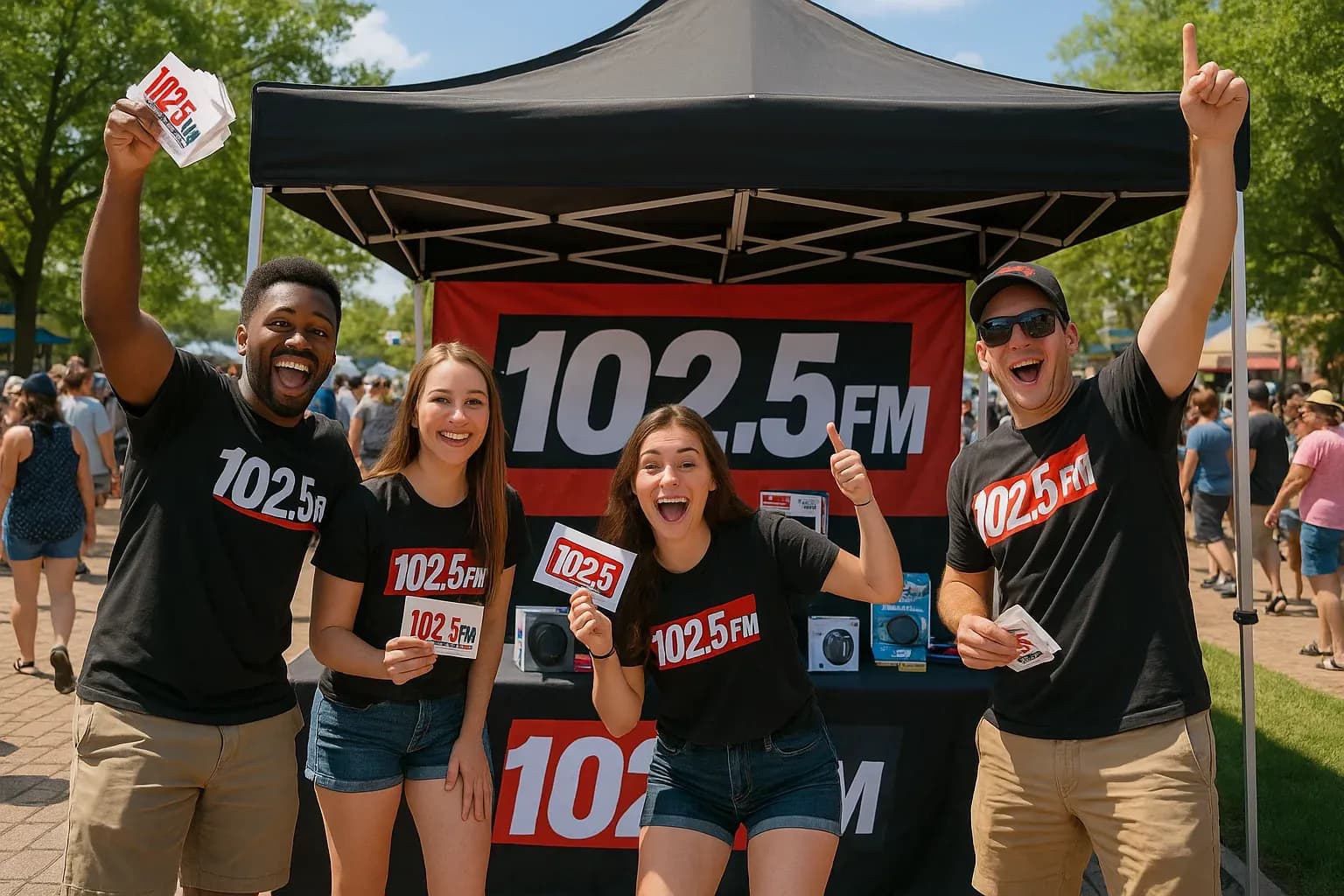
Remote broadcasts and on-location promotions have higher production cost but generate disproportionate brand impact — especially for local connection and sponsor relationships.
11. Remote Broadcast Giveaway
How it works: Set up at a sponsor location. Run a live, on-location contest with a crowd-drawing element — wheel spin, trivia with audience participation, reaction game. The remote broadcast itself becomes the content.
Why it works: Connects the radio brand to local physical spaces. Generates social content (photos, short video). The sponsor gets foot traffic; you get a live content moment. Understanding how to drive revenue through content makes the case for sponsor investment here.
Revenue angle: Location sponsors the remote + the on-air promotion leading up to it.
12. Concert Pre-Show Experience
How it works: Partner with a venue to give a listener the backstage, meet-and-greet, or early access experience at a local or touring show. Promote it leading up to the show. Announce the winner live.
Why it works: Music-adjacent for all music formats. The prize is experiential — not a thing, but a memory. High perceived value, often relatively low actual cost if venue is a partner.
Revenue angle: The venue or concert promoter may co-sponsor in exchange for promotional value. Add a radio sponsor for the "prize reveal" moment.
13. Community Scavenger Hunt
How it works: Hide prize envelopes (or branded items) at locations around your market. Drop clues on air over a week. First listener to each location wins. Use social media for photo verification — listeners post proof, you amplify.
Why it works: Gets listeners off the couch and into the community. Radio station as participant in local life, not just background noise. Works extremely well in small to mid-markets where community identity is strong.
Revenue angle: Partner with local businesses as "hiding spots" — they get foot traffic and you get sponsor income. Each business location can be a separate sponsor unit.
14. Battle of the Brands
How it works: Two local businesses compete in a listener-voted head-to-head over several weeks. Best pizza place in town. Best coffee shop. Best car wash. Weekly on-air debates, listener votes, social commentary. A winner is crowned.
Why it works: Creates sustained content over a promotion arc. Drives listener engagement and social discussion. Both businesses get coverage and promotion — they're motivated to mobilize their own customer bases to vote.
Revenue angle: Both competing businesses pay a sponsorship fee for inclusion. You've just sold the same promotion to two sponsors.
15. VIP Experience Upgrade
How it works: Someone buys a ticket to an event. You upgrade them — seats, backstage, dinner with a cast/performer/athlete. Listeners register via a keyword or app. Winner announced on air.
Why it works: The "upgrade" mechanic works because the winner already has some level of investment in the event. The prize feels personal, not random. High emotional impact from a sometimes-modest actual cost.
Sponsor-Driven Contests (5 Ideas)
The best sponsor contests feel like listener benefits, not advertisements. When you build a promotion around something listeners genuinely want, the sponsor gets association with positive listener emotion — not interruption.
16. Destination Vacation Giveaway
How it works: Partner with a travel brand — airline, hotel, tourism board, or local travel agency — for a vacation giveaway. Promote over two to three weeks with daily entry points (keyword texts, social entries, phone entries). Announce live.
Why it works: The single highest-perceived-value prize in most listener demographics. Travel sponsor wants the association with aspiration. Standard format for a reason — it works.
Revenue angle: The sponsor typically covers the prize value entirely; you monetize the promotional airtime.
17. Home Makeover
How it works: Partner with a home improvement store, furniture chain, or interior design brand. Listeners enter to win a room makeover — or a defined dollar amount toward renovation. Feature weekly "home tips" leading up to the winner announcement.
Why it works: Homeowner-skewed formats (Country, AC, Classic Hits, News/Talk) love this. The contest arc generates weeks of relevant content. The sponsor gets weekly branded integration, not just a prize announcement.
Revenue angle: The retailer funds the prize and pays for integrated mentions during the contest arc.
18. Cash Crawl
How it works: A winner enters a money machine (or simulated cash crawl at a sponsor's location) and grabs as much cash as they can in 60 seconds. The promotion emphasizes the chance at real money — not just prizes.
Why it works: Cash as a prize has universal appeal. The visual nature of a money machine creates compelling social and TV-worthwhile content. Strong audience draw for the announcement and reveal.
Revenue angle: A local financial services brand, auto dealer, or retailer can sponsor. "The [Brand Name] Cash Crawl."
19. Morning Makeover
How it works: Partner with a beauty salon, spa, or retailer for a complete personal makeover experience. Promote with listener submissions about "why they deserve a makeover." Read entries on air — the stories become the content.
Why it works: The submission stories are genuinely compelling content in themselves. Formats: AC, Hot AC, Country, CHR. The experiential prize creates listener loyalty that outlasts the contest.
Revenue angle: Spa/salon sponsors the prize experience plus airtime promotional value.
20. Summer Road Trip Kit
How it works: Assemble a prize package around a summer road trip — gas cards, snack brands, entertainment subscriptions, sunglasses, maybe a hotel stay. Multiple sponsors contribute to the package. One winner takes everything.
Why it works: Multi-sponsor structure allows you to sell smaller units to multiple local partners who might not fund a solo prize. Package value is high; individual sponsor cost is manageable.
Revenue angle: Four to six sponsors each contribute a component plus a sponsor fee.
Seasonal Contests (5 Ideas)
Here's the thing about seasonal contests: they give your programming calendar a content arc and give sponsors a natural tie-in reason. The best ones are built around events and moments your audience is already thinking about — not a holiday you have to explain.
21. Summer Survival Kit
How it works: Launch Memorial Day weekend with a contest that gives away everything a listener needs to "survive" summer — lawn chairs, a cooler, outdoor speaker, local event tickets, restaurant gift cards. Build the prize live on air each day for two weeks ("today we're adding…").
Why it works: Building the prize creates daily tune-in motivation. Each addition is a new mini-announcement. Sponsors love the recurring mentions. Format: Country, AC, Classic Hits, CHR.
22. Back-to-School Package
How it works: Starting mid-July, run a contest for a full back-to-school prize package — supplies, clothes, tech, maybe tuition assistance. Target parents explicitly. Entries include a brief note about their kid.
Why it works: August and September are strong ratings months — capitalize with a promotion that drives tune-in during the buildup. Stories about kids and back-to-school resonate across demos.
Revenue angle: Retail, education, and technology sponsors align well with back-to-school themes.
23. Holiday Wish List
How it works: Listeners submit their holiday wish list — a realistic one, not a Ferrari. You pick five items from one listener's list and fulfill them on air. The reveal is a live phone call.
Why it works: The call-in reveal is an authentic emotional moment. The "realistic wish list" framing makes it relatable for everyone — listeners hear themselves in the winner's list. Strong formats: Country, AC, Christian, CHR.
Revenue angle: Each wish list item can be a separate sponsor contribution.
24. Valentine's Day Date Night
How it works: Partner with local restaurants, florists, and entertainment venues for a complete Valentine's Day package. Run the contest the week before, announce on Valentine's Day morning.
Why it works: Listener urgency (the holiday is coming), sponsor motivation (bookings, sales), and emotional content (love stories) combine. The application entries often produce compelling on-air content.
25. Summer Concert Season Pass
How it works: In April or May, give away a "concert season pass" — a pair of tickets to every major show at your local venue for the summer. One massive prize, promoted all spring.
Why it works: Extends your promotional reach across the full summer season. Every concert announcement becomes a reason to talk about the contest. The venue benefits from the promotional activity around their shows.
Revenue angle: The venue often partners or partially subsidizes in exchange for the promotional value.
Making Your Contests Actually Work
Running the promotion is the easy part. Getting ratings and revenue results takes strategy.
Set an objective before you design the contest. Is this about acquiring new listeners? Retaining habitual ones? Increasing TSL? Or direct revenue? Each objective requires different structural choices. A new-listener acquisition contest looks different from a loyalty program for your current base.
Build the play-along layer. The listeners who never win need a reason to stay engaged. Trivia reveals, voting mechanics, elimination tracking, and daily arc moments keep the non-winner audience invested. That's the mechanic that moves ratings — not the prize.
Promote off-air. Social, email, and local partnerships extend your contest's reach beyond habitual listeners. That's how you actually acquire new ones. A contest that only your existing listeners hear can improve loyalty but won't grow the audience.
Leverage ratings periods. Your biggest contests should be timed with Nielsen measurement periods. The tune-in behavior you drive during a promotion is most valuable when it's being measured.
Connect to content. The best contests generate on-air content throughout their run — not just at the winner announcement. Entry stories, daily updates, social vote reveals, and build-the-prize moments are all content that makes the show better and the promotion more memorable. Pair your contest with content that gets the phones ringing and you'll compound the engagement impact.
Frequently Asked Questions
What types of radio contests work best for ratings? Contests that drive daily tune-in perform best for ratings. That means play-along mechanics, daily arc moments, and multi-week arcs timed around measurement periods. A single announcement-and-winner contest creates one listener moment. A properly structured contest creates dozens of reasons to tune in over weeks.
How do you run a radio contest that generates sponsor revenue? The most sponsorable contests have clear category fit, high perceived value, and a promotional arc that gives sponsors multiple mentions over time — not just a prize logo slap. Build sponsor integration into the contest structure from the start, not as an afterthought. Destination vacations, home makeovers, and multi-brand "survival kits" are consistently strong sponsor vehicles.
Do phone-in contests still drive tune-in? Phone-in mechanics work best when the broader audience is engaged even if they don't call. Variable caller numbers, play-along formats, and having a reason to listen for the outcome (not just hope you're caller nine) keep the full audience invested in the segment.
How often should a radio station run contests? One active major contest at a time, with smaller micro-promotions layered in for tactical objectives. Running too many contests simultaneously dilutes listener attention and reduces the impact of each. Reserve your biggest prize budgets for measurement periods and major seasonal moments.
How do you promote a radio contest effectively? On-air promotion alone is insufficient. Use social media (especially video content showing prize elements or entry moments), email lists, local event tie-ins, and cross-promotion with sponsor businesses. Listeners who don't hear your on-air promos might find the contest on Instagram — and then tune in to enter.
My take: pick two ideas from this list — one play-along format and one sponsor-friendly arc — and run them properly instead of running eight contests halfway. Structure beats volume every time. Your listeners will remember the one you did well far longer than the five you phoned in.
— Ava
Ready to simplify your show prep?
Try RCP free for 7 days. $0 until day 8