
Cinco de Mayo 2026 falls on Tuesday, May 5 — and most American radio stations are about to do this holiday wrong. Not on purpose. Because the easy version is wrong, the easy version is what your sales team already pitched to a tequila brand last week, and somebody on your morning show is about to call it Mexican Independence Day on the air.
Here's the first thing every PD should know: Cinco de Mayo is not Mexican Independence Day — that's September 16, and it's a much bigger civic holiday in Mexico than May 5 is. Cinco de Mayo commemorates the 1862 Battle of Puebla, when an outnumbered Mexican force defeated invading French troops. In Mexico, the day is observed mostly regionally in Puebla. In the United States, it grew into a broader celebration of Mexican-American identity. The stations that get this right own the day. The ones that default to sombreros, fake accents, and "Cinco de Drinko" promos hand listeners an easy reason to change the dial. I'm going to walk you through how to land on the right side — by format, with cultural context, sponsor angles, and a clear list of what to leave at the door.
What Cinco de Mayo Actually Is (And Why Your Content Should Know)
The short version: on May 5, 1862, a Mexican force of roughly 4,500 — many of them local Pueblan militia and indigenous troops, led by General Ignacio Zaragoza — defeated a French invading army of about 6,000 at Puebla de los Ángeles. The victory didn't end the French intervention, but it became a lasting symbol of Mexican resistance. Today in Mexico, the day is observed primarily in Puebla and at some military and civic ceremonies — not the nationwide festival many Americans assume.
In the United States, the holiday grew through the 20th century as a celebration of Mexican-American culture, especially in California, Texas, Arizona, Illinois, and the Southwest. Then in the 1980s, beer and tequila brands recognized the marketing opportunity and the commercial layer exploded. My take: that layer is real, and your sales team is going to chase it. The question is whether your content respects what's underneath it.
Why this matters for your station: people of Mexican origin make up roughly 40 million Americans — about 57 percent of all U.S. Latinos in 2024, per Pew Research. Your audience either includes Mexican-American listeners directly, or it includes their neighbors, coworkers, and friends. Either way, your on-air cultural literacy reflects on your brand year-round, not just on May 5.
The unifying principle: authentic beats themed. Specific beats generic. Local Mexican-American voices beat your morning show's bilingual cosplay. Keep that hierarchy in your head and the rest of this guide writes itself.
Cinco de Mayo Segments by Format
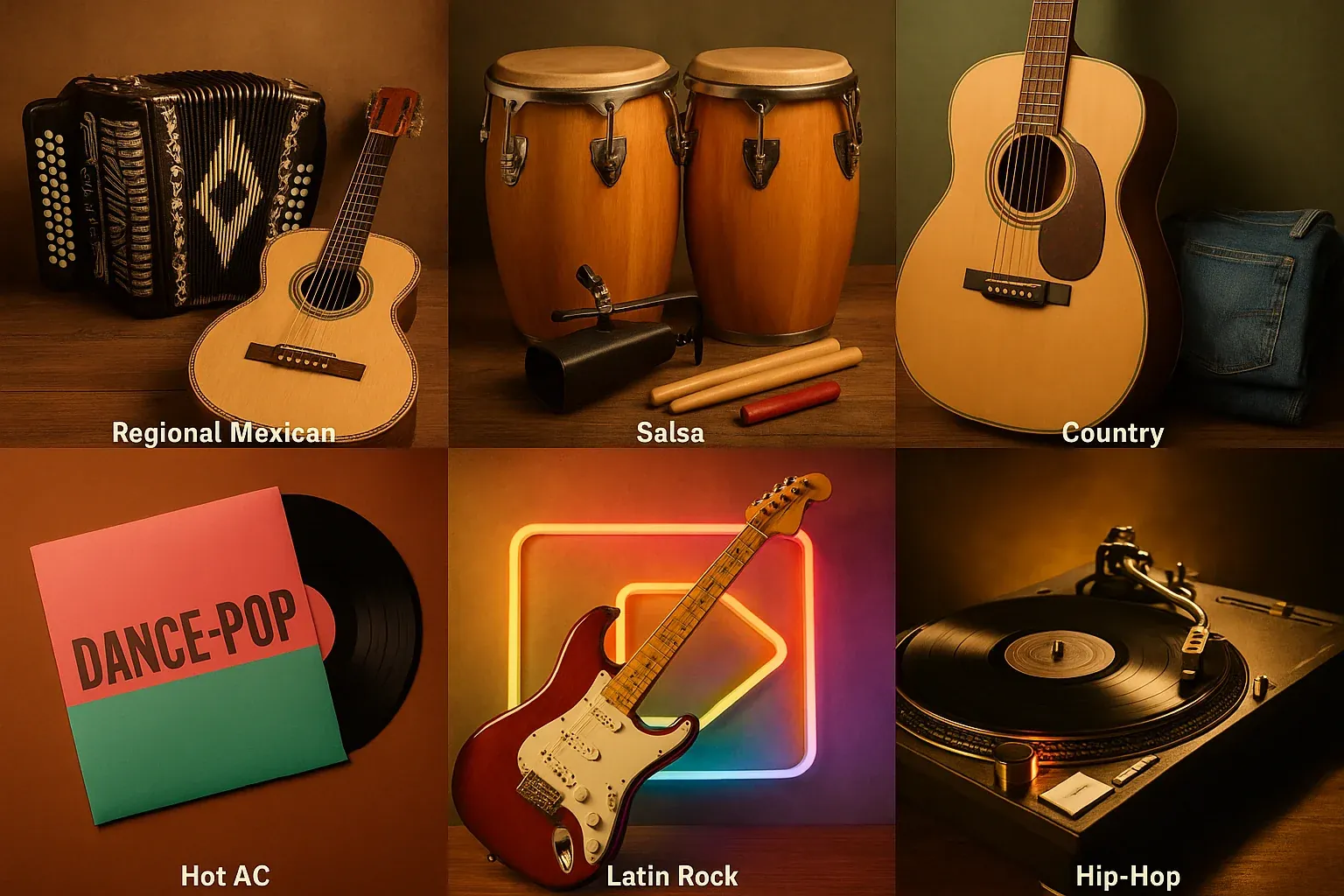
Every format has a real angle here. The angle is just different — and the formats with the deepest natural connection (Regional Mexican, Spanish Tropical) deserve the deepest treatment.
Regional Mexican
This is your day. If you program Regional Mexican, Cinco de Mayo is one of your three biggest content opportunities of the year, alongside September 16 and Día de los Muertos. The audience expects substance, not surface.
Banda and Norteño Programming Spotlights. Build dedicated programming around Mexican music traditions tied to Puebla, the Bajío, and the broader story of Mexican civic celebration. Bring in local mariachi groups, banda ensembles, and norteño acts for live cuts or pre-recorded features. Your audience knows the difference between a playlist selected with care and a generic mix — show the care.
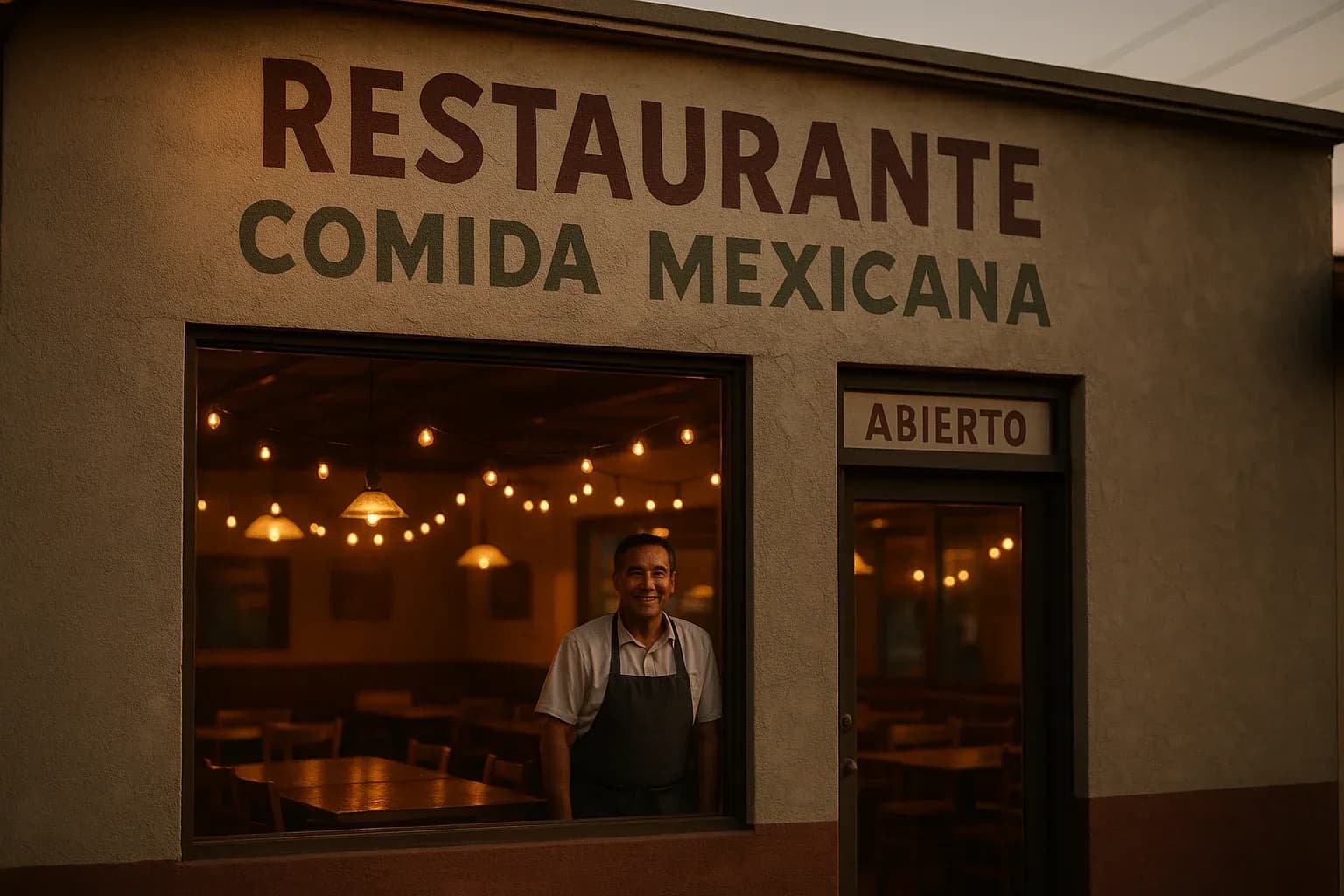
Local Mexican-American Business Features. Run a week of features on Mexican-American-owned businesses in your market — restaurants, panaderías, mercados, bakeries, salons. Have the owners on-air. Tell their family story. The Cinco de Mayo content that lasts is the content that introduces your market to neighbors they didn't know they had.
Puebla-Origin Hosts and Callers. If your market has a Pueblan community — and many U.S. markets do, especially New York (which hosts the largest Pueblan diaspora in the country), as well as Los Angeles and Chicago — find them. Their connection to the actual history is direct. A two-minute call from a listener whose grandparents were born in Puebla outperforms a two-minute curated history segment every time.
Mexican-American Achievement Stories. Profile Mexican-American leaders, entrepreneurs, artists, athletes, and civic figures from your market and the national stage. In the U.S., Cinco de Mayo became a celebration of contribution. Make your programming reflect that.
If you haven't seen what RCP delivers for Regional Mexican, our RCP El Grito format kit is built for exactly this — Spanish-language show prep written by people who know the difference between banda and norteño and don't need it explained.
Spanish Tropical / Caribbean
Cinco de Mayo isn't a Caribbean holiday, but the broader Latin-unity framing absolutely lives here. Your Puerto Rican, Dominican, Cuban, Colombian, and Venezuelan listeners will tell you the same thing: Mexican-American success in the U.S. created room for the broader Latin community. Lean into it.
Cross-Cultural Latin Music Programming. Build a "Latin music across the Americas" block — salsa to mariachi, reggaeton to banda, bachata to norteño. Use the day to showcase the breadth of Latin musical traditions. Your DJs can speak to the connections.
Pan-Latin Solidarity Framing. Cinco de Mayo as a celebration of Latin contribution to American culture broadly. Feature voices from across the diaspora — Caribbean audiences celebrating Mexican-American achievement and vice versa. The framing is unity, not appropriation.
Local Latin Business Features. Same playbook as Regional Mexican but expanded to the full Latin business community in your market. The goodwill from those businesses lasts long past May 5. RCP's Tumbao kit is built for this — Caribbean-format content with the cultural literacy your audience expects.
Country
Country has a real Cinco de Mayo lane. The cultural and musical bridges between country and Tex-Mex are deeper than most stations program around — and your border-state listeners already live this every day.
Build a feature on the country–Tex-Mex crossovers: Freddy Fender's "Before the Next Teardrop Falls," Flaco Jiménez and the Texas Tornados, Linda Ronstadt's Canciones de Mi Padre, the Mavericks, Robert Earl Keen's collaborations with regional Mexican artists. This is country history your audience should know. If you're programming country in Texas, Arizona, New Mexico, or Southern California, the Mexican-American restaurants, ranches, rodeos, and music venues in your market are part of the country fabric of the place. Profile them — not as a Cinco de Mayo gimmick, but as a Cinco de Mayo introduction to year-round coverage.
Avoid: "Country goes to fiesta" framing. Reducing a culture to a costume is the move that costs you Mexican-American sales prospects, and the damage outlasts the day.
Hot AC / CHR / Top 40
Your audience is Latin-music-fluent already. Bad Bunny, Karol G, Becky G, Peso Pluma, Maluma, Shakira are part of their daily playlist. Cinco de Mayo just means leaning further in. Build a Latin-pop block on the day — current crossover hits, classic Selena and Shakira, regional Mexican artists who've crossed into pop. Pair with features on the best local Mexican-American restaurants and Tex-Mex institutions in your market — the family-owned places where the food is the cultural document, not the national chain spots.
Avoid: the sombrero-and-maracas aesthetic in promos and station socials. Real photography of real local restaurants and real community moments outperforms stock graphic clichés every time.
Rock / Alternative
Latin rock is some of the most creative, durable music ever made — and most Rock formats underplay it twelve months a year. Cinco de Mayo is your reset button. Build a programming block that honors both lanes: the Mexican rock canon (Maná, Café Tacvba, Caifanes, Maldita Vecindad, Molotov) and the Chicano rock canon born in the U.S. (Ritchie Valens, Thee Midniters, El Chicano, Santana, Malo, Los Lobos, Tierra). Add Rage Against the Machine for the Chicano-political-rock thread. This is foundational American music history your audience deserves to hear. Concert-ticket and venue sponsors love this content.
Urban / Hip Hop
Latin hip-hop is a foundational pillar of the genre, and your audience is fluent. Feature the artists driving the moment — Bad Bunny, J Balvin, Cardi B, Snow Tha Product, Latto's collaborations, the deeper Latin trap and reggaeton catalog. Hip-hop's Latin community has always been intertwined with the Black community — Cypress Hill, Big Pun, Fat Joe, Cardi B's whole catalog. Build content around the cross-cultural threads in your market: local interviews with Latin and Black community leaders, music history segments, block parties.
News/Talk
Profile Mexican-American business leaders, elected officials, educators, military veterans, scientists, and artists. Substance over symbolism. Pre-record interviews so you have weeks of usable material. Cinco de Mayo can also create a window for substantive conversation about U.S.-Mexico policy, immigration, border-state economics, and bilateral trade — but read your market. In some markets that lands as substance; in others it becomes the political fight your audience came to escape. If you go there, bring genuine expertise — local economists, immigration attorneys, business leaders — not the loudest voices.
Sponsor Integration Without Stereotypes
Cinco de Mayo sponsor inventory is real. The category is large, the spend concentrates in early May, and brands want air. The question is which integrations you build and which you decline.
Categories that work: Mexican-American-owned local businesses (restaurants, mercados, panaderías, retail, services); tequila and mezcal brands when paired with substance — a Mexican-American distillery story with the founder on-air is content, a generic "margarita giveaway" is filler; heritage organizations and cultural nonprofits; Spanish-language media partners for cross-promotion.
Categories to handle with care or decline: national fast-food chains hijacking "Taco Tuesday" — the laziest category in the inventory; party stores running cliché promotions with sombreros and fake mustaches; national beer brands without cultural specificity.
The integration format that works: spotlight the business owner, not the product. "[Sponsor] presents Cinco de Mayo Stories" — featuring local Mexican-American business owners telling their own stories. The sponsor gets credible association, the business gets discovered, the listener gets actual content. Everybody wins, and nobody ends up on a Twitter thread for the wrong reasons.
Social Media Tie-Ins
Match your social strategy to your on-air strategy: real over themed. Spotlight local Mexican-American business owners with Instagram reels and TikTok features — tag the businesses, let them re-share, the content travels because it's real. Run a "What Cinco de Mayo means to your family" call-in campaign in the week leading up to May 5, and let listener-generated stories become on-air material the following day. Pair with our April content calendar for the daily hooks running into the holiday.
Avoid: sombrero emojis, fake mustache filters, and Spanish captions written by someone who doesn't speak Spanish. Your bilingual audience will notice within four seconds. Use Spanish when a fluent speaker writes it. Use English when they don't.
The Cinco de Mayo Content Landmines
Here's the part I see most show-prep guides leave out. Worth printing this list and taping it next to the studio clock.
Don't call it Mexican Independence Day. That's September 16. Any host who says this on May 5 is making a public mistake the entire Spanish-speaking audience will catch. Fix your liner sheets today.
Don't default to "margaritas and tacos." It's lazy, increasingly tone-deaf, and positions your station alongside every brand making the same mistake. Mexican-American culture is one of the deepest in the Americas — use the day to introduce your audience to a sliver of it, not to perform a costume of it.
Don't hire non-Spanish speakers to "do Spanish phrases" on air. The exaggerated-accent bit reads as mockery to bilingual listeners. It always has. If you want Spanish on your air, borrow a fluent host or contributor for the day.
Don't skip the holiday in Hispanic-heavy markets. In a market with a significant Mexican-American population, ignoring Cinco de Mayo communicates that the community isn't part of your audience. A daypart of substantive content signals respect. A full-day blackout signals indifference.
Don't run sponsor copy you wouldn't want a Mexican-American listener to hear. Read every Cinco de Mayo spot in your log out loud. If it makes you wince, send it back. And no — "Cinco de Drinko" is not a workable phrase. It is a no.
FAQ
When is Cinco de Mayo 2026?
Cinco de Mayo 2026 falls on Tuesday, May 5. With this guide published April 27, you have eight days to plan, produce, sell sponsorships, and build social runway. Tight but workable — the stations that act this week win the day.
What does Cinco de Mayo actually celebrate?
Cinco de Mayo commemorates the Mexican army's victory over French forces at the Battle of Puebla on May 5, 1862. It is not Mexican Independence Day (September 16). In Mexico, the holiday is observed primarily in the state of Puebla. In the United States, it grew into a broader celebration of Mexican-American culture, identity, and contribution.
How should radio stations handle Cinco de Mayo content respectfully?
Three rules: lead with cultural accuracy (Battle of Puebla, not Mexican Independence Day), feature local Mexican-American voices and businesses rather than themed bits, and build content that introduces your audience to the culture instead of performing a costume of it. If you want programming help built around exactly this, Ava Hart programming help can give your team a head start.
What's the difference between Cinco de Mayo and Mexican Independence Day?
Cinco de Mayo (May 5) commemorates the 1862 Battle of Puebla. Mexican Independence Day (September 16, Día de la Independencia or El Grito de Dolores) commemorates the 1810 start of Mexico's war of independence from Spain — and it is a far bigger civic and cultural holiday in Mexico than Cinco de Mayo. Confusing the two on-air is the single most common mistake American radio makes about Mexican history.
Key Takeaways
- Cinco de Mayo commemorates the Battle of Puebla on May 5, 1862 — it is not Mexican Independence Day. Get this right on-air, in promos, and on social.
- Authentic beats themed every time. Local Mexican-American voices, businesses, and stories outperform generic "fiesta" framing in every format and every market.
- Regional Mexican and Spanish Tropical formats own the day. If you program either, this is a top-three content opportunity of the year — treat it accordingly.
- English-language formats can absolutely program Cinco de Mayo. Country, Hot AC, Rock, Hip Hop, and News/Talk all have authentic angles. The angle is depth and specificity, not costume.
- The five "don'ts" are not optional — wrong holiday, lazy clichés, fake-accent bits, full-day blackouts in Hispanic-heavy markets, and wince-worthy sponsor copy. Cut them all.
Need format-specific Cinco de Mayo content — and substantive year-round prep for every format you program — delivered to your dashboard daily? That's exactly what Radio Content Pro was built for, with dedicated Spanish-language content through RCP El Grito and RCP Tumbao. Your talent focuses on connecting with listeners. We handle the grunt work. Start your free trial today.
— Ava
Ready to simplify your show prep?
Try RCP free for 7 days. $0 until day 8