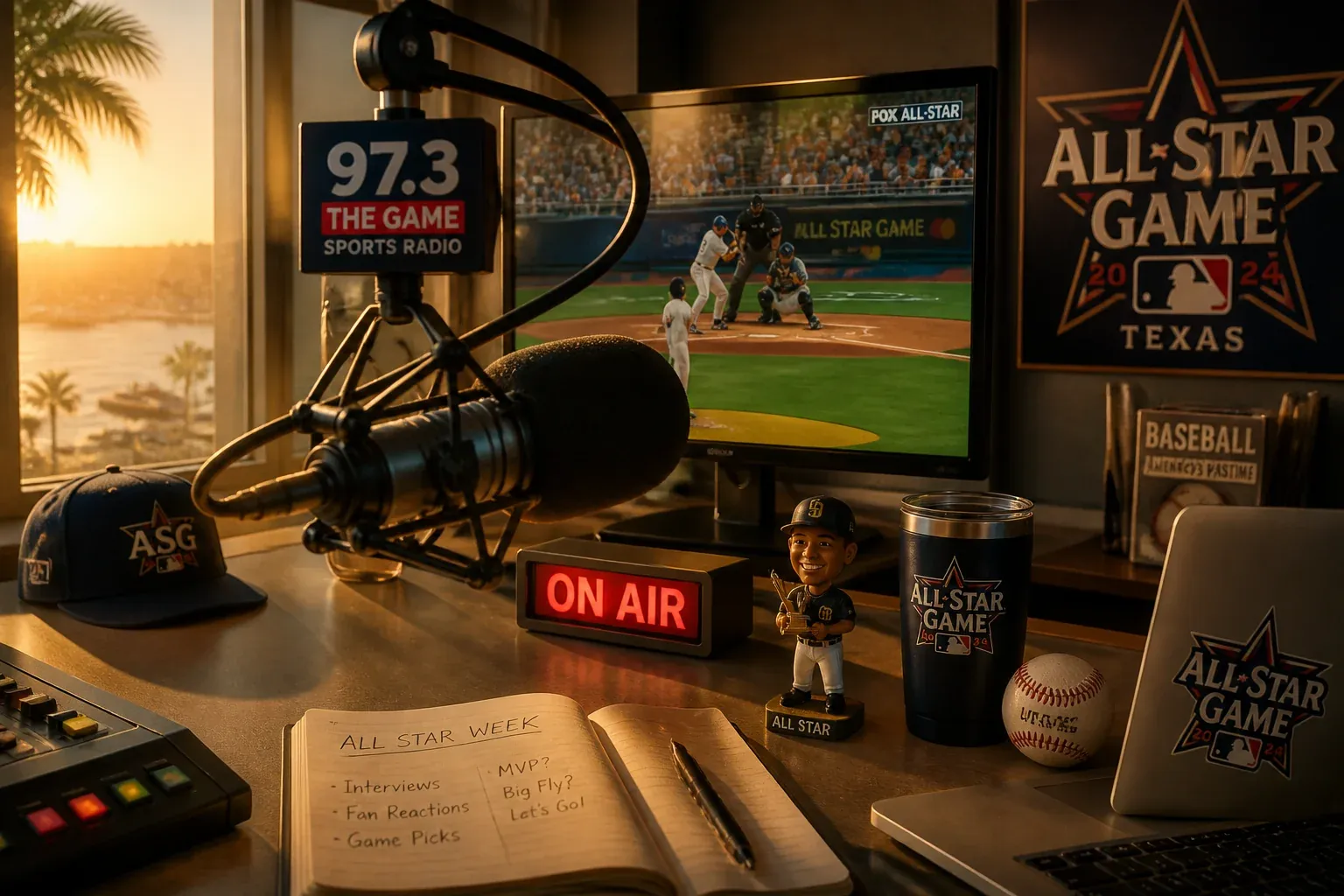

If you program a Country, AC, CHR, or News/Talk station and you've been treating All-Star week as the sports guys' week off, this one's for you. The MLB All-Star Game (Tuesday, July 14) and the Home Run Derby the night before are the rare mid-summer story your whole market is half-watching — and you don't need a play-by-play voice to use them. This guide covers why the break is a cross-format play, ready-to-run segments for every format, the Home-Run-Derby entry point, the play-along and call-in structures that actually work, the local-player angle, the Bastille Day side-hook, and the sponsor tie-ins that sell in July.
Here's the trap most non-sports stations fall into: they see "baseball" and assume it's not their story. But the All-Star break isn't really about baseball — it's about the mid-summer lull. It lands in the slowest news window of the year, right when half your building is on vacation and your listeners are coasting too. A shared, low-stakes, genuinely fun national event dropping into that quiet stretch is a gift. The stations that grab it sound planned. The ones that wait for football sound like they checked out in June.
The move isn't becoming a sports station for a week. It's borrowing the energy of the moment and translating it into your format's voice — the same cross-format instinct that works for the NBA Finals. Let me show you how to do that without faking a fandom you don't have.
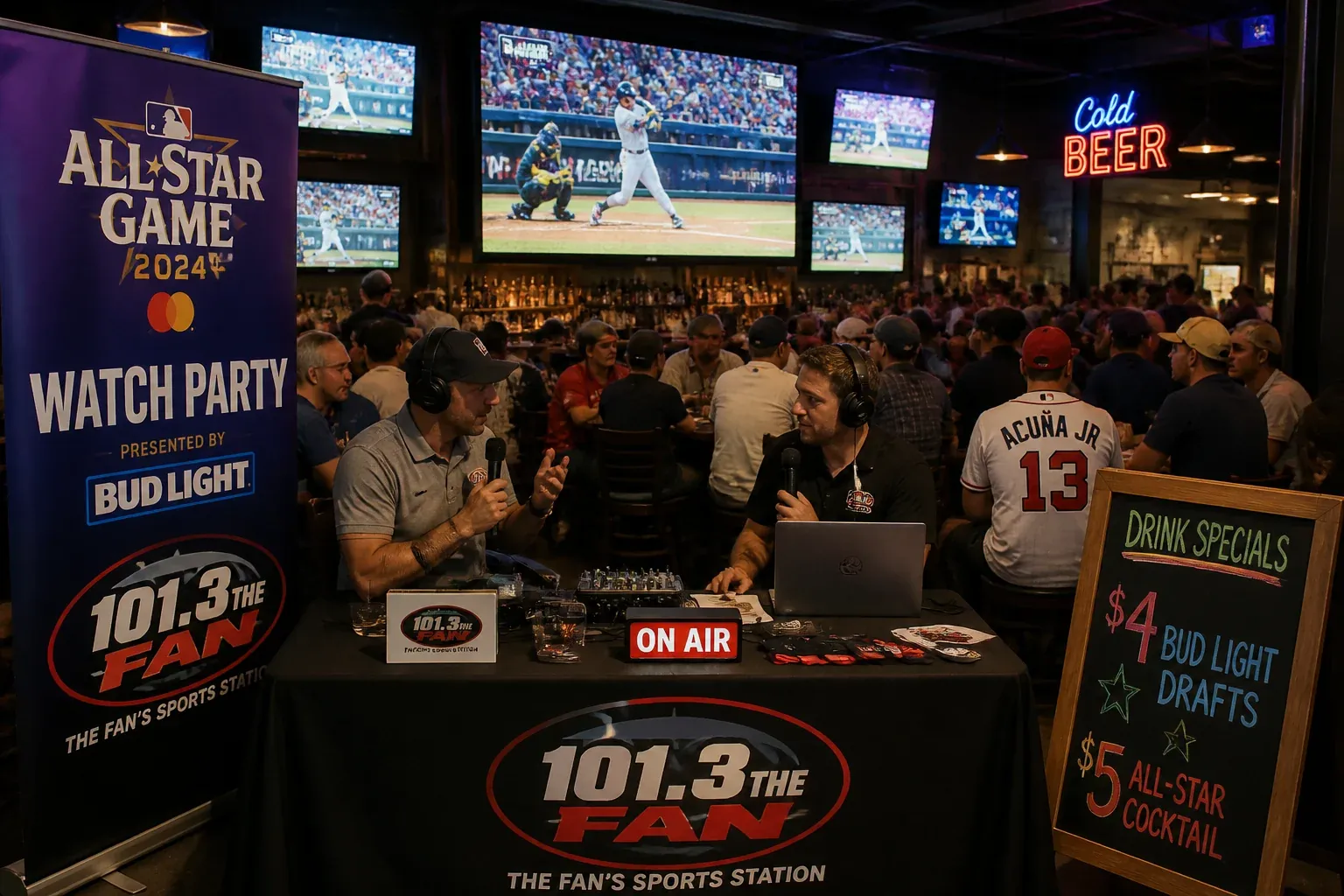
Why the All-Star Break Works on Every Format
A show-prep topic isn't valuable because it's about sports. It's valuable because it's shared — something enough of your audience already has an opinion about that you can hang a real moment on it. The All-Star break clears that bar in any market. Even listeners who can't name their team's closer know the Derby is the one where guys just mash home runs, and they have a take on whether the game "counts" anymore.
That's your opening. Industry research on show prep keeps landing on the same point: the gap between a listener thinking that's interesting and did you hear that? is personalization — taking a topic everyone has and making it specifically yours. The All-Star break is the raw material. Your format is the angle.
And the timing does half the work. The break sits at the heart of summer's lighter, out-of-home listening patterns, smack in the middle of the July content calendar. A big, easy, national hook in the middle of the slow season is exactly the kind of thing that makes a casual summer listener stop scanning and stay.
All-Star Segments by Format
You don't need a baseball segment. You need your segment, with the All-Star break as the hook. Here's the format-specific version.
Sports / Sports-Talk
This is your home field, so the bar is higher — your audience already has the rosters and the snubs. Give them what they can't get from the box score.
- The snub desk. Who got left off, who got in on reputation, who's the most overdue All-Star in your market's division. Opinion-driven, argument-friendly.
- A daily appointment segment. Same time every day through the break — "All-Star Final Word at 4:20." Industry research on Nielsen optimization is blunt: a specific, repeated appointment CTA beats a vague "tune in later" every time. Tell people exactly when to come back.
AC / Hot AC
Keep it human and water-cooler, not stat-y. Your audience watches socially — for the spectacle, the kids' reactions, the group chat.
- A "did you actually watch the Derby?" call-in. The Derby is pure spectacle — even non-fans watch for the highlights. What people remember the next morning is the longest bomb and the kid in the stands who caught one.
- A summer-night angle. "What were you doing while the game was on?" Backyard, lake, the drive home. You're mapping your audience's actual July evening, with the game as the timestamp.
Country
Country listeners carry hometown pride well, so lead with community, not the league.
- A local-watch-party shout-out block. Where's everyone watching — the bar, the firehouse, the back porch? You're mapping your market's social life, with the game as the excuse.
- A "small-town to the show" tie-in if anyone with local roots is an All-Star or even in the organization. Real people make better radio than franchises do.
CHR / Top 40
This is a culture-and-celebrity moment as much as a sports one — the Derby and game pull musicians, the anthem performer, the courtside-equivalent crowd.
- The crossover talk. Who sang the anthem, which celebrity threw out a pitch, the walk-up songs. Your audience is already tracking that; put it on your air.
- A "walk-up song" play-along. Ask listeners what their walk-up song would be. It's fast, it's personality-forward, and it works in any break.
News / Talk
The format with the most room — use it for the angles a sports station won't take.
- The business-of-the-break segment. What hosting an All-Star Game means for a city's hotels and restaurants, the economics of the week, the ad-rate story. Substantive and genuinely local.
- A nostalgia hour. The most memorable All-Star moments in living memory — the format's depth is a strength here, and it's catnip for an older-skewing audience.
The through-line: each of these is a show-prep move you'd make for any big shared story, pointed at the All-Star break. You're not covering baseball. You're covering your listeners' week — and baseball happens to be in it.
The Home Run Derby Is Your Easy Entry Point
If you only lean into one night, make it the Derby (Monday, July 13). It's the casual, no-homework half of the week — there's no strategy to explain, no standings to track. Sluggers hit bombs, the crowd loses it, and people who'd never sit through nine innings will absolutely watch a guy launch 30 in a row.
That accessibility is why the Derby is the best promotional night of the break. One of the proven summer plays radio stations run is a "Regular-Guy Home Run Derby" — your own listener version, where everyday fans (or your morning show) take swings at a local field or batting cage for prizes, tied to the real event. It's tangible, it's local, it photographs well for social, and it gives a sponsor something real to put their name on. Predictions, "who's your pick," local cages offering a derby night — the Derby practically writes the promotion for you. For the deeper baseball-coverage playbook, see how to own baseball season on your station.
Play-Along and Call-In Structures That Don't Fall Flat
Phone response has been declining for years, and "what do you think of the All-Star Game?" gets you dead air and one rambler. The fix is structure. Give listeners a frame instead of an open mic — and lean on play-along bits that don't even require a call:
- The one-sentence take. "Give me your All-Star prediction in one sentence — go." Constraint creates energy and keeps the segment moving.
- Real fan or Derby fan? "Be honest — are you a real baseball fan or just here for the Derby?" Self-deprecating, inclusive, and it lets the 90% who aren't diehards in.
- The bracket/play-along. Run a station Derby bracket or an All-Star prediction game listeners enter online. It's interactive without depending on the phones, and it gives you a name-and-email for the promotion.
Screen for energy, not expertise. The best All-Star caller isn't the one who knows the most — it's the one who's the most fun to listen to. If your phones have gone quiet, that's a fixable craft problem; here's how to pick topics that actually make the phones ring.
The Local-Player Angle (and What to Do Without One)
Your whole approach shifts on one question: does your market have a player in it?
If a local or regional player made the team: lead with them, on every format. This is a hometown story now, not a sports story. Track their week, take calls from people who knew them in high school, get the family on if you can. The pride is real, so match it.
If you've got no local connection: don't fake a rooting interest — listeners hear it. Pivot to the universal angles instead: the Derby spectacle, the walk-up songs, the "does the game still matter" debate, the nostalgia. Neutral markets are where the cross-format AC, Country, and CHR angles shine, because you're covering the experience of the break, not a box score. Knowing which game you're playing is the same ratings discipline that separates stations that grow from stations that coast.
Bastille Day: A Free Side-Hook on July 14
Here's a bonus most stations miss: the All-Star Game shares its date with Bastille Day. That's a free, low-effort second hook for the same show — a French-themed bit, a croissant-or-baguette bracket, a local French restaurant tie-in, a "fanciest thing you've ever eaten" call-in. It costs you nothing and gives your non-sports dayparts a reason to play on July 14 even if baseball isn't their thing.
Sponsor Tie-Ins That Sell in July
The All-Star break is sponsor-rich, and the categories pick themselves. Package the content with the revenue from the start.
- Sports bars and restaurants. A nightly "where to watch the Derby and the game" read or a live remote. The easiest sell on the board.
- Wings, pizza, and beer. Game-night food and beverage buys, for the obvious reason.
- Batting cages and local rec. Natural partners for a Regular-Guy Derby promotion.
- A presenting sponsor for your appointment segment. "All-Star Final Word, brought to you by [local sponsor]" turns a recurring bit into a sellable asset.
For the contest-and-promotion side — Derby brackets, prediction contests, ticket and gear giveaways — pair this with your broader summer radio promotion playbook, because the All-Star break is really just one tentpole in a long promotional summer.
FAQ
Should a non-sports station cover the MLB All-Star break?
Yes — and most should. The All-Star Game and Home Run Derby are a shared mid-summer moment, not just a sports event, and they land in the slowest news window of the year. AC, Country, CHR, and News/Talk stations can all find an authentic angle (the Derby spectacle, walk-up songs, watch parties, local business impact) without pretending to be a sports station.
What's the single best All-Star radio segment if we only do one?
A daily appointment call-in with a tight, fun prompt — "your All-Star take in one sentence" or "real fan or Derby fan?" Run it at the same time every day through the break so listeners know exactly when to come back. One repeated, well-promoted segment beats a scattered handful.
When should we run All-Star content?
The Home Run Derby is Monday, July 13, and the All-Star Game is Tuesday, July 14, 2026. Start teasing the weekend before, go heaviest on Derby day (it's the most accessible night), and run a recap the morning after the game.
What sponsors fit All-Star content?
Sports bars and restaurants, game-night food and beverage (wings, pizza, beer), and batting cages or local rec centers for a listener Derby promotion. A presenting sponsor on a daily All-Star segment is the cleanest package.
Key Takeaways
- The All-Star break is a cross-format play. It drops into the slowest news week of the year — translate it into your format's voice instead of leaving it to the sports guys.
- Lead with the Home Run Derby. It's the accessible, no-homework night, and it's the best promotional hook of the break (run your own "Regular-Guy Derby").
- Structure the interaction. Tight prompts and play-along brackets beat open-mic call-ins, and a bracket grabs a name and email for your promotion.
- Match the market. Go all-in if you have a local player; pivot to universal water-cooler angles if you don't. Don't fake a rooting interest.
- Take the free Bastille Day hook on July 14, and package content with revenue — sports bars, game-night food, and a presenting sponsor are easy July sells.
The All-Star break is a gift to summer radio: a big, shared, genuinely fun story dropped right into the quiet season, when sounding planned is half the battle. The stations that feel most alive in July are the ones in the conversation — not the ones waiting for football. If you'd rather have format-specific segments and host notes ready instead of building them between innings, work with Ava — Radio Content Pro delivers content tuned to your format so your talent can focus on the calls. Start a free trial and have your All-Star coverage mapped today.
— Ava
Ready to simplify your show prep?
Try RCP free for 7 days. $0 until day 8