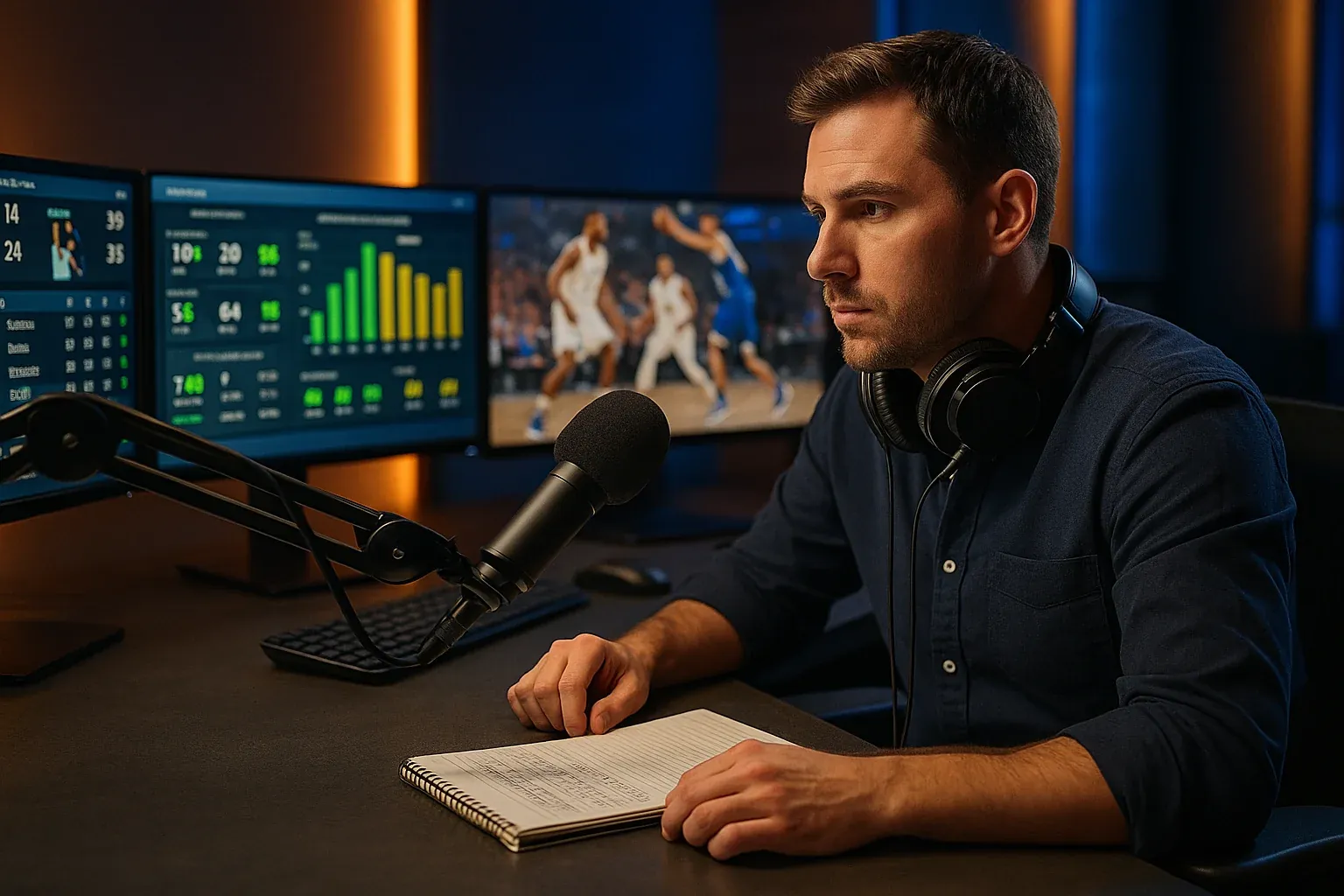

Your alarm goes off at 4:30 AM. The game ended at midnight. Three trades broke overnight. Your phone has 47 notifications from the group chat arguing about the refs. And you've got 90 minutes before the mic goes hot.
Sports radio show prep is a different animal. The content moves faster, the audience knows more, and yesterday's hot take is today's cold leftover. You can't wing it — but you also can't spend four hours prepping a four-hour show. Podcasts recently overtook spoken-word radio in weekly listening time for the first time — about 40% to 39% of spoken-word audio — but AM/FM still commands roughly 61% of all ad-supported audio listening. The audience is there. The question is whether your prep is good enough to keep them.
This guide is the system. A daily sports talk prep routine that gets you from groggy to game-ready in under an hour. Segment ideas that drive calls and keep listeners locked in. A seasonal calendar so you're never caught flat-footed when the big moments hit. And a look at how AI tools are changing the prep game in 2026 — without replacing the thing that makes sports radio work: your voice and your take.
Why Sports Radio Show Prep Hits Different
Every radio format needs prep. But sports content has a shelf life measured in hours, not days. A trade rumor at 6 PM is old news by 6 AM. The box score your audience hasn't seen yet? It doesn't exist. They watched the game. They've already read the takes on X. They're not tuning in for information — they're tuning in for your angle on it.
That's the fundamental shift that separates great sports radio from mediocre sports radio. You're not a news service. You're a conversation starter.
Here's what makes sports prep uniquely demanding:
- Perishable content. A morning show host can recycle a great relationship topic for weeks. A sports take about last night's game is worthless by tomorrow.
- Informed audience. Nearly six in ten sports fans consume sports content daily, and 83% actively follow sports news. Your listeners already know the score. They want analysis, debate, and takes they haven't considered.
- Real-time disruption. About 44% of fans see breaking sports news on social media before anywhere else. Trades happen mid-show. Injuries break during a segment. You need systems for handling breaking sports news on the fly.
- Gambling content. Sports betting is now legal in 39 states and generated nearly $17 billion in operator revenue in 2024 alone. Lines, over/unders, prop bets, "bad beat" stories, and emerging concepts like "betcasting" (real-time betting integration during broadcasts) are now core sports radio material. Barrett Media's top sports radio shows ranking proves the format's biggest names all weave gambling content into their daily mix.
- Multi-sport juggling. Depending on the season, you're covering 2-4 major leagues simultaneously. Fall means NFL, college football, NBA openers, and World Series — all in the same show.
If you're building a general show prep foundation first, our complete show prep guide covers the fundamentals that apply across all formats.
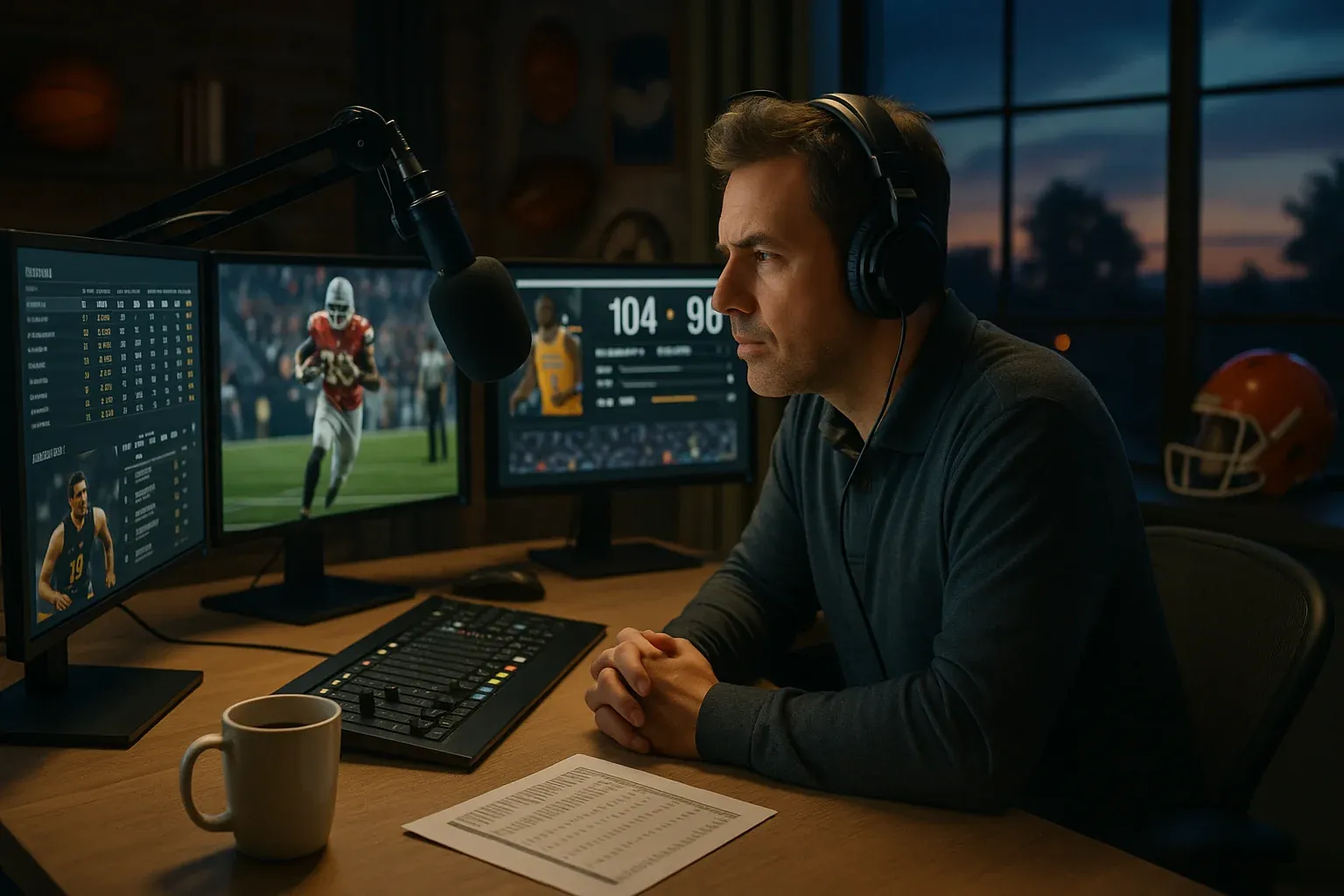
The Daily Sports Talk Prep Routine
The best sports radio hosts we work with have a system. Not a vague "I'll check the scores in the morning" approach — an actual repeatable process. Here's the routine that works across markets and show types.
The Night-Before Scan (10 Minutes)
Do this before bed. Seriously. Ten minutes saves you thirty in the morning.
- Check final scores and highlights. Not deep analysis — just know who won, any blowouts, any upsets. SportsCenter, ESPN app, or your preferred scores feed.
- Flag developing stories. Trades, injuries, suspensions, coaching changes. If something breaks after 10 PM, you'll catch it in the morning scan, but flagging overnight stories gives your brain a head start on angles.
- Note what's trending on X. The post-game social conversation tells you what your listeners will want to talk about tomorrow. If 50,000 people are arguing about a blown call, that's your A-block.
The Pre-Show Deep Dive (30-45 Minutes)
This is where prep becomes a show. Here's the morning routine, step by step:
6:00 AM — Headline scan (10 min) Pull from 3-4 sources: ESPN, The Athletic, your local beat writers, and one national columnist. You're looking for stories, not reading full articles. Scan headlines, grab the angles that spark a reaction.
6:10 AM — Rank your stories (5 min) Pick 3-5 "A-block" stories ranked by one filter: what will my audience care about most? Local team stories almost always win. National stories need a local connection or a universally hot take to earn A-block placement.
6:15 AM — Build your takes (15 min) For each A-block story, answer three questions:
- What's my position? (Not "both sides." Pick one.)
- What stat or fact backs it up?
- What's the caller bait? (The angle that makes people pick up the phone to agree or disagree.)
6:30 AM — Pull supporting material (10 min) Stats, audio clips, social media posts, quotes from pressers. You don't need a research department — you need 2-3 data points per topic that make you sound prepared.
6:40 AM — Check RCP for curated content If you're running Radio Content Pro, your Info Kit has already curated the day's sports headlines, trending topics, and talk-break material. Pull what works. Customize the rest with Ava Hart to match your voice and market.
The Show-Day Toolkit
Even the best prep gets blown up by breaking news. Build these systems before you need them:
- Breaking news protocol. When a trade or injury breaks mid-show, you need a 30-second pivot plan. Who checks the source? Who writes the tease? How fast can you get it on air?
- Caller topic seeding. Don't wait for callers to find topics. Plant the debate in your first segment: "I'm taking the Pacers over the Celtics tonight. Change my mind. Lines are open." Directed calls beat random calls every time.
- Social integration. Run a poll during the show. Read the worst takes from your mentions. Screenshot a bad prediction from last week. Social content is free prep material, and your audience loves seeing their posts on air.
Avoid the common traps that derail even experienced hosts. Here's our breakdown of show prep mistakes that kill ratings.
Sports Segment Ideas That Drive Ratings
A solid prep routine gets you ready. Great segments keep listeners tuned in. Here are the formats that work across sports talk radio.
Daily Staples
Build your show skeleton around repeatable segments:
- The Morning Line. Quick-hit takes on last night's games. Two minutes per game. Score, takeaway, one opinion. Move fast.
- The Hot Seat. Pick one controversial take. Defend it for 15 minutes. "The Lakers are better without LeBron. Here's why." The spicier the take, the more calls you get.
- Over/Under. Give listeners a number — wins, points, touchdowns — and let them call in with over or under. Simple format. Massive engagement.
- The Parlay. With sports betting legal in 39 states and Americans wagering over $166 billion annually — generating $3.7 billion in state taxes — gambling segments are ratings gold. Daily best bets, listener parlays, "fade the host" challenges. Handle responsibly, but don't ignore the demand.
Weekly Features
These give listeners a reason to tune in on specific days:
- Mount Rushmore Monday. "Mount Rushmore of [anything]." Best playoff performers. Worst trades in franchise history. Most overrated athletes of all time. The format is infinitely repeatable and always generates debate.
- The Draft. Not the NFL Draft — a hypothetical draft. "We're drafting the perfect sports bar menu." "Draft your ultimate announcing team." Listeners submit picks via text and social.
- The Blind Resume. Read a player's stats without revealing the name. Listeners guess who it is. Works for any sport. Harder than you think.
- Sound Bite Friday. Compile the week's best post-game audio — rants, hot mic moments, bizarre interviews. Play the clip, react in real time. Low prep, high entertainment.
Need more topic ideas that get phones ringing? Check out our list of radio show topics that get phones ringing.
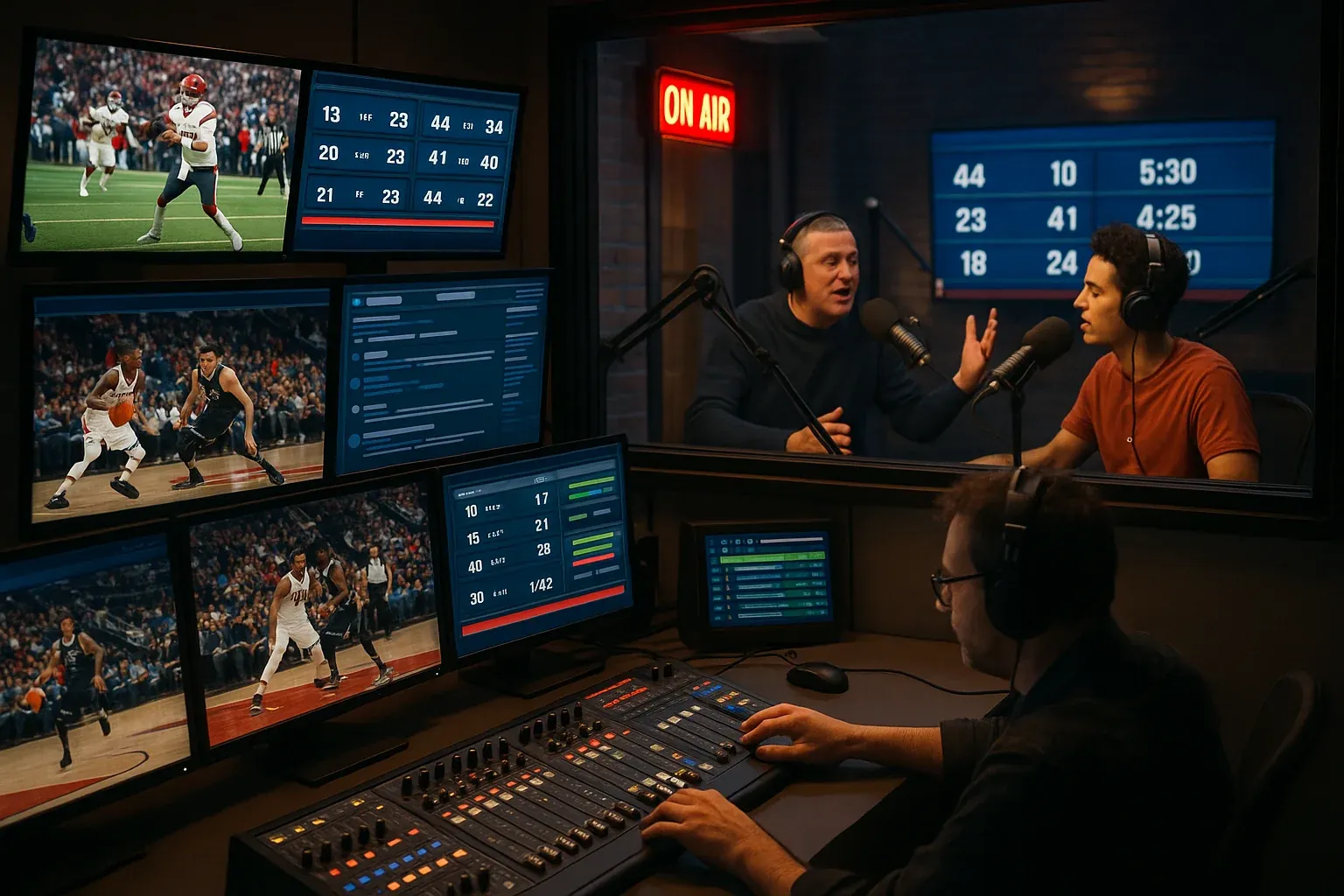
Game-Day Content That Keeps Listeners Tuned In
Game days are the Super Bowl of daily sports radio. Your audience is more engaged, more opinionated, and more likely to stay tuned. Here's how to build content around the biggest days on the calendar.
Pre-Game (Morning/Afternoon Drive)
- Matchup breakdown. Key stats, injury updates, historical head-to-head records. Give listeners the talking points they'll use at the bar tonight.
- Prediction segment. Lock in your pick on air. Make it specific: final score, MVP, biggest play. When you're right, you clip it. When you're wrong, you own it — and that's content too.
- Listener predictions. Open the lines or run a poll. "Give me your score prediction in one text." Read the best ones on air. People listen harder when their pick might get mentioned.
In-Game (If You're Live)
- Score updates every 15 minutes. Even if you're not a play-by-play station, score updates during big games keep listeners checking in. Tease the next update to build time spent listening.
- Halftime hot takes. Snap reactions at the break. What's working? Who's choking? Quick, raw, emotional — that's what listeners want in the moment.
- Social watch. Monitor X and Reddit during the game. The best fan reactions become on-air content in real time.
Post-Game (Next Morning)
- Reaction calls. Open the phones immediately. The first 30 minutes after a big game (or the first segment the next morning) are the most emotionally charged calls you'll get all week. Let them vent or celebrate.
- "Biggest Takeaway" segment. Not a full recap — one thing. The one play, one decision, one stat that tells the whole story.
- Look-ahead. End the game conversation by pivoting to what's next. "The Celtics won, but they play the Bucks Friday. Here's why that matters more." Always push forward.
The Cross-Format Play
You don't have to be a sports station to ride game-day energy. Radio reaches 93% of college basketball fans monthly — and those listeners skew high-income (average household income of $117K), making them a premium audience for advertisers. Audio ads during the tournament consistently outperform TV on attention metrics. March Madness brackets work on AC stations. Super Bowl content works everywhere. World Series game-day energy hits in any market with a local team. Our March Madness radio content guide breaks down tournament content for every format — not just sports talk.
Seasonal Sports Content Calendar for Radio
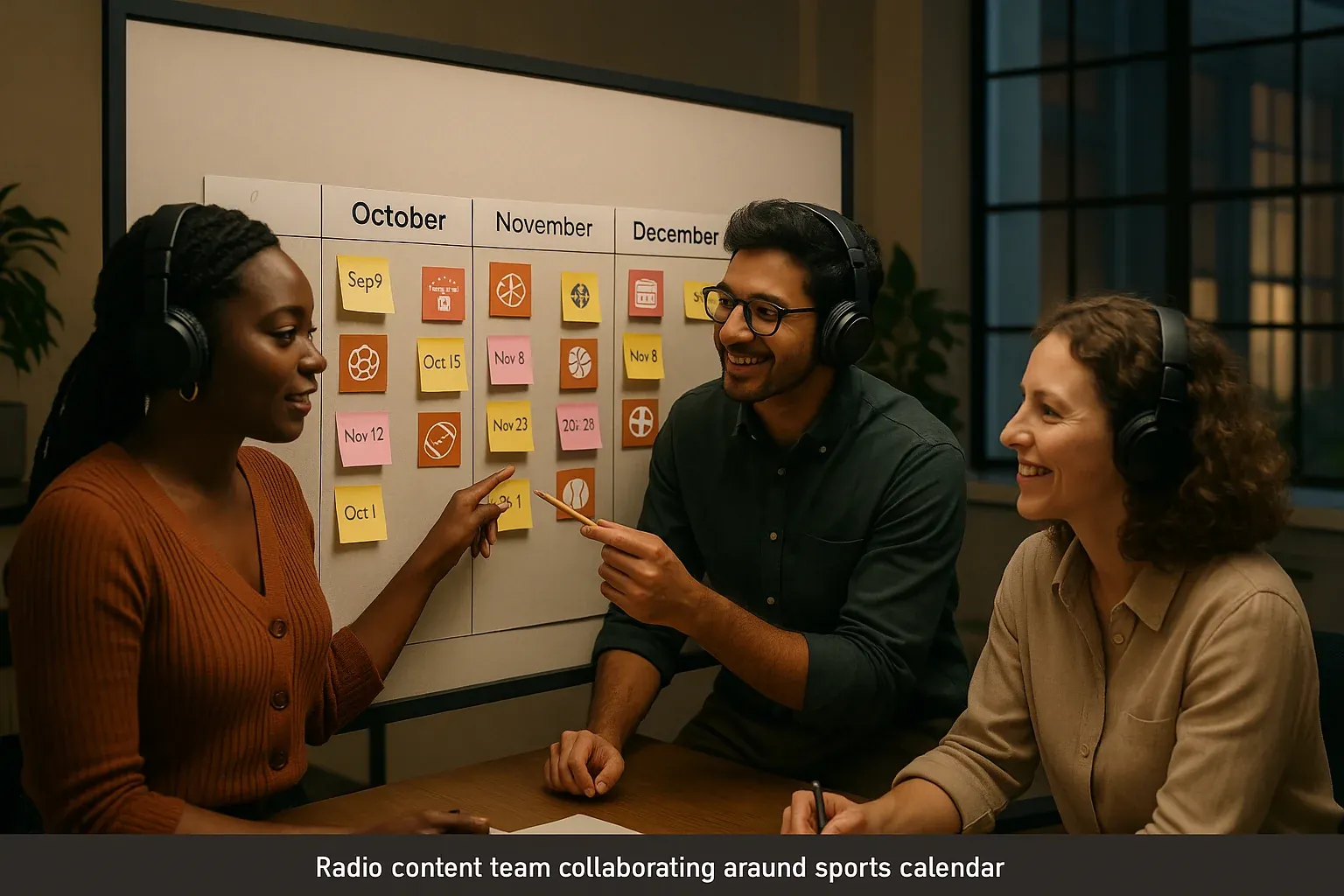
Sports radio prep isn't just daily — it's seasonal. The best hosts plan 2-4 weeks ahead because the biggest content moments are predictable. Here's your year at a glance.
Q1: January-March
- NFL Playoffs and Super Bowl (January-February). The single biggest content event in American sports. Plan Super Bowl week content at least two weeks early.
- March Madness (March). Selection Sunday through the Final Four. Three weeks of daily tournament content. Bracket contests, upset alerts, Cinderella stories.
- Spring Training (February-March). Light content, but MLB fans are hungry. Roster battles, trade rumors, and "too early" predictions fill the gap between football and baseball.
Q2: April-June
- MLB Opening Day (March-April). 2026 has the earliest Opening Day ever — March 25. Baseball is back.
- NBA and NHL Playoffs (April-June). Simultaneous playoff runs mean double the content. Smart prep means prepping both sports in half the time.
- NFL Draft (April). Three days of pure content. Mock drafts, trades, reactions, grades. The draft is essentially Christmas for sports talk radio.
- NBA Draft (June). Smaller event, but still a full day of content for basketball markets.
Q3: July-September
- MLB All-Star Break (July). Mid-season reset. Awards predictions, trade deadline speculation.
- NFL Training Camp (July-August). Football is back in the conversation. Roster battles, position competitions, injury reports.
- College Football Preview (August). Conference realignment, preseason rankings, "who's overrated" debates.
- US Open Tennis (August-September). Niche but high-engagement in the right markets.
Q4: October-December
- World Series (October). Even non-baseball fans tune in for the Fall Classic.
- NFL Mid-Season (October-November). The season's storylines are taking shape. Playoff races, MVP debates, coaching hot seats.
- College Football Playoffs (December). Expanded to 12 teams — more games, more content, more debate.
- NBA and NHL Openers (October). New seasons launch with fresh storylines and roster changes.
Plan your content calendar around these milestones. Our March 2026 content calendar shows how to map seasonal hooks to daily prep.
How AI Is Changing Sports Radio Prep in 2026
Here's the honest truth about AI and sports radio: it's not replacing you. But it is changing what you spend your prep time on. About 76% of media organizations now use AI tools in some part of their workflow, and the adoption rate in sports content is accelerating fast.
What AI does well for sports prep:
- Curates headlines from hundreds of sources before you wake up
- Pulls real-time stats and generates quick-reference data sheets
- Writes first-draft social posts and show teases
- Adapts national stories for your local market and format
- Tracks trending topics and sentiment across social platforms
What AI can't do:
- Have a take. The "I think the Cowboys are done" moment — that's you.
- Read the room. Knowing when your audience wants to vent about the refs vs. move on to the next game — that's experience and instinct.
- Build relationships with callers. The regular who calls every Monday with his fantasy lineup? AI doesn't know his name.
- Deliver personality. Your voice, your timing, your sense of humor — that's what makes sports radio radio and not a podcast.
The way we see it at Radio Content Pro, AI handles 90% of the curation work so you can spend your prep time on the 10% that actually matters: building your takes, planning your segments, and bringing the energy that keeps people tuned in.
Tools like our Info Kit for News/Talk formats deliver curated sports content daily — headlines, trending stories, talk-break material — so you're not starting from a blank page at 5 AM. And with Ava Hart, you can customize any piece of content to match your voice, your market, and your audience in seconds.
The hosts who are winning in 2026 aren't anti-AI or all-in on AI. They're using it to eliminate the busywork so they can focus on being great on the air.
FAQ
How do you prep for a sports talk radio show? Start with a 10-minute night-before scan of scores and developing stories. Then run a 30-45 minute morning routine: headline scan, rank your stories by local relevance, build your takes with supporting stats, and pull audio or social content for segments. Use AI curation tools to handle the headline gathering so you can focus on building angles and takes.
How long should sports radio show prep take? Most experienced sports talk hosts spend 45-60 minutes on daily prep, plus a quick 10-minute scan the night before. Game days may add an extra 15-20 minutes for matchup research and prediction content. The goal is efficiency — a system that gets you show-ready without burning hours.
What's the best show prep service for sports radio? Look for a service that offers continuous updates (not just a morning dump), format-specific curation, and personalization tools. Generic prep services miss the nuances of sports content. Radio Content Pro's Info Kit delivers curated sports headlines, trending stories, and talk-break material with AI-powered personalization through Ava Hart. For a full comparison, see our best show prep services guide.
The Bottom Line
Sports radio show prep comes down to one thing: having a system. The format has seen a 6-12% dip in some markets as listening fragments across platforms, but over the past decade, sports radio has grown about 14% overall — and 84% of sports fans still identify radio as a key part of their media diet. The hosts who sound effortless on air? They're running the same routine every morning. They scan, they rank, they build takes, they pull material — and they do it in under an hour because they've turned prep into a habit instead of a scramble.
The best sports radio isn't about knowing every stat. It's about having a take and defending it. Your audience doesn't need a walking encyclopedia — they need someone who's prepared enough to be interesting and confident enough to be wrong sometimes.
Build the routine. Stock your segment toolkit. Plan around the seasonal calendar. And let AI handle the curation so you can focus on being the voice your listeners tune in for.
Ready to simplify your show prep?
Try RCP free for 7 days. $0 until day 8