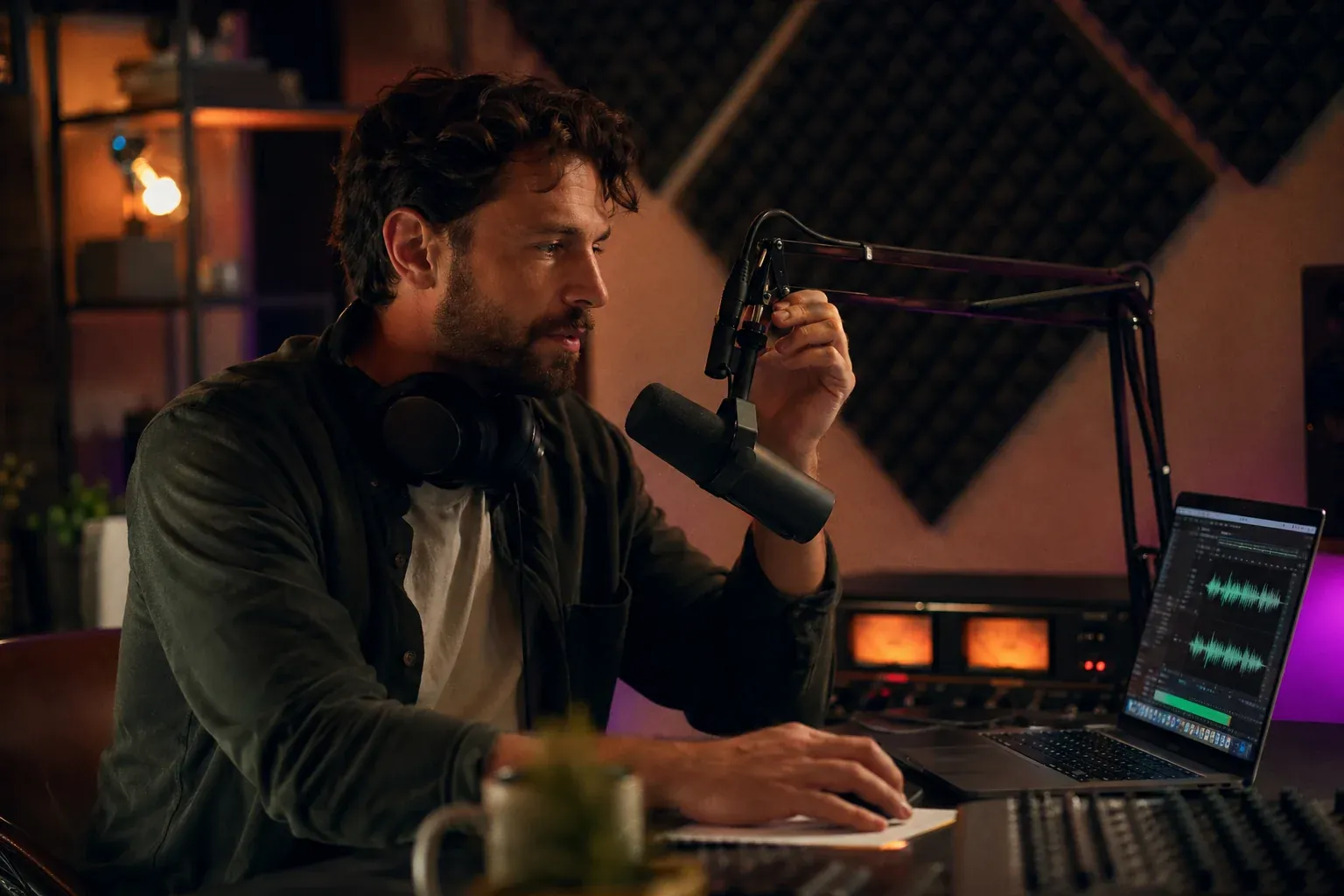

Walk into almost any radio newsroom in 2026 and you'll find two things: a folder full of unreleased show audio that could have been a podcast, and a host who keeps meaning to launch one. The split between thinking about it and shipping it almost always comes down to a handful of specific decisions — about pacing, structure, equipment, and what the show is actually for. Get those right and the rest is mechanics.
This is the practical, radio-first guide to making those decisions. Not the generic "start a podcast in 7 steps" post written for someone who has never been on a microphone — that wasn't built for you. The voice you've already developed, the endorsement chops you've already sharpened, the mic technique you bring to every shift: all of those are unfair advantages most podcasters spend years trying to manufacture. The interesting questions are the ones nobody else gets to ask.
Industry voices we work with put it bluntly. The PDs we hear from keep saying the same thing: we already have the audio, we just don't ship it. That sentence is the whole problem and the whole opportunity in one breath. The stations that close the gap between archive and feed are the ones building portable host brands, second revenue streams, and the kind of audience depth that radio alone has never delivered. The ones that don't are watching their best segments go to waste twice — once on-air, once when they fail to ship.
So here's the working version. What changes from broadcast. What you already do better than 95% of podcasters. The structural moves that separate a podcast that gets to episode 50 from one that quietly disappears at episode 6. The equipment, software, monetization model, and clip-repurposing pipeline. And — crucially — how to settle the rights conversations and the format question before you record a single episode you'll wish you hadn't.
The Unfair Advantage Radio Hosts Bring to Podcasting
Most of the skills that separate a great podcast from a forgettable one are the same skills that separate a great radio host from a struggling one. You already have them — and most podcasters don't.
Mic technique. You know proximity. You know how to talk over a mic, not into it. You can hold tone for 90 seconds without going breathy or punching out. Listen to almost any new podcast and you'll hear the opposite: hot-mouth pops, dropped consonants, level swings that make a smart episode sound amateurish. That's a year of repping you've already done.
Pacing instincts. A radio host's internal clock — the one that knows when a story has run long, when a guest needs to land the plane, when a break is coming up too fast — translates directly. Podcast listeners aren't watching a clock, but their attention works the same way. Wandering kills audio on every platform.
Endorsement reads. This is the one that surprises hosts when they realize it. Host-read endorsements are the highest-margin ad format in podcasting, and the radio personalities who already do them well on-air are sitting on top of an unusual revenue lane. The skill that took years to learn — making a sponsor read sound like a recommendation, not a commercial — is the exact same skill the platform pays for. We'll come back to this.
Audience read. Knowing what works without checking — when a tease lands, when a phoner is a dud, when to pivot — is a kind of taste that's hard to teach. You've been training it every shift for years. Bring it with you.
Storytelling structure. Radio professionals tell self-contained, three-to-five-minute stories all day. The Pixar architecture — once upon a time, every day, one day, because of that, until finally — is the same arc you build into a great talk break. Stretching it across a 25-minute podcast episode is just longer reps of something you already know how to do.
The trip-up: most radio hosts assume their advantages don't transfer because the format is different. They do. The work is to recognize what to keep and what to retire.
What Actually Changes When You Move from Broadcast to On-Demand
Five things change. Get these right and you've solved 80% of the new-medium problem.
Pacing. A podcast doesn't have a hot clock. Listeners aren't waiting for the song to come back on. The natural pace is slower, more conversational, less imaging-driven. The "and now…" energy that opens an hour will sound forced in episode three. Strip the urgency that doesn't serve the content, keep the urgency that comes from a tight story.
Length. Radio breaks are 90 seconds for a reason. Podcasts aren't. The right length is as long as the topic earns and as short as you can make it. Don't pad to hit a number, and don't cut to a number either. We've heard this principle put bluntly by veteran podcasters: listeners won't sit through wandering breaks in this format any more than they will over-the-air. Free-from-format does not mean free-from-discipline. The data on listener drop-off rewards good content over short content — and punishes wandering content at any length.
Structure. Most podcasts are built episode-first, not clock-first. A cold open, a host intro, the body, a close. That's it. No legal IDs, no top-of-the-hour news, no traffic and weather. The structure simplifies. The writing has to do more of the work, because the listener chose this episode out of an inbox of choices and you have to justify the click.
Sponsor model. This is the biggest economic shift. Radio sells :60s and :30s on a rate card. Podcasts sell host-read endorsements at CPM, on a sponsorship calendar, often through a network or a self-serve marketplace. The economics are different. The read style is different ("This episode is brought to you by…" vs. a produced spot). The audience expects you to actually use the product. Reads that sound like radio commercials get skipped — but reads that sound like a recommendation from someone the listener trusts can clear $25–$50 CPM, several times what a typical local on-air spot generates per ear. We get into the math below.
Discoverability. Radio audiences find you because you're on a frequency they already listen to. Podcast audiences find you through search, recommendations, and word of mouth. That makes show titles, episode titles, descriptions, tags, and keywords much more important than they are in radio. The hosts who break through are the ones who treat metadata as a craft, not an afterthought. The radio social media strategy guide breaks down the cross-platform content multiplication piece, and most of those tactics apply directly here.
The Cost-of-Listening Discipline
Every second a listener gives you is an investment. They paid for it with attention they could have spent elsewhere — on a different podcast, on music, on the news, on silence. They want a return on that investment, and the modern audio bar is high enough that the return has to be obvious within the first 30 seconds.
This frame changes how you build episodes. A great podcast opening isn't a host introduction — it's a promise of return. Tell me what I'm about to get, why it matters, and why I should keep listening past the intro music. Audio breadcrumbs (a callback to come, a question worth waiting for, a tension you'll resolve) keep the audience hooked without forcing the host to lose their voice or chase listeners with empty cliffhangers.
Industry storytelling research has been pointing at the same skeleton for years: Once upon a time there was X. Every day, Y. One day, Z. Because of that, A. Because of that, B. Until finally, C. It's the Pixar arc, and it works for podcast episodes the same way it works for animated features. Even informational episodes benefit from this structure — there is always a problem, a turn, and a resolution worth hearing.
The pacing payoff: a tight, well-shaped 18-minute episode beats a meandering 45-minute one in every metric podcast hosts can measure. Drop-off rate. Completion rate. Subscriber growth. Episode reviews. Sponsorship CPM. All of them favor the host who treats every minute as a contract with the listener.
Equipment: You Probably Already Own Most of It
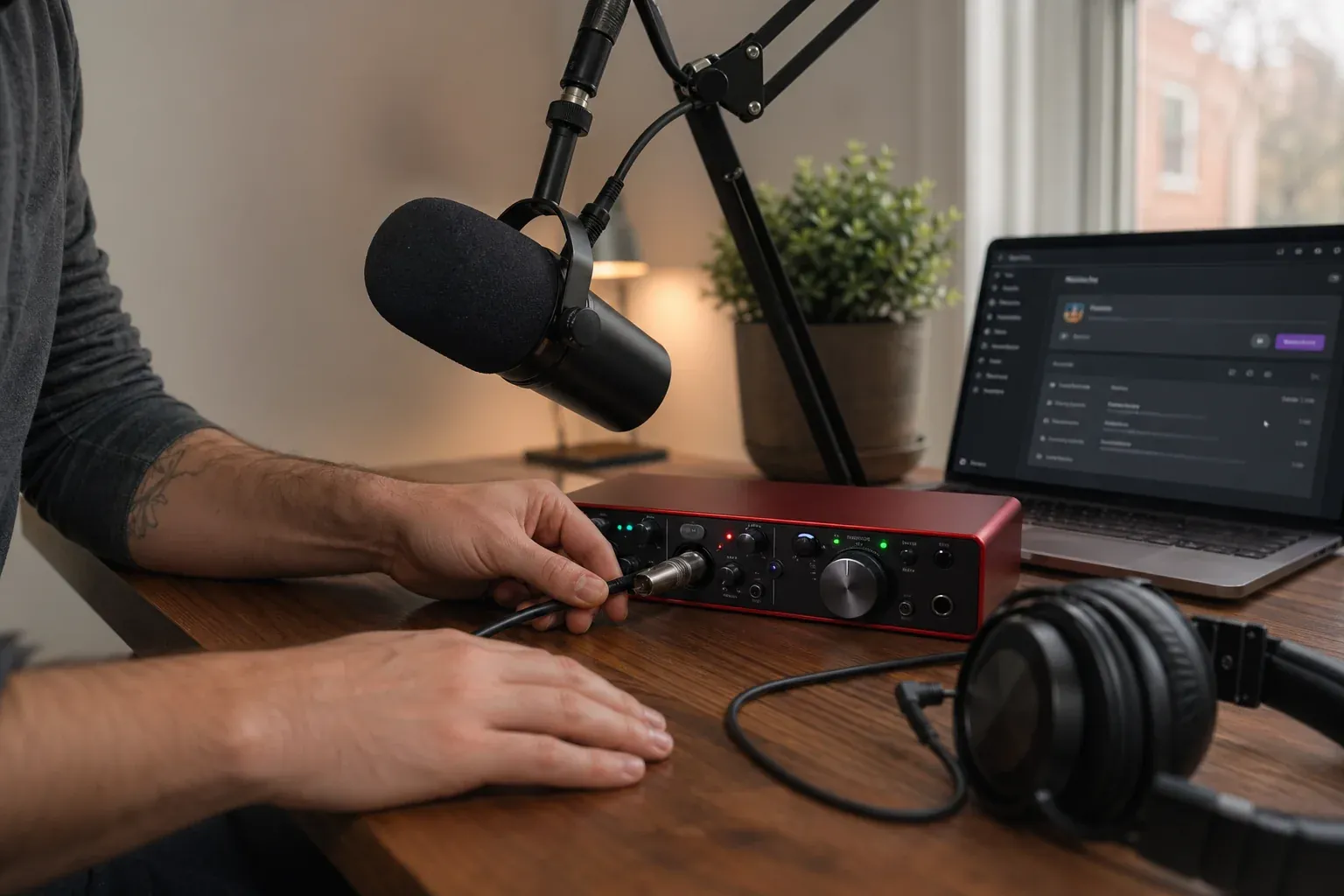
Quick honest take before the buy list: if you're an on-air host, you almost certainly have access to a usable rig already. Studio mics, headphones, an interface, a treated room — your station has all of it. The two questions are can I record there outside of my shift? and can I get the file off the workstation easily? If both answers are yes, you've already saved $400–$1,000 and most of the setup hassle.
If you're recording at home (which most podcasting hosts do, partly to stay separate from station-owned IP and partly so they can record on their own schedule), here's what's actually worth buying:
- Microphone. A Shure SM7B is the podcast standard, but it's overkill for most home setups and needs a cloud lifter. A Shure MV7+ or a Rode PodMic USB at $250–$300 is a better starting point for radio hosts who already know how to work a dynamic mic.
- Interface. If your mic is XLR, you need an interface. A Focusrite Scarlett Solo or a Rode AI-1 will do everything you need for $130–$200.
- Headphones. Use the closed-back pair you already own from the studio. Don't buy new headphones for podcasting unless yours are dying.
- Room treatment. A closet works. Two moving blankets and a rug under the desk will outperform most apartment "podcast booths" you can buy. Save the money for software.
Total: roughly $400–$500 if you already own headphones. Anything past that is a tool, not a requirement. We've seen hosts spend $3,000 on gear and never publish; we've seen $400 setups outperform them every time.
The Interview Discipline Radio Doesn't Teach
Here's a craft difference that catches most radio hosts off-guard: in radio, you do interviews live. In podcasting, you almost never should.
The veterans we hear from put it directly: take an interview live, unscripted, and unfiltered, and ten minutes in you'll already wish you'd recorded it. Guests run long. They lose the thread. They drop a great line in the middle of a tangent that buries it. They stutter a name they'll wish they'd said cleaner. None of that has to ship in podcasting — and that's the point. The whole reason you record an interview is so you can edit it.
The discipline that separates great podcast interviews from average ones:
- Record everything separately. If you're remote, use Riverside or a similar tool that captures local tracks per guest. Mixed-track Zoom recordings sound like Zoom. Local tracks sound like a studio.
- Pre-interview your guests for 5 minutes. Tell them you'll edit ruthlessly. Tell them they can ask to redo a bad answer. Tell them filler words will get cleaned up. The best interviews are the ones where the guest knows the safety net exists.
- Edit hard. Cut tangents. Cut throat clears. Cut the second time the guest tells the same story. Cut your own follow-up question if the answer made it irrelevant. A 75-minute raw recording becomes a 28-minute episode that listeners actually finish.
- Build a cold open from the best 30 seconds of audio. Pull the most compelling line from anywhere in the interview, lead the episode with it, then cut to the host intro. This is the highest-leverage editing move in podcasting and almost no radio host does it on first launch.
This is the work the format clock made invisible to you. It's also the work that makes the podcast feel professional from episode one.
Software That Fits a Working Host's Day
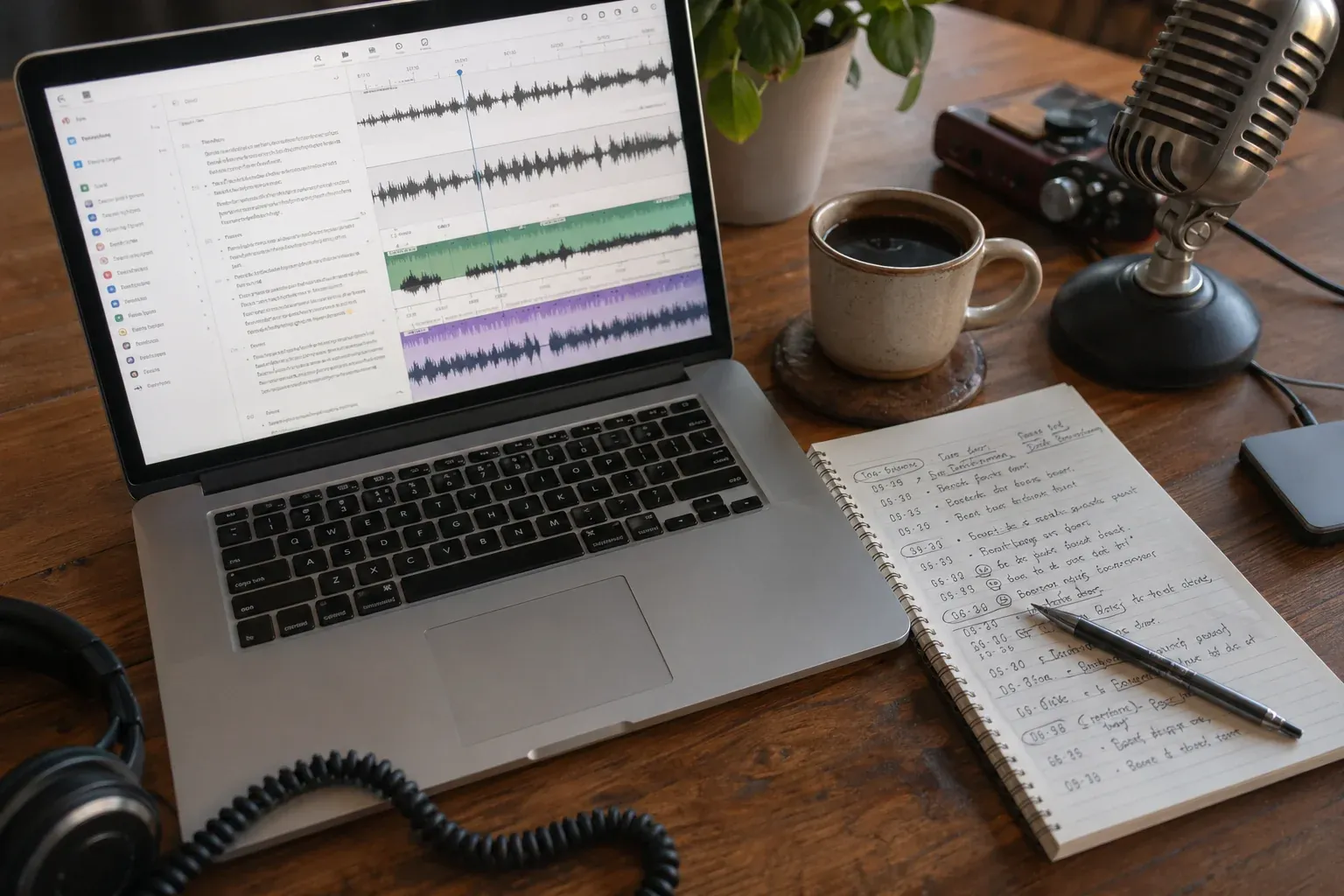
The software stack is where radio hosts make the most expensive mistakes — usually by buying enterprise tools they don't need or using free tools that cost them hours of cleanup. Here's the working short list.
Descript ($24/mo Pro) — Edits audio by editing the text transcript. For a radio host whose ear for cuts is already trained, this changes how fast a 45-minute interview comes together. Drag-to-rearrange segments, generate filler-word removal in one pass, export polished audio. The learning curve is real but small, and the filler-removal feature alone saves an hour per episode.
Riverside ($24/mo Pro) — Remote interviews recorded in studio quality (separate tracks per guest, recorded locally, uploaded after). If you're doing any remote guests, this beats Zoom and Skype recordings every time. The clean separated tracks alone are worth the money.
Hindenburg ($95–$390 one-time or subscription) — The pro audio editor a lot of newsroom and feature-podcast producers use. Worth a look if your podcast is interview-heavy or production-rich. For a host doing solo episodes, Descript is faster.
Buzzsprout or Transistor ($12–$24/mo) — The hosting platform that distributes your episodes to Apple Podcasts, Spotify, Amazon, and the rest. Don't host on your own server, don't use a free tier that disappears in 90 days. A paid host pays for itself the first month you don't have to fight a feed problem.
A note on AI tools. Generative AI is genuinely useful for podcast prep — episode outlines, show notes, social posts, transcript summaries, even draft chapter markers. The practical ChatGPT for radio guide covers the prompting tactics that translate directly. We're hearing from radio pros doing AI-assisted episode planning who say it's cut their pre-production time roughly in half — and the same lean tooling that powers a small-market AI workflow translates almost directly to podcast pre-production. Don't use AI to write the cold open — that's the part that has to be you. Do use it for the structural work that's been eating your nights.
Repurposing the Show Audio You're Already Making
Here's the part most radio hosts miss: you are producing podcast-grade content every single day. The interview segment from Tuesday's show. The bit you and your co-host rolled with for 12 minutes that worked. The phoner with the local mayor that you cut down to fit a stop set. All of that is podcast inventory if you handle the rights and the workflow correctly.
The repurposing playbook that we hear works:
- The "best of" episode. Curate four to six segments from the past week, top-and-tail with fresh host narration explaining each one. Total assembly time: 30 minutes if you've kept your pull files organized. This is the easiest podcast to launch with.
- The "extended cut." Take a strong on-air interview and release the full 25-minute version that the format clock didn't have room for. Listeners love the bonus content angle, and it justifies a host-read sponsor moment without feeling forced.
- The "behind the break." A short companion podcast where you and your co-host break down what you were thinking on a specific segment, what fell flat, what surprised you. Niche, but listeners who become subscribers from this kind of show are some of the most loyal you'll ever build.
- The "topic spin-off." You've got a recurring topic on your show that has its own audience inside your audience — pets, finances, true crime, music history. That topic is its own podcast. Run it weekly, keep episodes focused, and let it serve as a destination for listeners who already love the segment.
Don't skip the video repurposing layer. Even if you record audio-only, capture a simple webcam track. Industry voices have been pointing at this hard for the past two years: 30-second vertical clips for TikTok, Instagram Reels, and LinkedIn are the single highest-leverage marketing asset a podcast produces, and most of them require nothing more than a static webcam shot of you and a guest. Stations that have started clipping have seen download numbers double inside two months, with zero new content produced — just the same audio, packaged for the platforms where new listeners actually hunt for shows.
A clean show prep workflow makes all of this dramatically easier. The same daily curation that powers a great morning show — story selection, talk-break angles, social copy — produces podcast assets as a near-byproduct. The step-by-step show prep guide walks through the workflow that does the work once and re-uses the output everywhere.
One important rights note. Before you turn show audio into a podcast, get the rights conversation right with your station and any talent or guests on the recording. Music is the trickiest piece — broadcast music licensing usually does not cover on-demand redistribution. Strip music beds out, talk over the music for 8 seconds, or use podcast-safe music libraries. Your station's GM and a five-minute call with your performance rights organization will sort this faster than any blog post.
The Money: Where a Radio Host's Endorsement Skill Pays Off
This is the section most podcast guides get wrong, because most podcast guides are written by people who never sold a sponsor. Radio hosts have the opposite problem — most of you have sold endorsements, you just haven't run the numbers on what they're worth in podcasting.
Host-read endorsements are the highest-margin ad format in audio. Industry research on radio personality endorsements is unambiguous: listeners trust personality reads more than produced commercials, take action on them more often, and remember the sponsor longer. That trust transfers directly to podcasts — and the per-listener economics are actually better, because the audience is leaning in instead of half-listening from the kitchen.
Three revenue paths we hear working for radio-host podcasts:
- Direct host-read sponsorships you sell yourself. A local advertiser you already have a relationship with from on-air. Charge per-episode (typical range: $150–$500/episode for a small-market local audience, more if your show has any kind of national pull). Your existing endorsement relationship is the warmest sales lead in podcasting — use it.
- Programmatic / dynamic ad insertion via your podcast host. Buzzsprout and similar platforms have built-in marketplaces. Lower CPM than direct, but zero sales effort. Reasonable supplementary income once you cross 1,000 downloads per episode.
- YouTube monetization on the video version. A well-produced video podcast clears roughly $3–$10 per 1,000 views once you've crossed YouTube's monetization threshold (1,000 subscribers + 4,000 watch hours). Not your primary income, but a real second stream once you're consistently shipping.
Sound sincere or skip the read. Industry voices have been emphatic on this for a decade and the data hasn't changed: the moment a host-read starts to sound like a commercial, the listener tunes out and the sponsor relationship erodes. Your endorsement edge from radio holds only if you bring the same authenticity to podcast reads. Use the product. Have a real opinion about it. If you don't, don't take the spot.
The sponsorship math that justifies one local ad. Even one local sponsor at $200/episode covers a year of hosting plus most of your software stack on the first deal. The second sponsor is profit. The third is what funds an audio editor on the side. This is the part radio hosts under-model when they're asking themselves whether a podcast is "worth it" — they're modeling the time investment without modeling the revenue lane that already exists in their existing relationships.
A Podcast as Career Portability — Not a Promotion Tool
This is the framing radio hosts often miss when they start: a podcast isn't a competitor to your radio show. Done well, it deepens the audience relationship for your on-air work and — quietly, over time — becomes one of the most valuable assets in your career.
The reason: a podcast is portable. Your gig isn't.
Radio is a career of format flips, ownership changes, and unexpected last-Fridays. The host who shows up to the next gig conversation with a publicly searchable, on-demand portfolio of who they are as a personality — episodes, downloads, named sponsors, an audience that follows them — is a different candidate than the one who shows up with an aircheck and a story. We hear this from PDs running searches in 2026: a podcast with even a modest audience is now a baseline credibility signal, not a bonus.
Three things stations tell us they see when an on-air host launches a podcast intentionally:
- Audience deepens. Casual radio listeners become engaged podcast subscribers. They show up to remotes. They request more often. They tell people about the host, not just the station.
- Career portfolio grows. A podcast survives format flips, ownership changes, and the slow-motion industry shifts that make every radio job feel temporary. It's an asset you carry with you.
- Sponsor relationships expand. Local advertisers who already buy on-air can extend their reach with host-read podcast endorsements at a fraction of the cost of adding more spots. Stations are now bundling on-air and podcast as a single package — and the close rate is reportedly stronger than the on-air-only pitch.
Keep both lanes clear. The radio show is the broadcast — wide, daily, format-driven. The podcast is the destination — deeper, on-demand, host-driven. Cross-promote both ways. Tease the podcast on-air every day. Mention the radio show in your podcast intro. Make sure your podcast description and your on-air bio link to each other. The host's character profile guide is a useful exercise here too — clarity about who you are on-air translates directly into a stronger podcast brand.
Frequently Asked Questions
How long should my first radio-host podcast episode be?
Twenty to 30 minutes is the right starting target for most radio hosts. Long enough to deliver real value, short enough to finish without padding, and roughly the length of a daily commute. Resist the urge to release a 60-minute pilot — long episodes lose listeners and audio quality issues compound at length. Make every minute earn its place.
Should I launch the podcast under my station's brand or my own name?
Both work, but they solve different problems. Station-branded podcasts benefit from cross-promotion and existing infrastructure but live on the station's terms. Personally branded podcasts are portable to the next gig and let you own your audience, but you build them from scratch. Many radio hosts split the difference: a station-branded show feed for repurposed broadcast content, plus a personally branded passion-project podcast they own outright. Talk it through with your GM before you announce — these conversations are easier when they happen first.
How often should I publish?
Weekly is the sweet spot for working radio hosts. Daily is unsustainable on top of an on-air shift. Monthly is too infrequent for the algorithms to recommend you. A consistent weekly drop on the same day at the same time builds the habit faster than any other tactic.
Do I need to be on every podcast platform?
Submit to Apple Podcasts and Spotify on launch day — they're roughly 80% of all podcast listening. Your podcast host (Buzzsprout, Transistor, etc.) handles the syndication to the rest automatically. Don't waste time pitching individual platforms. Spend that time on episode quality and metadata.
How do I make money from a radio-host podcast?
Three paths, most commonly: dynamic ad insertion through your podcast host's marketplace, host-read endorsements you sell directly to local sponsors, or audience-supported revenue (Patreon, Apple Subscriptions). For most radio hosts starting out, host-read local endorsements are the highest-margin and easiest sale because you already have the relationships and the read skills. One local sponsor at $200/episode covers a year of hosting and most of your software stack.
Do I need video for my podcast?
You don't need a full video production, but you should capture a simple webcam track. The 30-second clips you can pull from a static-shot recording are the highest-leverage marketing asset a podcast produces — and they're free if the camera is already on. The audio episode stays the primary product. The video is the marketing.
Key Takeaways
- Radio hosts already have the hardest skills — voice, pacing, mic technique, audience read, and endorsement chops. The transition to podcasting is mechanical, not foundational.
- Five things change from broadcast to on-demand: pacing, length, structure, sponsor model, and discoverability. Get those right and the rest follows.
- Treat every minute as a contract with the listener. "As long as it needs to be, as short as it can be" beats every other length rule. The Pixar arc — once upon a time, every day, one day, because of that — works for podcast episodes the same way it works for talk breaks.
- Don't over-buy equipment — a $400–$500 rig at home, plus the studio you already work in, covers everything you need to start.
- Edit interviews ruthlessly. Recording live and unfiltered is a radio reflex. Podcasts reward the opposite: capture more than you ship, then cut hard.
- Descript + Riverside + Buzzsprout is the working stack for most radio-host podcasts. Skip the enterprise tools until you actually need them.
- Repurpose the audio you're already making — best-of episodes, extended cuts, behind-the-break commentary, topic spin-offs. Capture a webcam track for the clip-repurposing layer that doubles your discoverability.
- Host-read endorsement skill is your highest-margin podcast revenue lane. Radio hosts already have the relationships and the chops. The CPM is real and the math works on the first sponsor.
- A podcast is portable — your gig isn't. Treat it as career infrastructure, not a side project.
- Settle the rights conversation first with your station, talent, and music — before you publish anything that pulls from on-air audio.
— Ava
Ready to simplify your show prep?
Try RCP free for 7 days. $0 until day 8