
Ask most radio hosts to describe themselves on-air and you'll hear some variation of the same answer: "I'm fun and relatable. I keep it real. I love music and pop culture."
That's not a character. That's a LinkedIn bio.
The most memorable radio personalities in the history of the medium didn't survive on vibes. They had architecture — a defined on-air persona with specific quirks, specific contradictions, specific emotional hooks that listeners recognized, bonded with, and came back for. Howard Stern isn't just "edgy." He's a deeply insecure man who needs constant validation from the audience, which makes him both infuriating and impossible to look away from. Elvis Duran isn't just "warm." He's a man who genuinely loves the people around him in a way that makes every guest feel like the most important person in the room. Characters are specific.
When you can't articulate what makes your on-air persona specific, neither can your listeners. And if listeners can't articulate it, they can't talk about you — and word of mouth dies before it starts.
The radio character profile exists to solve this problem. Not by inventing a persona, but by excavating the one you already have.
Take the free Radio Character Profile → It's 28 questions, 10 minutes, and free — no account required.
What Is a Radio Character Profile?
A character profile is not a bio. It's not a resume. It's not a format clock or a show prep checklist.
A character profile is a map of your on-air personality's architecture — the structural elements that, taken together, explain why you're compelling radio. It captures the quirks listeners notice before you do, the contradictions that create tension and depth, the recurring emotional themes that could fuel months of content.
The best character profiles reveal things you couldn't easily articulate yourself. That's not a bug — that's the point. Most people are the worst witnesses to their own personalities. You're too close to it. You've lived with yourself your entire life, so the things that make you distinctly you have become invisible to you.
Think about the personalities who built 20-year careers. John Boy & Billy built a Southern rock-and-roll empire by being everyman characters who were simultaneously absurdist satirists — a contradiction that shouldn't work and absolutely does. Ryan Seacrest built a multimedia brand on relentless professionalism that somehow never feels cold. Bobby Bones occupies the strange territory of country-music insider who still sounds like an outsider — and that tension drives everything he does.
In every case, you can identify the contradictions. Contradictions are where radio personalities get interesting. Crude but vulnerable. Blue-collar but sophisticated. Sweet but with a blade-sharp wit. The contradiction is the character. Without it, you're just a pleasant voice on the radio — and pleasant voices don't build loyal audiences.
A good character profile also maps your storylines — the recurring content themes that emerge organically from who you are. These aren't manufactured. They're already there, waiting to be recognized and named. Once you name them, you can develop them intentionally.
The goal of a character profile isn't to make you perform a persona. It's to help you find your character voice — the specific position you occupy that no one else on the dial can replicate. Once you know what that is, every content decision gets easier. Every break sounds more intentional. And listeners feel the difference, even if they can't name it.
Why Most Radio Hosts Skip This (And Pay the Price)
Character profile work isn't part of the standard radio playbook. Most talent development focuses on delivery, timing, content selection, show prep fundamentals. All of that matters. None of it is the same thing.
Without a defined character, hosts are interchangeable. Your format, your music, your station imaging — those things are easily replicated by the station across the dial. The only thing they can't replicate is you. But if "you" isn't defined, they don't need to.
Here's what undefined characters cost you:
Content becomes generic. When you don't have a strong character filter, you prep by committee — whatever seems vaguely interesting to a vaguely generic listener. But the most engaging content isn't interesting to everyone. It's specifically interesting to people who get you. Without a character to run content through, you can't ask the right question: Would my character actually care about this?
PDs can't position you. Program directors talk to other PDs. They recommend talent. They build formats around personalities. If they can't describe you in two sentences, they can't sell you — and they'll invest their development dollars in talent they can sell.
Listeners can't bond with you. Bonding requires something to bond to. Listeners who are just sort of vaguely entertained by a host are one bad commute away from switching stations. Listeners who feel like they genuinely know a host — who have a shorthand, who anticipate reactions, who feel a character's specific pleasure or outrage — those are the listeners who make you part of their daily routine.
The research bears this out: character-driven aircheck coaching is consistently cited as one of the most effective (and underused) talent development tools in radio. Coaches who focus on character branding — not just delivery or content selection — produce the most meaningful and lasting talent development. Yet most stations never do it because it's harder to measure than format compliance or content volume. The result is a lot of technically competent radio that nobody remembers.
Ten-year careers are built on characters. Two-year runs are built on content. If you want longevity, start with who you are on-air — not just what you talk about.
Ready to define yours? The free Radio Character Profile tool takes 10 minutes and generates a complete 13-section profile — no account required.
The 13 Sections of a Character Profile
The free Character Profile tool generates a 13-section profile from your answers to 28 questions. Here's what each section does and why it matters.
Synopsis
Your thumbnail. Who are you on-air in three sentences? This is the version you'd hand a PD at a conference — specific enough to be memorable, short enough to actually be read. Most hosts have never written this. The exercise of compressing your persona into three sentences forces a clarity that's immediately useful.
Short Summary
A three-to-seven word tagline that captures your on-air character. Harder than it sounds. This is the thing someone would say about you when recommending your show: "Oh, you'd love her — she's [short summary]." If you can't fill in that blank in seven words or fewer, your character isn't defined enough yet.
Character-Defining Quote
Not something you actually said on-air. Something that captures how your character sees life — a line that, if you heard it, you'd immediately think yes, that's exactly right. The quote illuminates worldview. It's the philosophical underpinning of everything your character does and says on the air.
Quirks
The stuff that makes you weird in the best way. Quirks are the details listeners mention when they describe you to friends. They're usually small — the way you always take a particular angle on certain topics, a running bit that never quite makes sense but listeners inexplicably love, an oddly specific passion that bleeds into the show. Quirks are memorable. Generic is not.
Contradictions
This is the section that separates a real character profile from a bio. Your contradictions are where your personality surprises people — where two seemingly incompatible traits coexist in you. A character without contradictions is flat. Contradictions create tension, and tension is what keeps people listening. Don't sanitize this section. The contradictions you're most embarrassed by are usually the most interesting ones.
Central Conflict
Every compelling character has a driving tension — an internal conflict that generates content almost automatically. It might be the tension between wanting to be liked and being willing to tell hard truths. It might be between your small-town roots and your big-market ambitions. Between being the peacemaker in every room and harboring genuinely fierce opinions. Your central conflict is your content engine. Once you name it, you'll see it running through everything you do on-air.
Potential Storylines
This is where the profile pays dividends in your prep folder. Based on your character profile, the tool surfaces eight to twelve recurring content themes you can develop and own. These aren't manufactured topics — they're the natural extensions of who you are. A host whose central conflict is "wanting to be the expert in the room but constantly getting things wrong" has a built-in recurring storyline about public humiliation and recovery. That's months of content with a clear emotional throughline that listeners follow.
Sense of Humor
Not that you're funny. Specifically how you're funny. Dry? Self-deprecating? Observational? Do you find absurdity in small domestic moments or in massive cultural contradictions? Do you go big or find the punchline in the understatement? Your humor type shapes how you approach every break, every story, every phone topic. Knowing it precisely helps you find more of it — and helps anyone writing for you deliver in your voice.
Positive Traits
Your emotional strengths on-air — the things you do naturally that make listeners feel something. Warmth. Loyalty. Curiosity. Fearlessness. These aren't just personality adjectives; they're tools. Knowing your emotional strengths helps you lead with them intentionally, especially in breaks where you're uncertain about the angle.
Likes and Hates
What you're genuinely passionate about — and what makes your blood boil. The most engaging radio lives in genuine enthusiasm and genuine contempt. Likes and Hates aren't meant to be your actual hobbies. They're the on-air version: the topics and types of stories that light you up or fire you up. Knowing them precisely helps you curate content that hits, not content that you're performing enthusiasm about.
Endearing Qualities
Why listeners root for you. This is different from your positive traits — it's about the specific things that make you likable, the imperfections and vulnerabilities that make you human. Listeners don't root for perfect people. They root for people who are genuinely trying, who occasionally fail in recognizable ways, who let them in just enough to feel something. Your endearing qualities are your emotional hooks.
Additional Traits
The hidden dimensions — the things about your character that don't fit neatly in the sections above but that complete the picture. These often turn out to be the most interesting things in the whole profile because they're the traits that haven't been fully expressed on-air yet. They're potential, not history.
How to Use Your Character Profile
A character profile sitting in a folder isn't doing anything. Here's how to put it to work.
As a content filter. Before you pull a story into your prep for show prep, run it through your character. Ask honestly: Would my character genuinely find this interesting? Would my character have a specific reaction to this — not a generic one? If the answer is no, the story probably isn't right for your show, regardless of how trending it is. This filter alone will sharpen your prep in ways that show up in your next aircheck.
As a storyline development tool. The Potential Storylines section is your six-month content calendar in seed form. Pick two or three storylines and develop them intentionally — recurring bits, running themes, callbacks that reward long-term listeners. This is how characters become familiar. Familiarity is what builds the habitual listening that moves your PPM numbers. You can also use your profile when working with Ava Hart to get AI-generated content that's filtered through your character, not generic talent.
For team alignment. Share your profile with your PD, your producer, and your co-hosts. When everyone is building toward the same character, the show has coherence. Without it, everyone's pulling in slightly different directions and the result sounds unfocused. The profile becomes a shared document — a reference point for creative decisions. Would this bit work for this host? Check the profile. It's also useful for imaging and production: promos that spotlight specific character traits are more memorable than generic station imaging, and your profile gives production the raw material to build them.
As a coaching reference. If you work with a talent coach, the character profile is the starting point for every session. It replaces the 20 minutes of general conversation at the beginning of an aircheck and gets you to the specific development work faster. For voice tracking, where the character has to survive without the real-time energy of a live show, the profile is especially critical — it keeps every pre-recorded break anchored to a specific persona.
For morning show development. Morning shows live or die on ensemble character dynamics. Individual profiles reveal how characters interact — where they complement each other, where they create productive friction. The best morning show teams aren't three hosts who all get along; they're three characters whose profiles create natural, repeatable tension.
How Our Free Character Profile Tool Works
The Character Profile tool is available to everyone at radiocontentpro.com — no account required, no strings.
Here's what the process looks like:
28 questions across 5 categories. The questions cover personality traits, strengths, quirks, inner world, reactions to situations, and your on-air brand. They're designed to surface things you know about yourself but haven't articulated — and a few things you might not know at all.
About 10 minutes to complete. Most people finish in a single sitting. The questions build on each other, so it helps to go straight through rather than pausing and returning.
Ava generates your 13-section profile. Once you submit, Ava Hart analyzes your answers and produces the full 13-section profile — not a template with your name plugged in, but a genuine synthesis of the patterns in your answers. The character-defining quote, the potential storylines, the contradictions: those emerge from your answers.
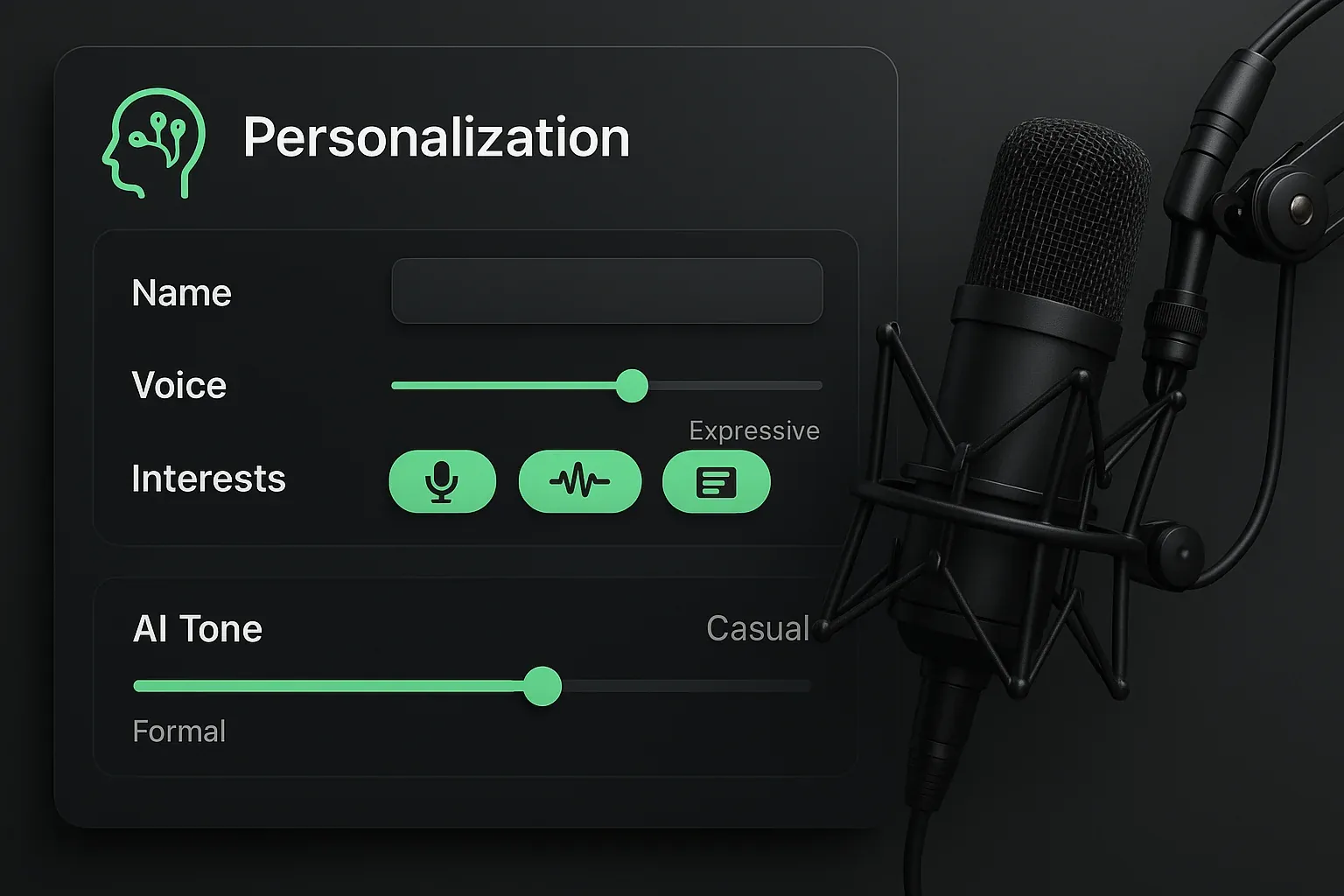
Download PDF and share with your team. You get the full profile on-screen plus downloadable PDF and Word documents. Print it, tape it to the studio wall, share it with your PD, paste the Ava Summary into your RCP customization settings. Do whatever helps you use it.
Retake anytime. Characters evolve. If you've been at a station for two years, or if you've moved markets, or if you've been through something significant personally, your on-air character may have shifted. Retaking the profile gives you an updated map.
Take the Free Character Profile →
Ready to simplify your show prep?
Try RCP free for 7 days. $0 until day 8
Know your character before your next aircheck. The Radio Character Profile is free, takes 10 minutes, and gives you a 13-section PDF you can share with your PD today. No account required.
Frequently Asked Questions
What is a radio character profile?
A radio character profile is a structured document that maps the personality architecture of a radio host's on-air persona — including quirks, contradictions, central conflict, potential storylines, sense of humor, and emotional traits. Unlike a bio or a resume, a character profile focuses on the specific elements that make a host compelling and memorable to listeners. It's the tool talent coaches use to help hosts understand what makes them distinct on-air, and what content themes they can develop and own.
How is a character profile different from a bio?
A bio tells you what someone has done. A character profile tells you who someone is on-air. A bio covers career history, stations, markets, achievements. A character profile covers quirks, contradictions, central conflict, and the emotional hooks that make a host relatable. Most radio talent has a bio. Very few have a character profile — which is exactly why most radio talent is interchangeable, and the handful who've done this work are not.
Can a character profile help improve ratings?
Indirectly, yes — and the effect is significant over time. Ratings are built on habitual listening, and habitual listening is built on emotional connection. Emotional connection requires a character listeners can bond with. A character profile doesn't improve your ratings the way a new bit or a strong phone topic does; it builds the foundation that makes all of those things more effective. Stations that invest in character development consistently outperform stations that invest only in content volume, because character is what keeps listeners coming back after the content cycle resets.
How often should I update my character profile?
There's no fixed schedule, but a good rule of thumb is to retake it whenever something significant has changed — a new market, a format shift, a new co-host, or a major life event that's reshaped how you see things. Some hosts refresh annually as part of their talent development routine. Others do it whenever an aircheck reveals that the show has drifted from its core identity. The profile is most valuable as a living reference, not a one-time exercise.