
PM drive hosts — we see you. It's 2:15 PM. You've got 45 minutes before the mic goes hot. The morning show just wrapped their post-mortem meeting and cleared out. The news cycle has been churning all day — three stories you flagged at noon have already evolved twice. Your phone is blowing up with takes about the trade that dropped at lunch. And somewhere in your market, 200,000 people are about to get in their cars and decide whether to tap your preset or open a podcast.
Welcome to afternoon drive. The most valuable daypart nobody talks about.
Here's the thing: search for "radio show prep" and you'll find a hundred guides for morning shows. Prep checklists, segment ideas, content pipelines — all built for the 5 AM alarm crowd. Afternoon drive? Almost nothing. It's the second-most-listened-to daypart in American radio, pulling comparable cume to mornings in many markets, and the show prep resources for it could fit on a napkin. The stations we work with tell us the same thing: budgets are tight, staffing's thin, and PM drive keeps getting treated like the consolation prize. It isn't.
That's a problem. Because PM drive isn't "morning show, but later." The audience is different. The energy is different. The prep is different. And the hosts who understand that difference are the ones winning afternoons.
This is the guide that should have existed years ago — a complete afternoon drive show prep system with the daily routine, the segment toolkit, and the content strategies that turn commuters into loyal listeners. Let's dig in.
Why Afternoon Drive Prep Is a Different Game
Every daypart has its personality. Mornings are about energy, information, and routine. Middays are background listening. Evenings are niche. But afternoon drive sits at a unique psychological inflection point: your listener is transitioning from their work identity to their personal identity. They're decompressing. And that shapes everything about how you prep.
Here's what makes PM drive prep fundamentally different from morning prep:
- The day has already happened. Morning shows preview the day. Afternoon shows react to it. Your listener has been consuming information for eight hours — they don't need more headlines. They need angles, takes, and conversations that help them process what they've already seen. If you need the foundational prep system first, our complete radio show prep guide covers the basics for every daypart.
- Commuter behavior is ruthlessly predictable. People leave work at the same time every day. They hit the same traffic. They arrive home at the same time. That predictability is your weapon — listeners develop habitual tune-in during afternoon drive more than almost any other daypart, and aligning your content rhythm with their commute pattern directly impacts your ratings.
- You're often flying solo. Morning shows get teams — a host, a co-host, a producer, a news anchor. Afternoon drive is frequently a one-person operation. That means your prep has to be tighter and more self-sufficient. There's no co-host to carry a segment while you scramble for your next topic.
- Breaking news is your advantage. Stories that broke at 10 AM have had six hours to develop. You've got updated information, reaction quotes, social media response, and emerging angles that the morning show couldn't access. This is your edge — don't waste it by recapping what everyone already knows.
- The mood is decompression, not acceleration. Morning listeners are caffeinating, commuting, and ramping up. Afternoon listeners are unwinding. The best PM drive content feels like a conversation with a smart friend at the end of the day — informed but not intense, entertaining but not exhausting.
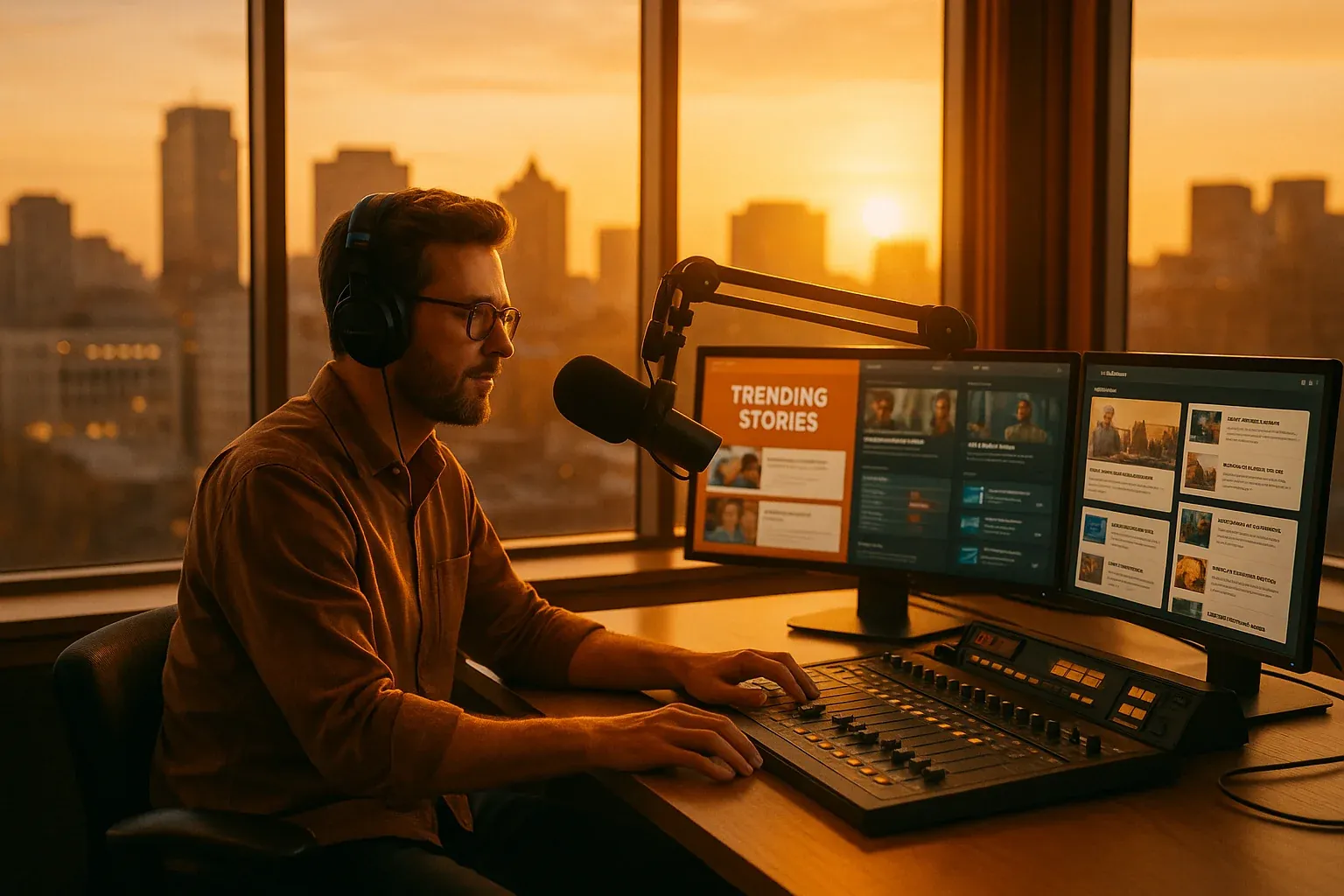
The Afternoon Drive Prep System
Here's the biggest mistake we see afternoon hosts make: prepping like a morning host who just woke up late. PM drive prep has a completely different rhythm. You have the luxury of a full day of developing stories — use it.
The Morning Check-In (10 Minutes, Before Noon)
You're not prepping the show yet. You're setting the radar.
- Scan the morning show's content. Know what your station already covered. Your audience may have heard it. Don't repeat — advance, contradict, or add dimension.
- Flag 5-6 developing stories. These are stories with legs — things that will evolve throughout the day. Political developments, sports trades, local controversies, viral moments that are still growing.
- Note the social conversation. What's trending on X and TikTok right now? By 3 PM, today's morning trends will have matured into fully-formed takes. Track them early so you can be ahead of the curve, not riding it.
The Deep Prep Session (30-40 Minutes, 12:30-1:30 PM)
This is where the show gets built. Do this after lunch, when the day's stories have taken shape.
12:30 PM — Story triage (10 min) Revisit your morning flags. Which stories have grown? Which died? Rank your top 4-5 by this filter: what will my listener want to talk about on their drive home? Remember — they've had the same day you've had. They've seen the same headlines. Pick the stories that have an emotional hook, not just an informational one.
12:40 PM — Build your angles (15 min) For each story, answer: what's the conversation my listener is going to have at dinner tonight? Your job is to give them that conversation first, in the car. For each topic, prep:
- Your take (clear position, not "on the other hand")
- One surprising fact or stat they probably haven't seen
- The phone-bait question (what makes someone call in or text)
If you're stuck on finding angles that generate listener response, our list of radio show topics that get phones ringing is a solid starting point.
12:55 PM — Evening preview content (5 min) What's happening tonight in your market? Games, concerts, events, TV premieres, restaurant openings. Your listener is driving toward their evening — give them something to look forward to. This is content morning shows can't touch.
1:00 PM — Pull supporting material (10 min) Audio clips, social posts, stats, quotes. You need less supporting material than a morning show because your stories have had all day to develop — but the material you pull should be fresher. A quote from a 2 PM press conference beats a quote from a midnight press release.
The Pre-Show Sharpening (15 Minutes, 2:30-2:45 PM)
2:30 PM — Final scan (5 min) What broke in the last hour? Afternoon drive lives and dies by recency. A story that broke at 2:15 PM is gold — your listener hasn't heard anyone talk about it yet.
2:35 PM — Lock your A-block (5 min) Pick your opening topic. It should be the single most talkable story of the day. For afternoon drive, "talkable" means something your listener is already thinking about and wants to hear a smart take on.
2:40 PM — Check RCP for curated content (5 min) If you're running Radio Content Pro, your dashboard has already curated the day's developing stories, trending topics, and talk-break material. For PM drive, the afternoon content refresh is particularly valuable — it surfaces stories that have evolved since morning. Customize with Ava Hart to match your voice and market.
Protecting Your Quarter-Hours
One tactical note that's critical for PM drive: commuter listening patterns are extremely predictable, and your content placement should respect that. Listeners who get in their cars at 5:02 PM do it every day at 5:02 PM. Structure your content to deliver strong hooks at the top of quarter-hours when fresh ears are arriving. If your listener catches you mid-commercial break every day at the same time, you'll lose them to a podcast before they ever hear your content. This is why your show prep checklist should include a clock review alongside your content prep.
PM Drive Segment Ideas That Work
Afternoon drive segments need to match the decompression energy of the daypart. High-energy morning show bits often fall flat at 4 PM — I'd strongly suggest resisting the urge to borrow the AM drive playbook wholesale. Here's what actually works.
Daily Staples
- "Did You See This?" Your A-block anchor. Lead with the day's most talkable story and your take on it. Frame it conversationally — "So did you see what happened with..." — because that's how your listener would bring it up at dinner.
- The 5 O'Clock Flashback. A personality-hosted music feature with a deep cut or throwback. Works across every format. Keep the talk short (30-45 seconds of context), then let the song play. This is a quarter-hour protector — listeners will stay through your next break to hear it.
- Tonight In [Market]. A 60-second rundown of what's happening in your city tonight. Events, games, deals, weather outlook for evening plans. Morning shows can't do this — it's a pure PM drive advantage that builds local connection.
- The Take Home. Your closing segment. One clear, memorable thought your listener carries out of the car. Not a recap — a single idea or opinion they'll bring up at dinner. "Here's what I think about this, and I want to know if you agree." This drives next-day tune-in.
Weekly Features
- Monday Reset. Weekend recap — what happened, what people are talking about, what you did. Monday afternoon listeners are re-entering the work grind and want to relive the weekend one more time. This is connection-building content.
- Wednesday Debate. A structured two-side segment on a trending topic. Call-in format works best midweek when listener energy needs a boost. Sports, pop culture, local issues — anything with clear sides.
- Friday Wind-Down. Longer music sets, lighter content, weekend preview. Match the audience mood: they're done. The show should feel like the first sip of a Friday evening drink. Weekend event previews, concert picks, and "what to binge this weekend" are low-effort, high-engagement content.
- Listener Commute Stories. Once a week, feature listener-submitted commute moments — the weird thing they saw on the highway, the perfect song that came on at the perfect time, the carpool karaoke moment. This builds community and generates user-contributed content. For more strategies on building the kind of listener loyalty that drives ratings, see our guide on how to increase radio ratings with content.
Format-Specific Afternoon Angles
The PM drive energy translates differently across formats:
- AC/Hot AC: "Soundtrack of Your Evening" — pair music with evening activities. Cooking dinner songs, workout mix, bath time playlist for parents. This format lives on mood — lean into the transition from work to personal.
- Country: Local connection is everything. High school sports scores, county fair updates, community events. Country afternoon drive should feel like the local gathering spot.
- Sports Talk: You have the advantage of games starting during your show. Live reaction, injury updates, lineup changes — your content is breaking while you're on air. Our sports radio show prep guide covers game-day prep in depth.
- News/Talk: The story has developed all day. Afternoon is for analysis, not headlines. "Here's what we know now that we didn't know this morning" is your frame.
- Rock/Alternative: Concert previews, new release reactions (albums typically drop Friday but singles drop all week), and music news. Evening energy matches rock's identity.

The Afternoon Drive Advantage
Stop thinking of PM drive as the second daypart. In some ways, it's the better daypart for content — you just have to recognize the advantages.
You have the completed story. Morning shows guess. Afternoon shows know. The trade rumors from 7 AM? By 3 PM you know who got traded, for what, and what the reaction is. That's not less interesting — that's more interesting, because you can actually analyze it.
Your content is exclusive by default. If you're the first voice your listener hears reacting to a 1 PM development, you've given them something no podcast or morning show can. Recency is PM drive's unfair advantage.
Solo shows build deeper connection. The morning team dynamic is entertaining, but one-on-one shows build a different kind of loyalty. Your listener feels like they're riding home with a friend, not eavesdropping on a group conversation. That intimacy is powerful — and it's why afternoon drive often produces the most loyal P1 listeners in a station's lineup.
You set up tomorrow's tune-in. The last thing your listener hears before they walk in the door determines whether they think about your station tomorrow morning. A strong close — a tease, a cliffhanger, a question they want to answer — bridges today's PM drive to tomorrow's AM drive. You're not just hosting a show; you're protecting your morning show's ratings too. Avoid the common traps that waste this opportunity — see our guide to show prep mistakes that kill ratings.
How AI Is Changing Afternoon Drive Prep
AI show prep tools are particularly powerful for afternoon drive because they solve the solo host's biggest problem: not enough time to research and prep alone.
What AI handles for PM drive prep:
- Monitors developing stories throughout the day and surfaces updated angles by early afternoon
- Curates evening event previews, local happenings, and entertainment content automatically
- Generates talk-break angles tailored to your format and market
- Writes social media posts for listener engagement during your show
- Provides fresh content for your "Tonight In [Market]" segment without manual research
What AI can't replace:
- Your take. The afternoon audience doesn't want curated information — they want your analysis, your humor, your perspective on the day.
- The local feel. Knowing that the traffic on Route 9 is worse than usual because of construction, or that the new restaurant on Main Street opened today — that's local knowledge no algorithm matches.
- Your relationship with listeners. Regular callers, text-line regulars, the listener who always requests the same song at 5:15 — that personal connection is what makes PM drive work.
At Radio Content Pro, the afternoon content refresh is designed specifically for PM drive hosts who are prepping alone. Your daily dashboard delivers developing stories, evening previews, and format-specific content — updated throughout the day, not just in the morning. And with Ava Hart, you can reshape any topic to match your voice, your market, and the energy of the 3-7 PM window.
If you're looking for a daily framework for pulling all this together, our 365 radio content ideas guide has month-by-month topic inspiration that works across every daypart.
FAQ
What is afternoon drive in radio? Afternoon drive — also called PM drive — is the radio daypart typically defined as 3:00 PM to 7:00 PM. It's the second-most-listened-to daypart in American radio, capturing commuters heading home from work. Afternoon drive pulls comparable cume to morning drive in many markets, though time spent listening can differ based on format and market size.
How do you prep for an afternoon drive radio show? Afternoon drive prep follows a different rhythm than morning prep. Start with a morning check-in to flag developing stories, do your deep prep session around midday when stories have taken shape, then do a final sharpening 15-30 minutes before air. The key difference: you're reacting to a full day of news, not previewing it. Focus on angles and takes, not headlines.
What makes a good afternoon drive radio show? The best PM drive shows match the listener's decompression mood with informed, conversational content. Lead with the most talkable story of the day, include evening previews and local content, and close with a memorable take that sticks with listeners through their evening. Solo hosts who build personal connection tend to create the strongest afternoon drive audiences.
How is afternoon drive different from morning drive? Morning drive is about energy, information, and routine — listeners are waking up and need to know what's happening. Afternoon drive is about analysis, conversation, and decompression — listeners already know what happened and want smart takes on it. Morning shows often have teams; afternoon shows are frequently solo. Afternoon drive has the advantage of completed stories, real-time breaking news, and the ability to preview evening content.
What content works for PM drive across all formats? "Did You See This?" lead topics, evening event previews, flashback music features, and strong closing segments work across every format. The common thread is conversational energy — PM drive content should feel like talking with a smart friend about the day, regardless of whether your format is AC, Country, Sports, or News/Talk.
The Bottom Line
Afternoon drive is radio's best-kept secret — the most under-resourced, under-discussed, and under-prepped daypart relative to its actual audience size and value. Every morning show in America has a prep routine, a content pipeline, and a shelf of resources. Afternoon drive has been told to figure it out.
That stops now. Build the system: morning flags, midday deep prep, pre-show sharpening. Stock the segment toolkit: "Did You See This?" opens, 5 O'Clock Flashbacks, "Tonight In [Market]" rundowns, and Take Home closes. Play to your advantages — completed stories, breaking recency, solo-host intimacy, and the power to bridge today's drive home to tomorrow's tune-in.
The 200,000 people about to get in their cars in your market? They're choosing between your station and a podcast. Give them a reason to tap the preset — and give yourself a prep system that doesn't leave you running on fumes at 2:45.
— Ava
Ready to simplify your show prep?
Try RCP free for 7 days. $0 until day 8